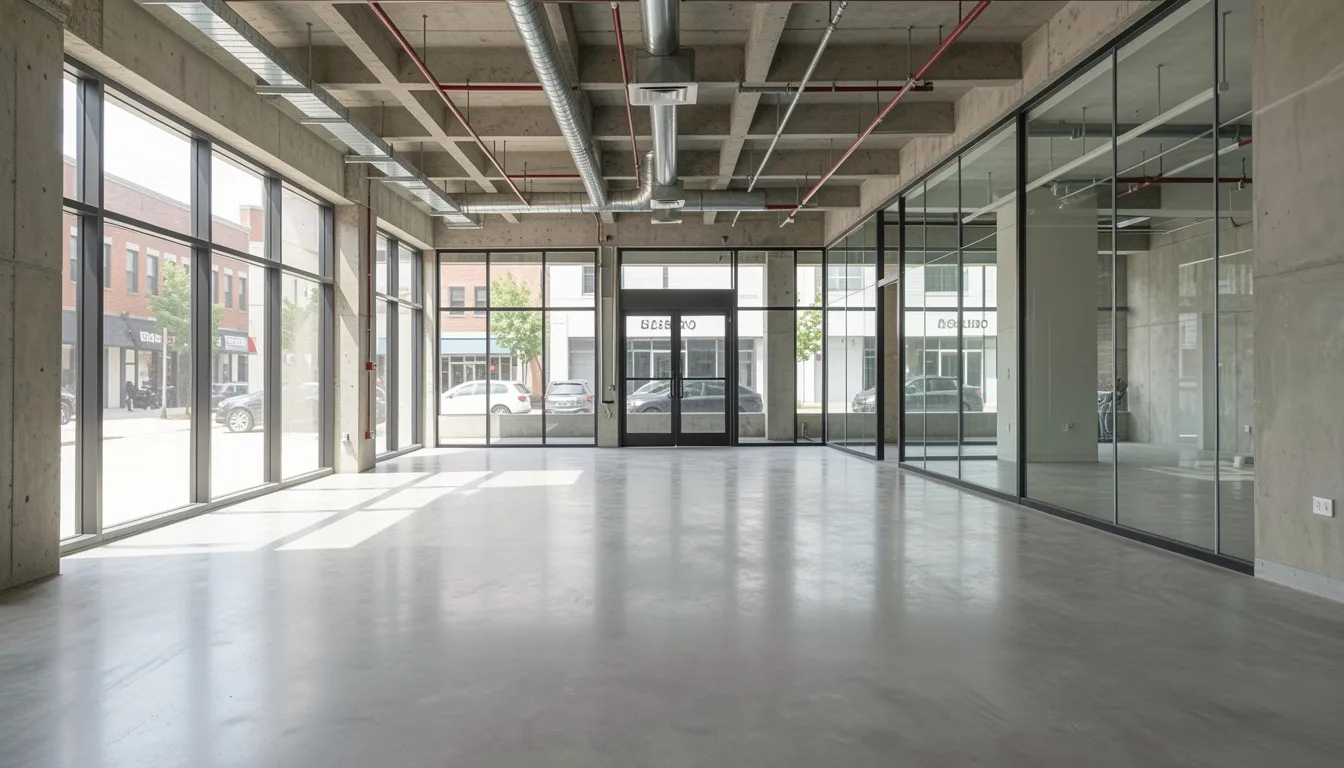
Tenant Improvement Services
Tenant Improvements in Miami:
How Commercial Build-Outs Work
A tenant taking over office, retail, or restaurant space in Miami usually asks the same question first: what has to change before the space can actually operate. This guide covers definitions, funding, permitting, delivery methods, Miami-specific risks, and the controls that keep build-outs predictable.
Who We Serve
Who This Service Is For
Office Tenants
Conference room reconfigurations, workstation layouts, lighting, data, and HVAC distribution updates for code-compliant office build-outs.
Retail & Franchise
Brand-standard finishes, signage, storefront details, and life-safety inspections for retail centers and franchise build-outs.
Restaurant Build-Outs
Infrastructure-heavy projects with hood exhaust, make-up air, grease management, kitchen utilities, and fire protection coordination.
Financial Institutions
Specialty infrastructure, security systems, and strict landlord standards for banking and financial services build-outs.
Property Managers & Landlords
TI allowance coordination, landlord approval workflows, and documented closeout for lease compliance and capital planning.
Industrial & Medical Suites
Use-specific code requirements, specialty MEP, and agency reviews for technical occupancies and medical tenant improvements.
Service Deep Dive
How Tenant Improvements Work in Miami Commercial Spaces
What Tenant Improvements Are (And How They Differ From Build-Outs)
In commercial real estate, tenant improvements are modifications made to leased space so a tenant can use it for its intended business function. The term overlaps with leasehold improvements, tenant build-out, commercial buildouts, commercial tenant remodeling, and tenant upfits, but the core idea is the same: adapt the interior to operational, branding, and code requirements.
A tenant, landlord, property owners group, or property management team may initiate the work depending on lease structure and building standards. A build-out often describes the overall delivery process, while tenant improvement construction describes the actual physical scope - from partitions and flooring to MEP, fire alarm, and fire sprinklers.
How Tenant Improvements Are Funded: Allowances and Documentation
Most leases fund part of the work through a tenant improvement allowance (TIA), which is a negotiated contribution from the landlord toward approved construction costs. A TIA can cover some hard and soft costs, but the lease must define what qualifies, because reimbursement disputes often come from vague language rather than construction overruns.
Payment mechanics typically include progress draws, lien releases, retainage, and closeout documentation before final reimbursement. In Miami, FL tenant improvements stay more predictable when the lease schedule, approved plans, and scope of work all describe the same project.
Demolition, MEP reroutes, and life-safety upgrades drive costs faster than finishes
Architecture, engineering, permitting, and inspections add soft costs before construction
Written scope with inclusions, exclusions, and change order workflow needed
Submittals and procurement logs must track long-lead items early
Step-by-Step: The Tenant Improvement Process in Miami
Most tenant improvements in Miami follow a repeatable sequence. Time is usually lost at three points - landlord approval, permitting, and long-lead procurement - which is why field verification at the beginning prevents expensive redesign later.
Due Diligence & Existing Conditions
Verify existing conditions including as-builts, utility capacity, ceiling heights, structural constraints, and current life-safety systems. Building rules also shape the schedule because after-hours work, freight elevator reservations, noise limits, and certificate of insurance requirements can restrict how work is sequenced.
Design, Landlord Review & Constructability
The architect and engineers coordinate their set with landlord standards and base-building criteria before permit submission. A constructability review should test egress, accessibility, fire ratings, and use-specific code requirements early, because paper conflicts become field delays once demolition starts.
Permitting, Inspections & Closeout
Track permitting comments, schedule inspections, and maintain documentation needed for final sign-off and certificate of occupancy or completion. Closeout includes as-builts, O&M manuals, warranties, test reports, and punch list completion.
Permits, Codes, and Life-Safety in Miami
Many interior projects require permitting because layout changes often affect egress, accessibility, MEP systems, or life-safety performance. In Miami-Dade County, the Florida Building Code and local enforcement expectations make code coordination a planning issue, not a final inspection issue.
Permits are commonly triggered by wall relocations, occupancy changes, HVAC, electrical, or plumbing modifications, and any adjustment to fire alarm or fire sprinklers. Restaurant build-outs, medical uses, and technical occupancies may add agency reviews, which is why permit strategy should match the actual use rather than the finish package.
Wall relocations and occupancy changes trigger permits
HVAC, electrical, and plumbing mods need separate permits
Restaurant and medical uses add agency review layers
Hurricane codes affect glazing, doors, and exterior work
Budget Planning
What Impacts Cost
TI costs vary by starting conditions, use type, and how much MEP and life-safety work the space needs. Understanding these factors early keeps budgets realistic.
Starting Conditions
Shell space vs. second-generation suites present different cost profiles. Existing MEP capacity, ceiling heights, and life-safety systems all affect how much infrastructure work is needed.
Early field verification identifies real conditions before they become budget surprises.
Use-Specific Infrastructure
Restaurant hoods, medical gas, grease traps, specialty electrical, and fire protection add cost layers that are driven by occupancy type, not finish quality.
Permit strategy should match the actual use rather than the finish package.
Landlord & Code Requirements
Building standards, landlord approval workflows, after-hours restrictions, and Miami-Dade code expectations add schedule and cost impacts that must be planned for upfront.
Coordinating lease terms, design intent, and code requirements early prevents rework.
Value Proposition
Why Professional TI Management Is Worth It
Protect Your TI Allowance
A clear scope with documented inclusions, exclusions, and change-order controls ensures your tenant improvement allowance delivers real value - not mid-project surprises that erode your budget.
Open on Schedule
Lease clocks and rent commencement dates create hard deadlines. Disciplined procurement, phased execution, and proactive permitting keep the path to occupancy on track.
Code-Compliant From Day One
Miami-Dade's code environment punishes late discovery. Getting egress, life-safety, and MEP coordination right during design - not during inspection - avoids costly rework and stop-work risk.
Our Advantage
What Sets Us Apart
Occupied-Building Expertise
Loading dock access, elevator reservations, staging limits, and noise restrictions reshape the sequence of work. We plan logistics as core project controls, not afterthoughts.
Miami Permitting Knowledge
Miami-Dade County enforcement expectations, Florida Building Code requirements, and use-specific agency reviews are integrated into our planning from day one.
Operational Discipline
Weekly schedule updates, RFI log, submittal log, and inspection tracker ensure issues surface while options still exist. Booster Construction frames this as transparent budgeting.
Landlord Coordination
TI allowance documentation, landlord approval workflows, progress draws, lien releases, and closeout packages managed as part of the construction process.
Typical Scopes
TI Scopes by Property Type in Miami
Miami projects differ less by finish style than by infrastructure demands, permitting triggers, and landlord constraints.
Office Refresh With Layout Changes
Reconfigure conference rooms and workstations while updating lighting, data, and HVAC distribution. Permitting is often triggered by egress, accessibility, and MEP changes even when the visual scope appears modest.
Retail or Franchise Build-Out
Strict brand standards for finishes, signage, and storefront details. The critical path often runs through custom millwork, fixture procurement, and life-safety inspections rather than basic painting or flooring.
Restaurant Build-Out
Infrastructure-heavy because hood exhaust, make-up air, grease management, and kitchen utilities drive design. Fire protection and mechanical coordination must be resolved early, or field conflicts will force rework.
How It Works
Controls That Keep TI Projects Transparent
Field Verification
Verify as-builts, utility capacity, ceiling heights, structural constraints, and building rules before pricing - because assumptions become change orders.
Scope & Budget Lock
Baseline budget with allowances defined, exclusions documented, and procurement started on long-lead items before construction begins.
Phased Construction
Weekly schedule updates, RFI log, submittal log, and inspection tracker keep scope, schedule, and budget aligned throughout execution.
Closeout & Turnover
As-builts, O&M manuals, warranties, test reports, and punch list completion. Turnover quality affects operations long after construction ends.
Service Area
Miami Neighborhoods Where TI Needs Vary
Tenant improvement contractors see different constraints by submarket, building age, and occupancy type. Brickell and Downtown Miami often involve high-rise logistics, strict management rules, and limited staging.
Wynwood, Design District, and Miami Beach often place more emphasis on storefront coordination and brand-forward finishes, which can increase review cycles and fabrication lead times. Hurricane season planning also matters because weather exposure can affect deliveries and risk management.
Miami-Dade & South Florida
Miami-Dade County
Downtown Miami, Brickell, Wynwood, Design District, Miami Beach, Coral Gables, Doral, Key Biscayne
Broward County
Fort Lauderdale, Hollywood, Plantation, Pembroke Pines, Weston, Davie, Sunrise, Coral Springs
Palm Beach County
West Palm Beach, Boca Raton, Delray Beach, Boynton Beach, Palm Beach Gardens, Jupiter
Local coverage matters because permitting expectations, building standards, and landlord requirements vary across South Florida submarkets.
FAQ
Frequently Asked Questions
Get Started
Verification, Documentation, and Control of the Critical Path
A successful TI project in Miami depends less on finishes than on alignment between lease terms, design intent, code requirements, and site logistics.
Bring the lease terms, site address, intended use, and any existing reports so we can scope your tenant improvement project with precision.
FAQ
Frequently Asked Questions
Related Services
Commercial Renovation
Interior remodels, common-area upgrades, and full-building renovations for offices, retail, and HOAs.
Learn moreDesign-Build Construction
Single-contract design and build delivery for faster timelines and single-point accountability.
Learn moreCommercial Interior Buildout
Ground-up interior construction for new tenant spaces, offices, and retail stores.
Learn moreCommercial Lobby Renovation
First-impression lobby upgrades that improve property value and tenant retention.
Learn more