Demolition Coordination
Commercial Demolition Contractors in South Florida
Controlled selective and interior removals for occupied commercial and institutional properties, scoped in writing and sequenced with the construction that follows.
The Role
Demolition Planned as the First Phase of Construction
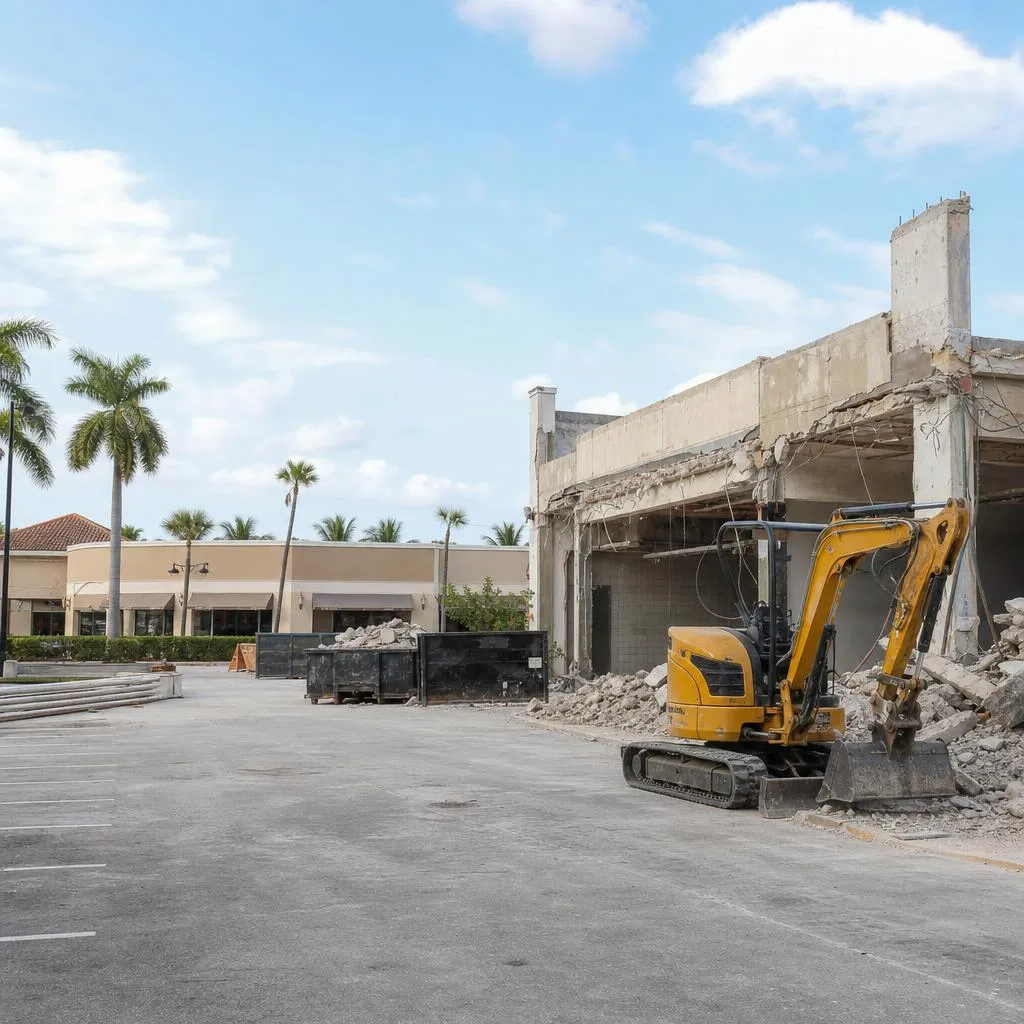
In South Florida, commercial demolition is less about heavy machinery and more about risk management: permits, utility disconnections, hazardous-material checks, protection of elements that stay, and the people who keep using the building. Booster Construction is a licensed and insured contractor with a 100% exclusive focus on commercial and institutional projects.
Our demolition work is coordination-focused. It forms part of a commercial renovation, tenant improvement, interior buildout, repair or compliance project, so the removals line up with the approved design and the trades that follow. Larger structural or total demolition is assessed case by case within the authorized scope.
Risks Early Planning Addresses
- Incomplete or unclear scope
- Tenant, staff, customer or resident disruption
- Uncoordinated shutdowns and restricted access
- Permitting and inspection delays
- Budget drift and avoidable change orders
- Turnover deadlines tied to follow-on construction
Methods
Choosing the Right Removal Approach
The method follows from the structure, its neighbors, utilities, hazardous materials, access and what happens next. It is selected after assessment, never before. No method eliminates every risk.
Selective & Interior Demolition
Our primary focus
Targeted removal of partitions, ceilings, finishes, fixtures and designated building components while elements marked to remain are protected. The usual path for tenant improvements, buildouts and renovations.
Careful Dismantling & Salvage
Where reuse is a goal
Systematic removal of components an owner wants to keep, relocate or recycle. Slower and more labor-intensive, but useful when fixtures, metals or architectural features have value.
Larger Structural Removals
Assessed case by case
Structural dismantling or total demolition is evaluated individually against engineering requirements, license scope, site constraints and the authorized project scope before any commitment.
| Approach | Typical Equipment | Advantages | Limitations |
|---|---|---|---|
| Selective interior | Hand tools, compact equipment, protected work zones | Precise; keeps the structural frame and systems designated to remain | Labor-intensive; concealed conditions often surface once finishes come off |
| Careful dismantling | Hand tools, light lifting and rigging | Supports salvage, relocation and recycling goals | Slower; needs staging space and clear salvage decisions |
| Concrete breaking & removal | Breakers, saws, loaders (scale-dependent) | Separates concrete for recycling where facilities accept it | Noise, vibration and dust controls; engineering review near structure |
| Mechanical (larger scope) | Excavators and attachments, by engineered plan | Efficient for large volumes once a site is cleared | Significant dust and noise; reviewed case by case within authorized scope |
Interior Focus
Selective Demolition for Tenant Improvements and Buildouts
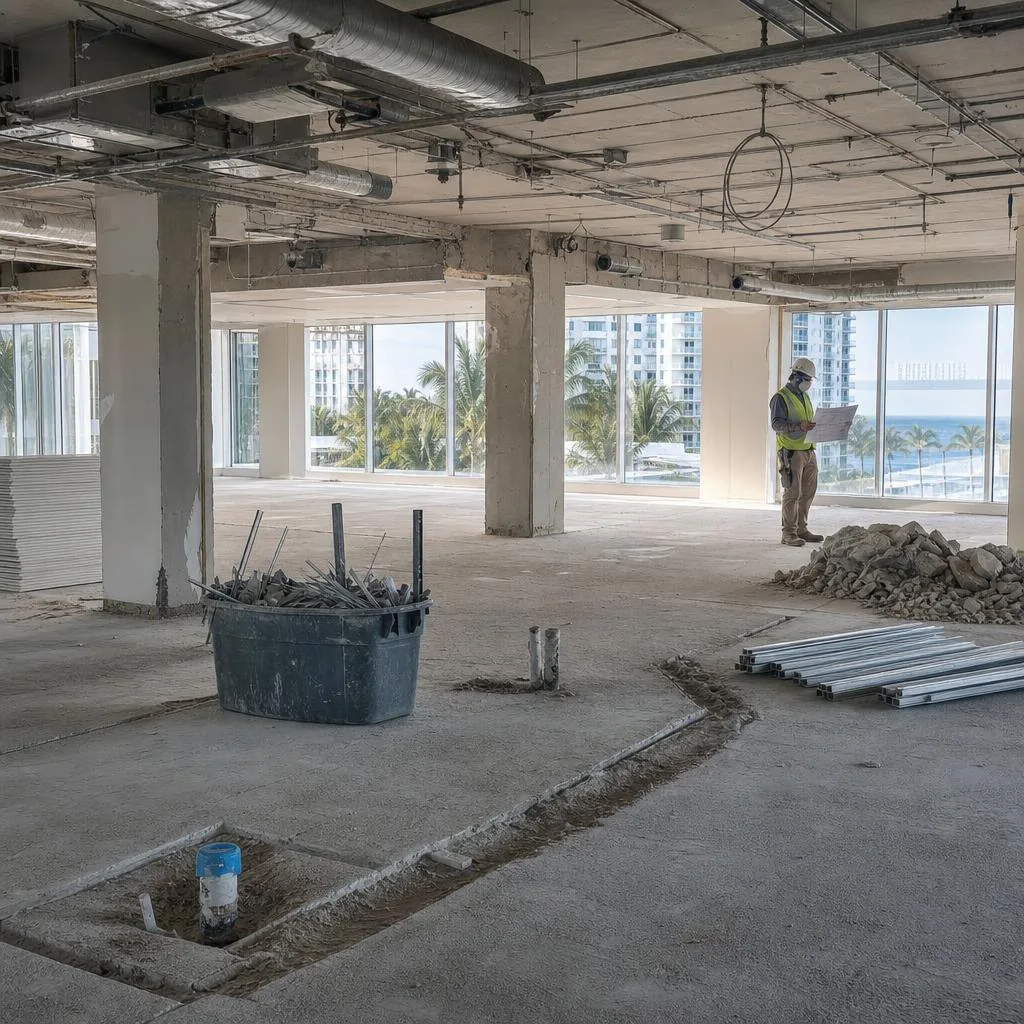
When demolition supports tenant improvements, removals are coordinated with the approved tenant layout, building rules, access requirements and turnover schedule, so the space is ready for new finishes, systems and fixtures without avoidable gaps.
For commercial buildouts, the demolition sequence is planned with the framing, mechanical, electrical, plumbing and finish work that follows. Lobbies and amenity areas follow the same logic; see our lobby renovation work.
Concealed conditions are common once finishes come off. When they appear, impacts are reviewed against the documented scope and approved before work changes direction.
Planning Track 01
Scope-First Planning and Budget Clarity
Every project starts with a documented Scope of Work. We review existing conditions, objectives, schedule, site restrictions, stakeholder responsibilities and how demolition connects to planned construction.
The scope identifies inclusions, exclusions and allowances so owners, boards and property managers can see how the budget is structured before approving it. When site conditions require a change, the impact is documented and reviewed against project requirements rather than handled without context.
Planning Track 02
Code-First Coordination for South Florida
Florida Building Code requirements, local permitting, accessibility, inspections and coastal conditions are identified early so the demolition plan, approvals and follow-on construction stay aligned. Requirements vary by jurisdiction and scope and can include demolition permits, utility disconnections, environmental reviews, tree protection and site controls.
Where work leaves a property with code questions, it often connects to related compliance work such as legalizing unpermitted work or 40-year recertification repairs.
Define the removal before it starts.
Send your plans and constraints for a scope review and planning conversation.
Occupied Sites
Phasing Around People Who Stay
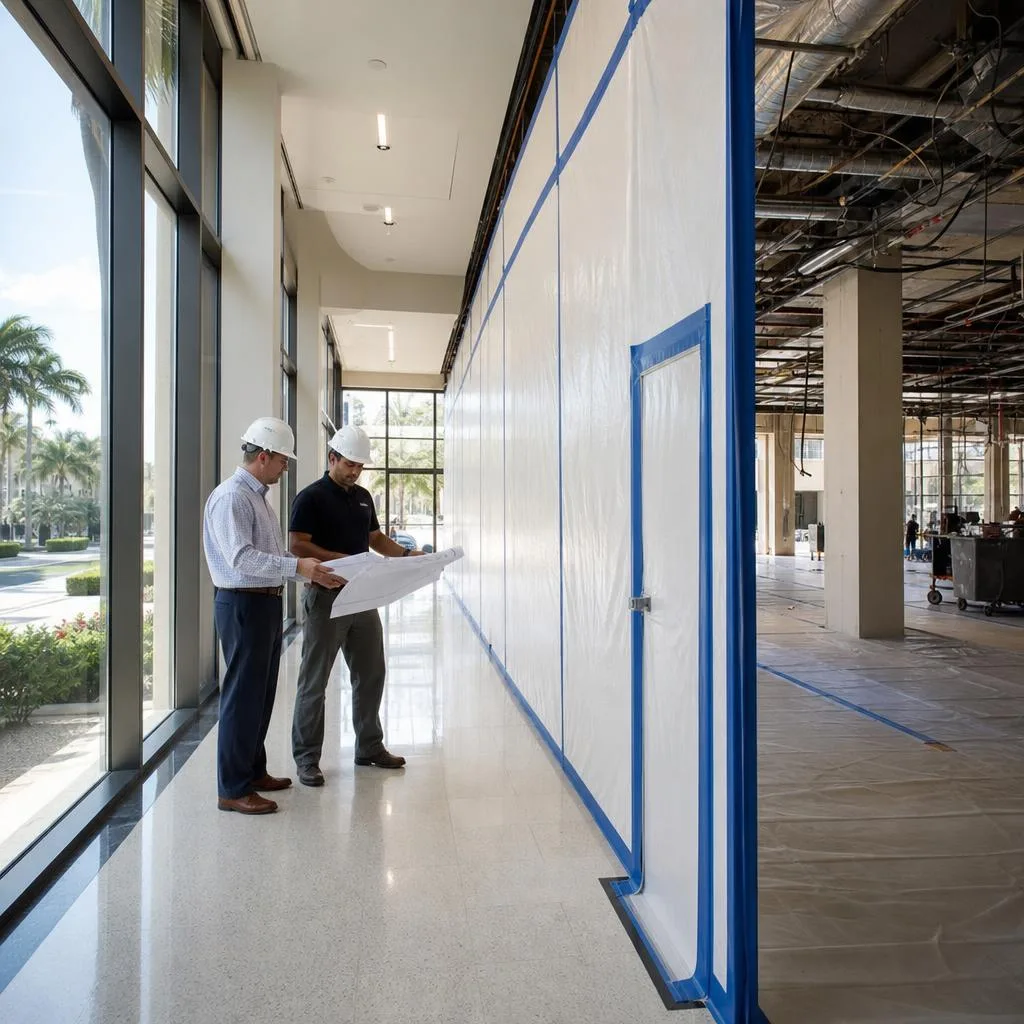
Some selective work can be phased around occupied areas, subject to approved plans and safety requirements. Work that cannot be safely isolated may require temporary vacancy or closure of an area. Planning can include:
- Rigid or temporary separation between work zones and occupied areas
- Dust controls and protection of HVAC returns where applicable
- Protected access routes and maintained exits
- Scheduled utility and system shutdowns with advance notice
- Noise windows and after-hours work where building rules allow
- Advance occupant and tenant notices
Who We Serve
Commercial Projects We Support
For stakeholders who need single-point accountability across connected phases of work.
HOA & Condominium Associations
Common-area, amenity and lobby removals planned around residents, board approvals and building rules.
Related serviceSchools & Institutional Facilities
Phasing aligned with academic calendars, life safety systems and restricted access.
Retail Centers
Tenant-space demolition coordinated with neighboring tenants, shoppers and landlord rules.
Related serviceProperty Management Companies
Clear scope documents and reporting for managers answering to owners and boards.
Office, Medical & Mixed-Use
Interior gut-outs that connect directly to the buildout that follows.
Related serviceSafety & Compliance
What Has to Happen Before Removal Begins
Asbestos Survey and Notification
Commercial facilities subject to asbestos NESHAP generally require a thorough asbestos inspection before demolition, regardless of building age, and demolition notification is generally required at least 10 working days in advance even when no asbestos is found, with specific exceptions.
Survey and abatement work is referred to appropriately licensed Florida asbestos professionals. See Florida DEP asbestos guidance.
Engineering Survey and Worker Safety
OSHA requires an engineering survey by a competent person before demolition operations, with written evidence of completion. Structural plans, shoring and specialist approvals may also apply. Reference: OSHA 29 CFR 1926 Subpart T, Demolition.
Storm Readiness
Miami-Dade and Broward fall within the Florida Building Code High-Velocity Hurricane Zone; Palm Beach County does not, but still faces serious storm exposure. Active demolition sites should maintain a site-specific storm plan for securing loose materials, fencing, debris and equipment, with suspension thresholds set by equipment manufacturers, site safety plans and applicable requirements.
Protecting What Stays
Adjacent structures, finishes and systems designated to remain are identified in the scope. Where heavier work is near sensitive or historic neighbors, vibration monitoring may be specified by the engineer. Structural concerns uncovered during removal are coordinated with the engineer of record and, where needed, our structural repair team.
Debris Management
Separation, Recycling and Disposal
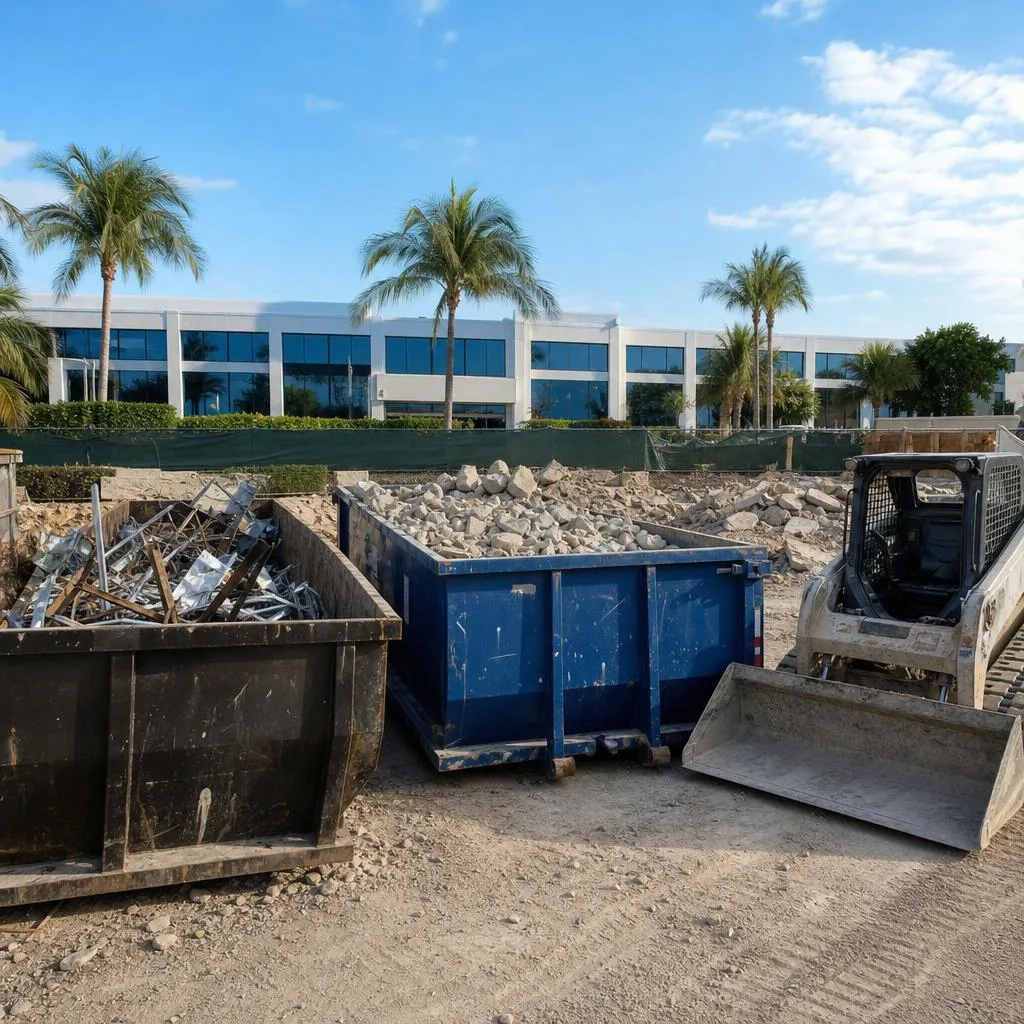
The debris plan identifies materials for reuse, recycling or disposal and the facilities authorized to accept them. Concrete, metals and other suitable materials can be separated where practical.
Hazardous waste requires its own handling and disposal arrangements. Recycled concrete aggregate must meet the specifications of its intended use; it is not automatically approved for FDOT or road-base applications.
Disposal records are included in closeout for the agreed scope.
Our Process
A Disciplined Path From Consultation to Closeout
Built for properties where several stakeholders approve scope, cost, timing or operational changes, with decisions tracked as the project advances.
Property & Goals Review
Objectives, available plans, existing conditions, access limits, occupancy and operational requirements.
Scope & Planning
Budget framework, inclusions, exclusions, allowances, permitting needs, specialist responsibilities and schedule.
Coordinated Execution
Work sequenced around occupancy, life safety, inspections, stakeholder access and turnover dates.
Documentation & Closeout
Applicable inspections, punch items, debris records and closeout for the agreed scope.
Quote Faster
What Helps Us Scope Your Demolition
Demolition proposals depend on the area and materials being removed, access, structural conditions, disposal volume, hazardous-material findings, temporary protection and occupied-site phasing. The more of this we see early, the clearer the proposal.
Send With Your Inquiry
- Existing drawings or as-builts
- Asbestos or hazardous-material survey, if available
- Planned layout for the follow-on buildout
- Building rules and work-hour restrictions
- Occupancy and access constraints
- Target turnover date
- Board or ownership approval timeline
Service Area
Serving Miami-Dade, Broward and Palm Beach
Permit procedures, environmental reviews and building-department requirements differ between counties and municipalities. We confirm the applicable requirements for each property before scheduling field work.
FAQ
Frequently Asked Questions
What does a commercial demolition contractor in South Florida handle?
Depending on the approved scope and license classification, work can include selective interior removals, site preparation, structural dismantling, debris handling and coordination with utilities, permitting authorities and follow-on trades. Booster focuses on demolition coordination connected to commercial renovations, tenant improvements, buildouts and repairs. Specialized work is assessed separately.
How do I choose the right contractor for commercial demolition?
Verify the current license class, insurance and experience with comparable properties. Review the written scope, exclusions, access plan, utility shutdowns, engineering requirements, permits, debris handling and schedule. Confirm who is responsible for specialist work and how concealed conditions and change orders will be approved.
What affects the cost of commercial demolition?
Costs depend on the area and materials being removed, demolition method, access, structural conditions, disposal volume and local fees. Hazardous-material assessment or abatement, temporary protection, engineering, occupied-site phasing and after-hours work can also affect pricing. A site review and documented scope are needed for a project-specific proposal.
Which demolition methods work best in small commercial spaces?
Selective interior demolition and careful dismantling are often suitable for small or constrained spaces. Compact equipment and hand tools allow targeted removals while protecting elements designated to remain. The method must be selected after assessing structural conditions, utilities, hazardous materials and access; no method eliminates every risk.
Can demolition take place while a commercial property remains occupied?
Some selective work can be phased around occupied areas, subject to the approved plans and safety requirements. Planning may include rigid separation, dust controls, protected access and exits, scheduled shutdowns, noise restrictions and advance occupant notices. Work that cannot be safely isolated may require temporary vacancy or closure.
Do I need an asbestos survey before demolishing a commercial building in Florida?
Commercial facilities subject to asbestos NESHAP generally require a thorough asbestos inspection before demolition, regardless of building age. Demolition notification is generally required at least 10 working days in advance even when no asbestos is found, with specific exceptions and procedures. Confirm survey, notification and abatement requirements with a qualified Florida asbestos professional and the responsible DEP or delegated local agency before scheduling work.
What permits and safety reviews are needed before demolition?
Requirements vary by jurisdiction and scope. Planning can include demolition permits, utility disconnections, environmental reviews, tree protection and site controls. OSHA requires an engineering survey by a competent person before demolition operations, with written evidence of completion. Structural plans, shoring and specialist approvals may also be required. Do not begin until applicable approvals and controls are in place.
How are demolition debris and recyclable materials managed?
The plan identifies materials for reuse, recycling or disposal and the facilities authorized to accept them. Concrete, metals and other suitable materials can be separated where practical. Hazardous waste requires its own handling and disposal arrangements. Recycled aggregate must meet the intended project specifications; it is not automatically approved for FDOT use.
Does Booster Construction handle permits and inspections?
Yes. We manage the full permitting process — preparing drawings and documentation, submitting to the local building department, coordinating with plan reviewers, and scheduling every required inspection through final sign-off. Our team works with municipalities across Broward, Miami-Dade, and Palm Beach counties and builds permitting time into the project schedule from day one.
What areas does Booster Construction serve?
We serve all of South Florida, including Broward County, Miami-Dade County, and Palm Beach County. Our projects span Fort Lauderdale, Miami, Plantation, Hollywood, Boca Raton, West Palm Beach, and the surrounding communities.
Does Booster Construction take on residential projects?
No. Booster Construction is exclusively a commercial general contractor. We work with HOA and condominium associations, property managers, schools, houses of worship, retail centers, offices, and other commercial and institutional properties.
Is Booster Construction licensed and insured?
Yes. Booster Construction is a Florida-licensed General Contractor (license CBC1266108, issued by the Florida Department of Business and Professional Regulation) and carries full liability and workers' compensation insurance. We are also a BBB Accredited Business.
How long does a typical commercial project take?
Timelines depend on scope and permitting. Smaller interior build-outs and renovations often run 6 to 12 weeks after permits are issued, while larger renovations, structural repairs, and phased occupied-building projects can take several months. We provide a detailed schedule with milestones before work begins and report progress throughout the project.
How do I get an estimate for my project?
Call (954) 280-2882 or use the contact form to schedule a free consultation. We review your goals on a site walkthrough, then deliver a transparent, line-item proposal with scope, schedule, and budget — no obligation.
Plan the demolition around the building you still operate.
Request a consultation to review scope, constraints, approvals and the construction that follows.
Images on this page are illustrative and do not depict specific Booster Construction projects.
Related Services
Tenant Improvements
Space reconfiguration and fit-outs that follow selective demolition.
Learn moreCommercial Interior Buildout
From cleared shell to ready-to-occupy commercial interiors.
Learn moreCommercial Renovation
Renovation programs for occupied commercial and institutional properties.
Learn moreCommercial Structural Repairs
Concrete restoration and structural correction when removals reveal deterioration.
Learn more