Learn what drives commercial interior demolition costs in South Florida, how to build a defensible budget, and what permits, disposal and line-item quotes should cover.
Planning a Commercial Interior Demolition Budget
A property owner planning a renovation often needs an early demolition budget before drawings and removal limits are complete. For owners asking, “How much does commercial interior demolition cost in South Florida?”, the useful answer depends on scope, building conditions, accessibility, disposal logistics, and code requirements.
This guide explains preliminary budgeting, major cost drivers, permitting considerations, and the details a defensible estimate should contain. It reflects the disciplined estimating perspective of Booster Construction, a licensed and insured commercial contractor focused on South Florida commercial and institutional projects.
What Commercial Interior Demolition Typically Costs
There is no reliable flat rate because commercial interior demolition cost changes with the building size, removal scope, access, waste volume, existing systems, and compliance requirements. For preliminary budgeting, establish project-specific planning ranges from a defined scope, access plan, waste assumptions, and current local subcontractor and disposal pricing.
Project-specific budgeting ranges are not project quotes. A commercial interior gut-out generally removes selected nonstructural finishes and systems while preserving the slab, structure, exterior envelope, and designated components for reuse.
A written scope is more useful than one commercial demolition cost per square foot. It identifies inclusions, exclusions, allowances, engineered plan requirements, site constraints, and whether bidders must be licensed and insured or bonded and insured.
Use Cost Per Square Foot as a Starting Point
Square-foot pricing supports early comparisons, but accuracy falls when a small space contains extensive plumbing, heavy finishes, commercial kitchens, or restricted loading access. Estimates should separate labor, equipment rental pricing, hauling, waste disposal, permits, supervision, and hazardous-material work.
Disposal assumptions must also reflect material type and applicable EPA guidelines. For covered facilities, EPA’s Asbestos NESHAP generally requires a thorough inspection before demolition or renovation. Covered demolitions generally require notification even when no asbestos is found; renovation notification depends on regulated asbestos quantities and other applicable conditions. Confirm the requirements with the responsible state or delegated local agency.
Define the Level of Removal
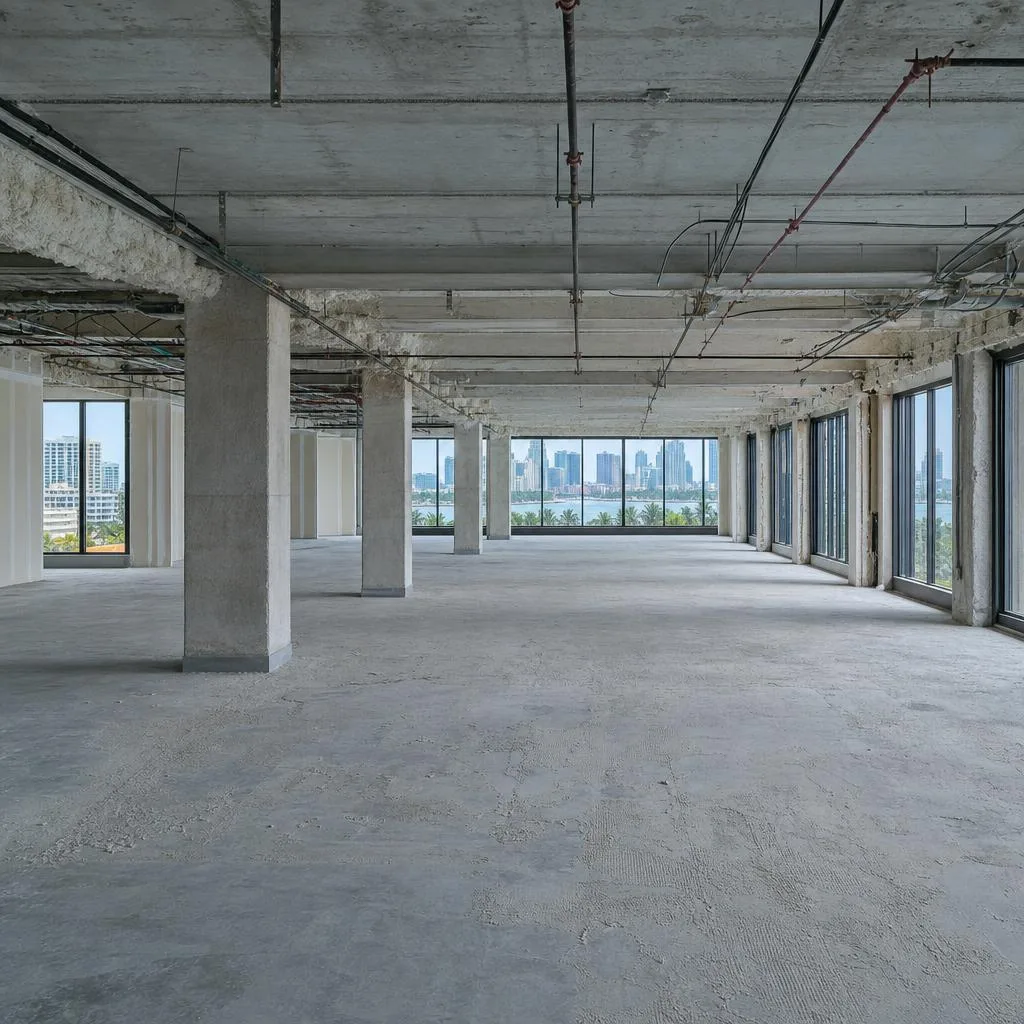
Selective demolition removes specific components, while an interior strip-out clears broader areas for a commercial tenant improvement demo. Structural demolition affects load-bearing components, and full-building commercial demolition removes the entire facility.
Retaining partitions, ceilings, fire suppression systems, mechanical, electrical, and plumbing (MEP) fixtures, or flooring changes sequencing and protection requirements. The estimate must distinguish retained elements from removal work.
The Main Cost Drivers in South Florida
The strongest cost drivers are labor hour projections, risk controls, logistics, and documented compliance rather than a generic regional markup. Miami, Fort Lauderdale, and other dense sites often require elevator reservations, traffic coordination, limited staging, and careful scheduling around neighboring tenants.
Hurricane rebuild demand can affect workforce and hauling availability. Coastal regulations, municipal procedures, and local disposal capacity can also influence scheduling and pricing.
Scope, Materials, and Building Systems
The materials involved determine production rates and debris volume. Common scope items include partitions, insulation, cabinet removal, drywall removal, plaster walls, flooring removal, ceilings, bathroom fixture removal, and selected MEP fixtures.
Extensive plumbing, grease ducts, chillers, thick materials, or temporary shoring require specialized labor, tools, and technical review. Steel recycling, salvageable metal, and recoverable equipment may reduce disposal volume, but any salvage credit should be documented in the proposal.
Access, Occupancy, and Schedule Constraints
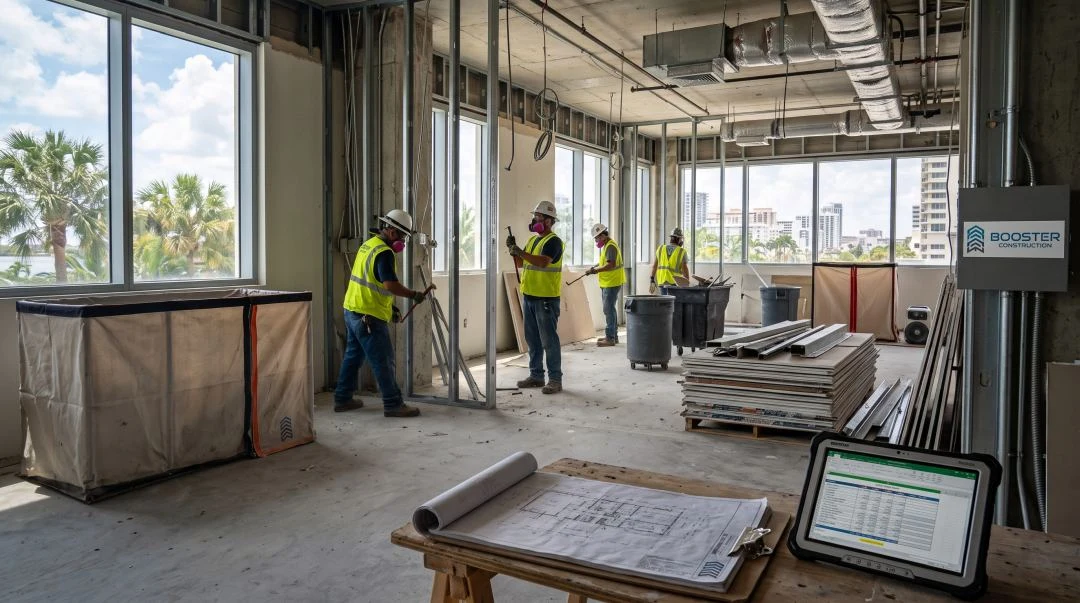
Tight access, upper-floor work, occupied buildings, restricted hours, floor protection, and phased execution increase labor costs and equipment costs. Active properties may require dust containment, zipper doors, negative air machines, high-efficiency particulate air (HEPA) filtration, noise controls, and life-safety coordination.
A compressed schedule can require added shifts, supervision, safety measures, and precisely timed hauling. These controls protect operations but reduce normal production efficiency.
Hazardous Materials and Regulatory Requirements
For a renovation or demolition at a Florida facility, the owner or operator must complete an asbestos survey of the affected area before commencing the planned work, subject to stated exemptions under Florida Administrative Code Rule 62-257.301. When present, asbestos abatement, lead paint remediation, mold, polychlorinated biphenyls (PCBs), and other regulated materials require separately managed work, often involving an asbestos removal contractor.
Planning may involve the Florida Department of Environmental Protection and applicable EPA rules.
How to Build a Defensible Demolition Budget
Property owners, facility managers, and institutional stakeholders need transparent line items tied to defined assumptions. This approach reduces budget drift during a property remodel and limits disputes over concealed plaster walls, equipment access, excavators, or undocumented systems.
Set a contingency for conditions uncovered after ceilings, walls, or flooring are opened. The percentage should reflect survey quality, building age, renovation history, and scope complexity.
Start With a Pre-Demolition Assessment
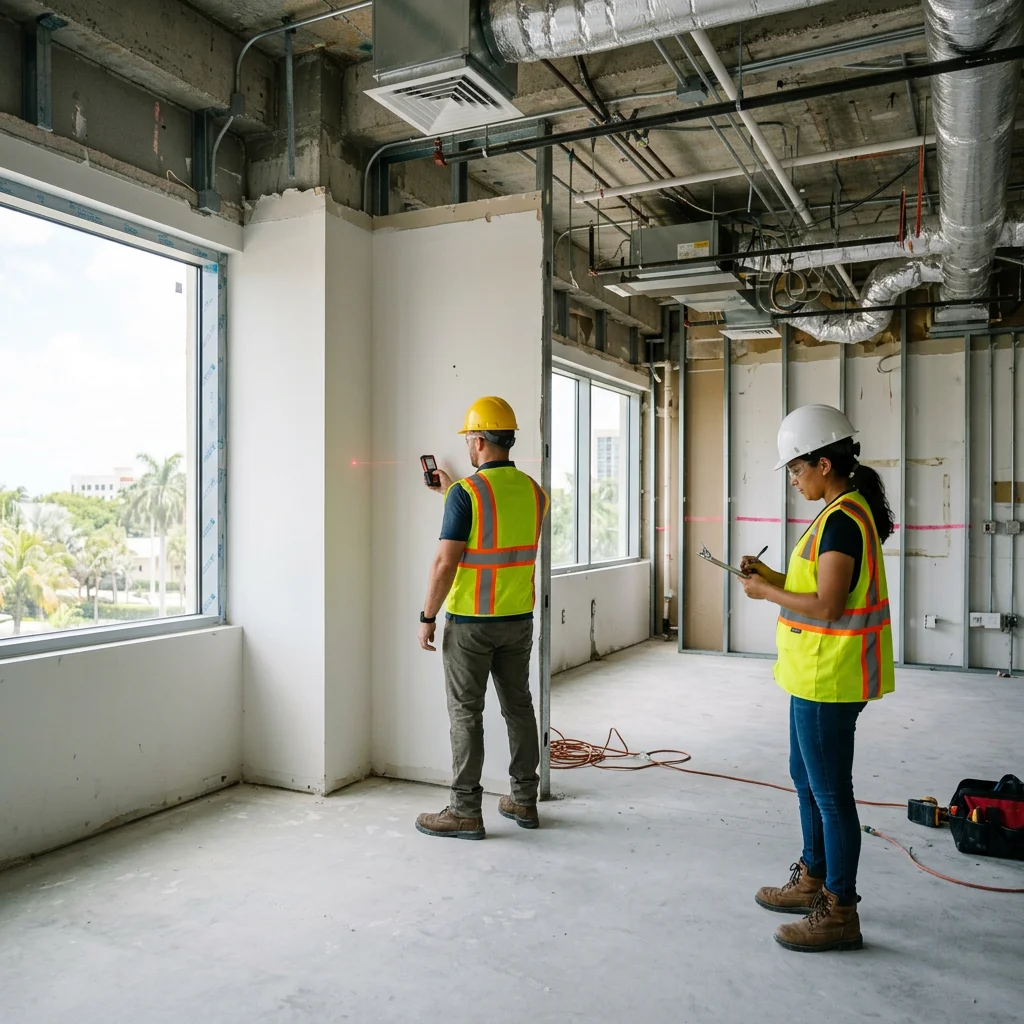
Record square footage, removal limits, materials, utility locations, foundation conditions, access routes, work hours, occupancy, and protected elements. A site walk should include photographs, test openings where appropriate, utility disconnects, and a plan for isolating active services.
A structural engineer should review work involving structural elements, unusual loads, temporary shoring, or protected components. This review establishes whether an engineered plan is required.
Apply a Simple Estimate Formula
A practical demolition estimate formula is direct labor plus equipment plus containment and safety controls plus hauling and disposal plus permits and supervision plus contingency. Deconstruction, steel recycling, chillers, and salvage operations should appear as separate line items when relevant.
An interior demolition cost calculator is only useful when its inputs reflect material types, access, debris volume, and abatement findings. Compare like-for-like scopes rather than selecting a proposal solely by its lowest total.
Permits, Notifications, and Compliance Costs
Demolition permits and associated charges are set by the responsible state, county, or municipal authority. Specialized permits and fees vary by location, valuation, review requirements, transportation fees, and project scope.
Interior work can still require permits when it affects structure, fire protection, electrical, plumbing, mechanical, accessibility, or life-safety conditions. Confirm inspections, right-of-way permits, waste rules, and any demolition notification period before setting the construction schedule.
Plan for Local Jurisdiction Requirements
Miami-Dade, Broward, and Palm Beach County projects follow jurisdiction-specific processes, so there is no universal Florida permit price. Miami-Dade’s Building Permit-Related Portal lets users submit and check the status of permit applications, and its online services page links to permit application checklists and forms.
Developers should also account for municipal requirements, Miami-Dade noise ordinances where applicable, elevator reservations, management rules, and disposal records. Thick slabs, structural interfaces, and other conditions can raise the project’s complexity and review needs.
Protect Occupants and Adjacent Tenants
Site-specific safety plans should address controlled access, gas lines, electrical and water isolation, dust control, signage, daily cleanup, and emergency routes. Tight access requires especially clear separation between work zones and occupied areas.
These controls reduce disruption in schools, retail centers, houses of worship, offices, and HOA-managed properties. Under a design-build delivery contract, responsibilities for design, permitting, demolition, and reconstruction should still be identified separately.
Example: Comparing Two Tenant Improvement Demolition Scopes
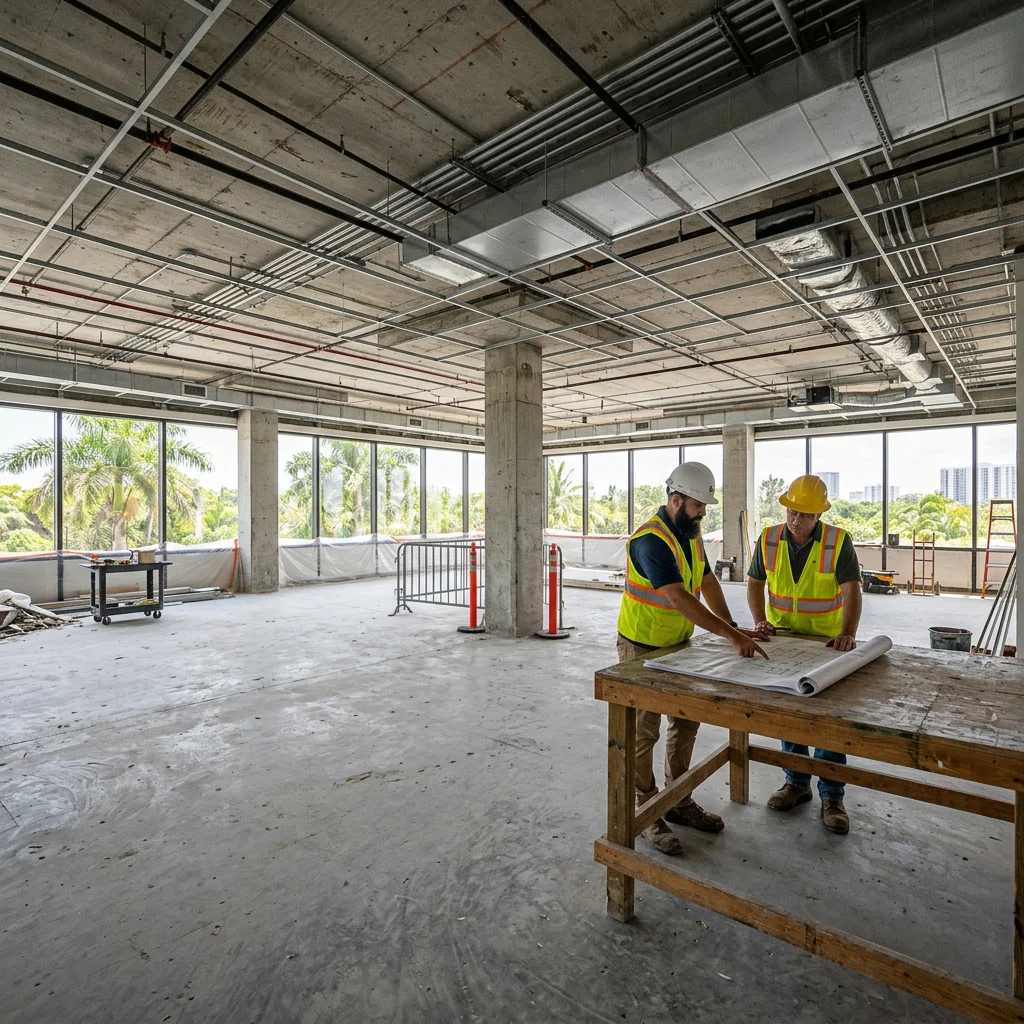
Consider two similarly sized tenant spaces planned for adaptive reuse. An open office strip-out may include carpet removal, partitions, suspended ceilings, wiring, and selected fixtures, with negative air machines used to manage dust where required.
A former food-service space may add grease ducts, extensive plumbing, equipment removal, heavy tile, waterproofing layers, and greater hauling weight. Equal floor area therefore does not create equal commercial interior demolition cost.
Detailed line-item quotes make the difference visible. They show whether each bidder has allowed for the same removal limits, protection requirements, schedule, and disposal obligations.
What a Clear Line-Item Quote Should Show
A clear quote should identify the following scope and cost items, with quantities and assumptions that can be compared across bidders.
Exclusions should address asbestos abatement, concealed conditions, structural repairs, utility upgrades, and site restoration. Decision-makers should also verify work hours, access responsibilities, loading and recycling access, schedule assumptions, and closeout documentation before authorization.

- Demolition limits and retained elements.
- Labor, supervision, and equipment.
- Protection, containment, and temporary controls.
- Dumpster rental, hauling, and disposal fees.
- Recycling fees and documented salvage credits.
- Permits, inspections, and required records.
- Site cleanup and turnover conditions.
Common Budgeting Mistakes to Avoid
Do not budget from square footage alone without confirming materials, accessibility, occupancy, and removal limits. A number that omits bathroom fixture removal, heavy finishes, envelope protection, or active-building controls will not represent the actual work.
Do not begin demolition before required surveys, utility planning, permit review, and hazardous-material evaluation are complete. Dust and erosion control, utility isolation, and life-safety planning must be settled before crews mobilize.
Avoid vague allowances and undefined debris terms that prevent accurate proposal comparison. Each quote should state quantities, assumptions, inclusions, exclusions, and responsibility for unforeseen conditions.
Frequently Asked Questions
How Much Should a Contractor Charge for Commercial Demolition?
The price should cover defined labor, equipment, containment, hauling, disposal, permits, supervision, and contingency. The appropriate charge depends on scope, access, materials, occupancy, schedule, and regulatory requirements.
How Do You Estimate the Cost of Demolition Work?
Begin with a site assessment and removal plan, then total labor hours, equipment, safety controls, hauling, disposal, permits, supervision, and contingency. Compare detailed line-item scopes with matching assumptions.
How Much Is a Demolition Permit in Florida?
Permit fees vary by the approving city or county, project valuation, scope, reviews, and required inspections. Confirm the current fee schedule with the responsible building department because Florida does not have one statewide demolition permit price.
Build a Budget That Supports the Renovation Ahead
A dependable South Florida demolition budget starts with disciplined scope definition, early compliance planning, and transparent line-item pricing. These controls give stakeholders a clearer basis for approving costs, managing risk, and coordinating the renovation that follows.
Explore Booster’s commercial demolition service in South Florida to discuss your removal scope, site constraints, and the handoff to rebuilding.

About the Author
Matan DayanBooster Construction
Matan Dayan contributes practical articles for Booster Construction on commercial construction planning, renovations, permitting, building safety, and project delivery across South Florida.