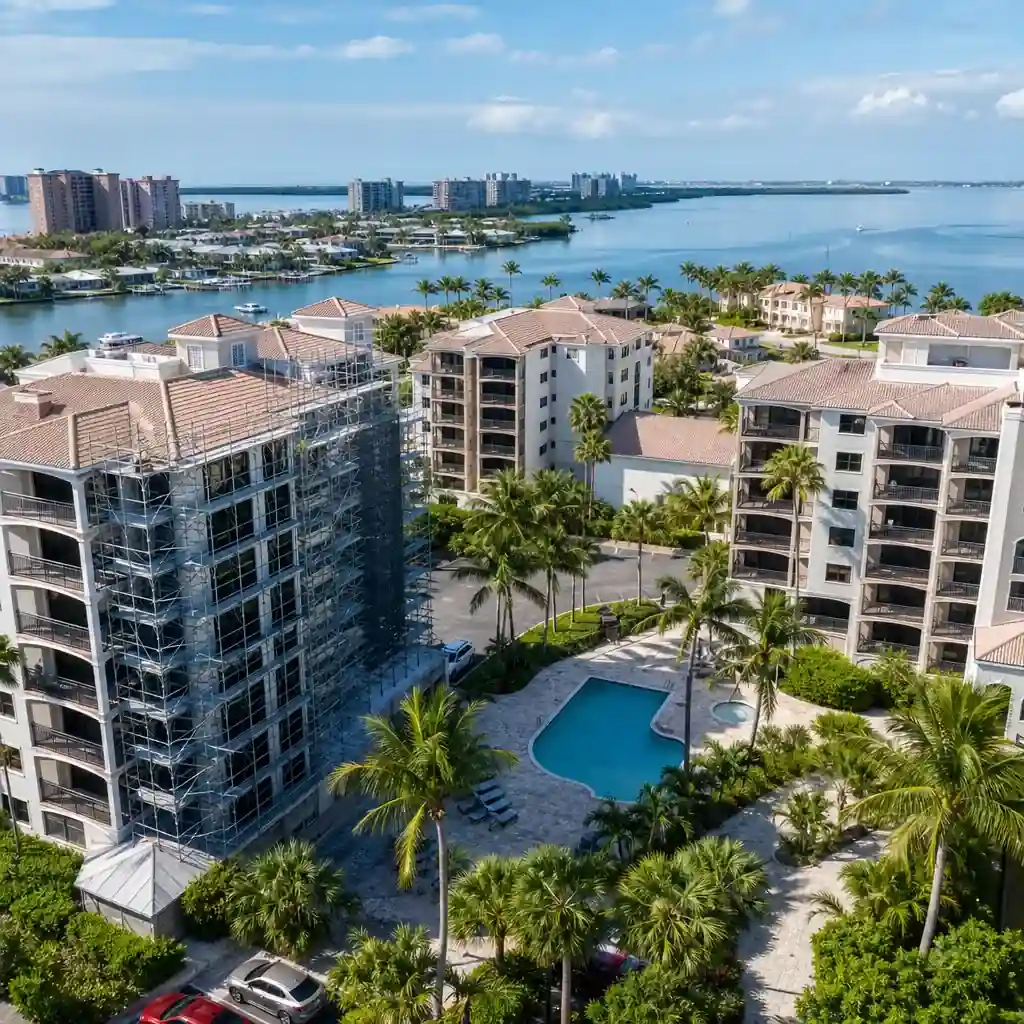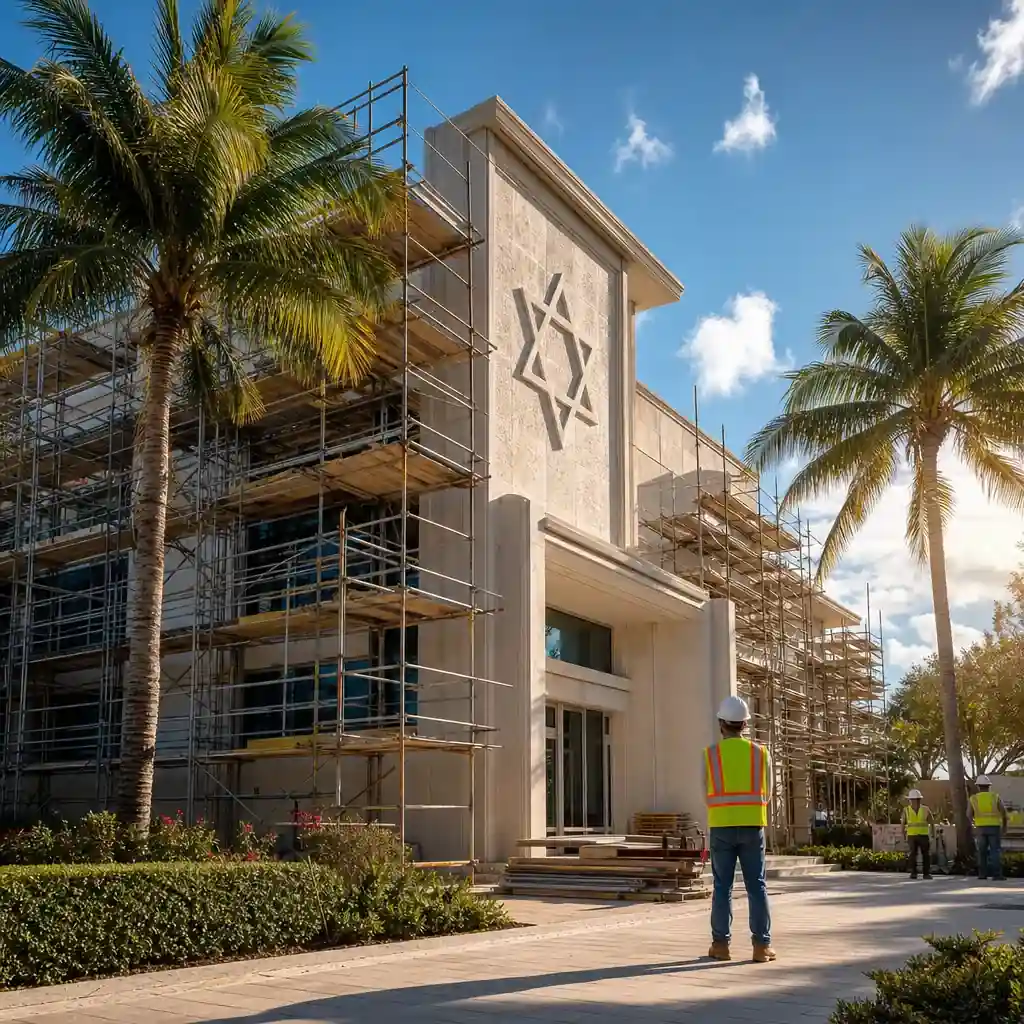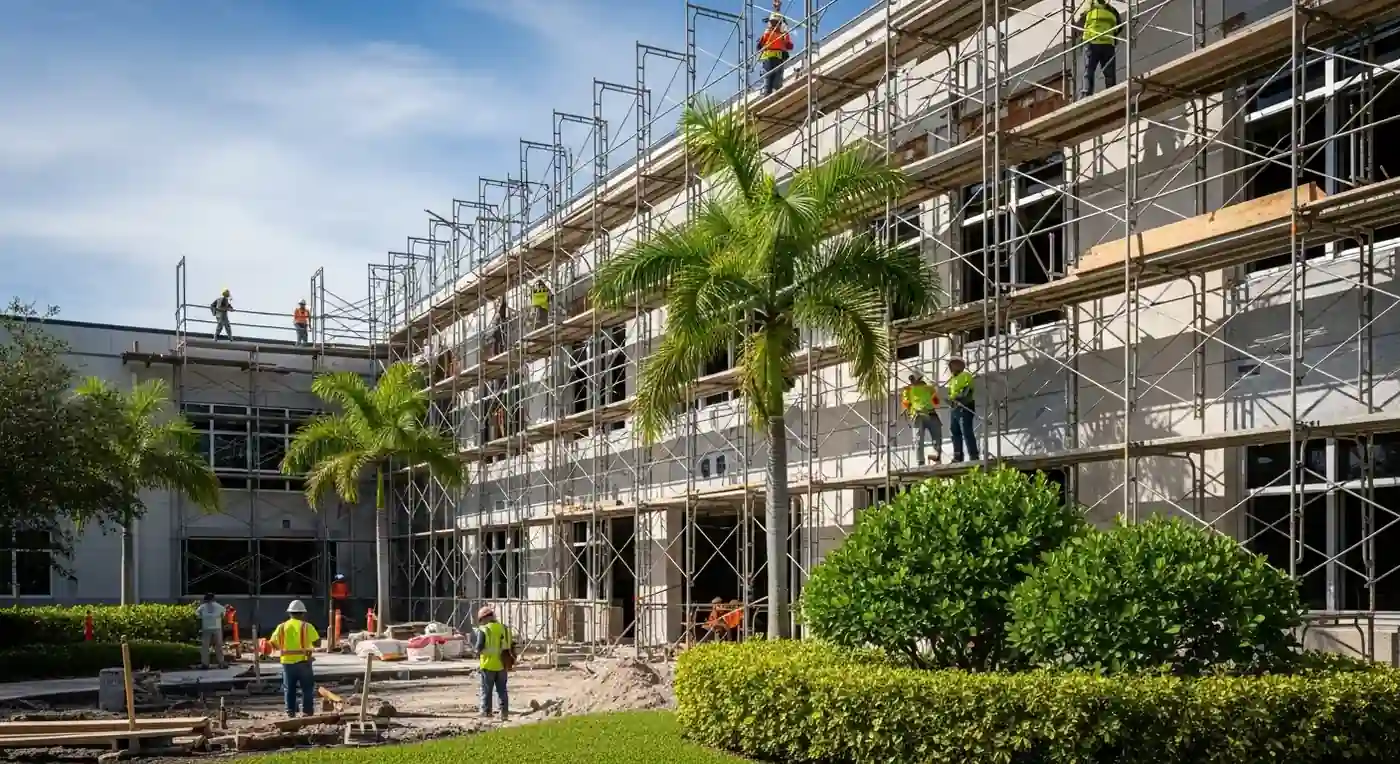
A comprehensive guide to navigating school building renovations in America. Covers SREF 2014 compliance, QSEC pre-qualification in Broward County, occupied campus logistics, hurricane resilience, and the Castaldi formula.
Key Takeaways
- Highly Regulated Environment: School building renovation contractors in America operate within one of the most strictly regulated sectors in construction. In South Florida, adherence to the State Requirements for Educational Facilities 2014 (SREF) and the Florida Building Code is an absolute legal necessity.
- Rigorous Vetting Protocols: Working on public school buildings requires mandatory pre-qualification. The School Board of Broward County utilizes the Qualifications Selection Evaluation Committee (QSEC) to rigorously audit a firm’s financial stability, bonding capacity, and safety records before any bidding can occur.
- Occupied Campus Logistics: Executing renovations within active educational facilities demands specialized, systems-driven project management. Contractors must use precise scheduling, physical barriers, and strict safety oversight to protect students and staff during complex remodels.
- Coastal Resilience is Mandatory: Institutional contractors with hurricane-code expertise are vital in South Florida. Upgrading educational facilities with new roofs, impact upgrades, and structurally reinforced components ensures schools can serve as safe havens during extreme weather events.
- The Value of Specialization: Firms that maintain a 100% exclusive focus on commercial and institutional construction consistently outperform generalists — yielding transparent budget control with no hidden costs, and ensuring taxpayer funds are maximized.
What Are School Building Renovation Contractors in America?
School building renovation contractors in America are specialized commercial construction entities tasked with modernizing, expanding, and physically maintaining the nation’s educational infrastructure. They transform aging school campuses into safe, technologically advanced learning environments, operating at the intersection of commercial construction, municipal compliance, and public safety.
Unlike residential construction companies, these licensed commercial general contractors must possess enterprise-level operational discipline to navigate public procurement laws. The scope of K–12 education construction encompasses everything from site development for new classroom wings to the replacement of air conditioning components within an active middle school. These contractors execute capital programs funded by taxpayers, making financial transparency and strict budget development paramount.
In coastal regions like South Florida, the baseline requirements are significantly elevated. Facilities must be engineered to withstand severe weather, requiring deep expertise in hurricane-resistant building codes and coastal regulations. Ultimately, these professionals do not just repair buildings — they provide comprehensive construction management, feasibility analysis, and value engineering to ensure every dollar spent enhances the educational mission of the school district.
Top 8 School Building Renovation Contractors in Broward County
When sourcing a partner for complex educational facility upgrades, reviewing the landscape of available licensed contractors in South Florida is an essential first step. The following firms operate within Broward County and the broader South Florida institutional construction market.
| # | Firm | Primary Focus | Base | Key Strength |
|---|---|---|---|---|
| 1 | Booster Construction | Commercial and institutional construction (100% exclusive) | Plantation, FL | Systems-driven project management, SREF compliance, and code-compliant occupied-site renovation for schools, HOAs, and municipalities (License CBC1266108) |
| 2 | Critical Path Construction | Commercial general contracting and project management | Miami, FL | Over two decades of experience in general contracting, project management, and owner representation |
| 3 | Simpson’s Home, Inc. | Luxury custom homes and select commercial build-outs | Fort Lauderdale, FL | Office build-outs and select commercial renovation projects alongside residential work |
| 4 | JA Global Services Group | Residential and light commercial construction | South Florida | Varied residential and light commercial construction services across the region |
| 5 | One Stop Construction, Inc. | Residential and commercial remodeling | South Florida | Bathroom and kitchen remodels, custom home building, and comprehensive renovation projects |
| 6 | Glogoz Construction Company | Residential and commercial remodeling | South Florida | Standard residential and commercial remodeling and renovation |
| 7 | Genereve Construction | General contracting | South Florida | Structural and renovation contracting for the local community |
| 8 | Fusco General Contracting | General contracting and renovation | South Florida | Standard contracting and renovation services across the region |
The Regulatory Framework: SREF 2014 and the Florida Building Code
The foundation of any educational construction project in Florida is strict adherence to state-mandated building codes. The State Requirements for Educational Facilities 2014 (SREF) serves as the definitive rulebook for the design, construction, and operation of public schools. Understanding and implementing these codes is what separates elite institutional contractors from standard commercial builders.
SREF requirements are incorporated directly into Section 423 of the Florida Building Code, creating a unified standard for all public educational facilities. These regulations dictate specific parameters for learning environments, including mandatory space requirements per student, safe school design principles, and classroom lighting minimums. A contractor cannot simply build to standard commercial codes — they must interpret and execute the highly specialized nuances of SREF to pass municipal and state inspections.
The Florida Department of Education SREF Guidelines outline the latest addendums and compliance matrices for all public school construction projects statewide. Contractors who build a repeatable internal process around SREF compliance dramatically reduce inspection risk and project schedule exposure for the school district.
The FISH Database and Castaldi Formulas
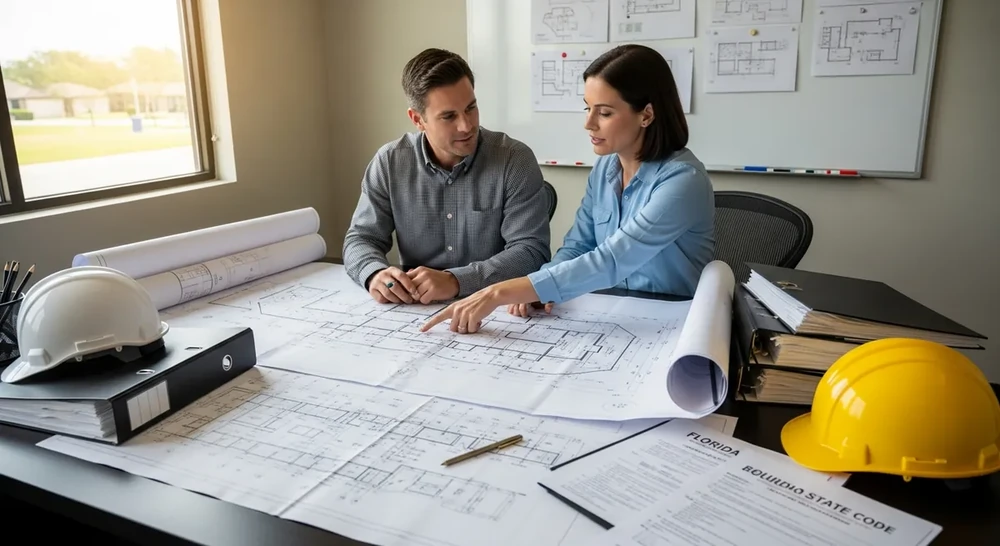
Funding for school renovations is inextricably linked to state-monitored databases. District school boards must annually certify their Florida Inventory of School Houses (FISH) data by April 1st, demonstrating to the Office of Educational Facilities (OEF) that their capacity records are accurate. When a renovation contractor is tasked with demolishing an older structure to make way for new construction, they must assist the district in navigating the Castaldi formula.
The Castaldi analysis is a mathematical formula submitted via OEF Form RCC-BRR to prove that replacing a building is more cost-effective than renovating it. The contractor must provide structural reports, condition assessments, and photographic documentation to support this analysis. If approved, the district can allocate Public Education Capital Outlay (PECO) funds for the building replacement.
This process requires the contractor to function not just as a builder but as a documentation partner to the school district — compiling engineering data, submitting state forms on schedule, and ensuring every project decision is backed by documented analysis that survives public audit.
Life Cycle Cost Guidelines and Energy Efficiency
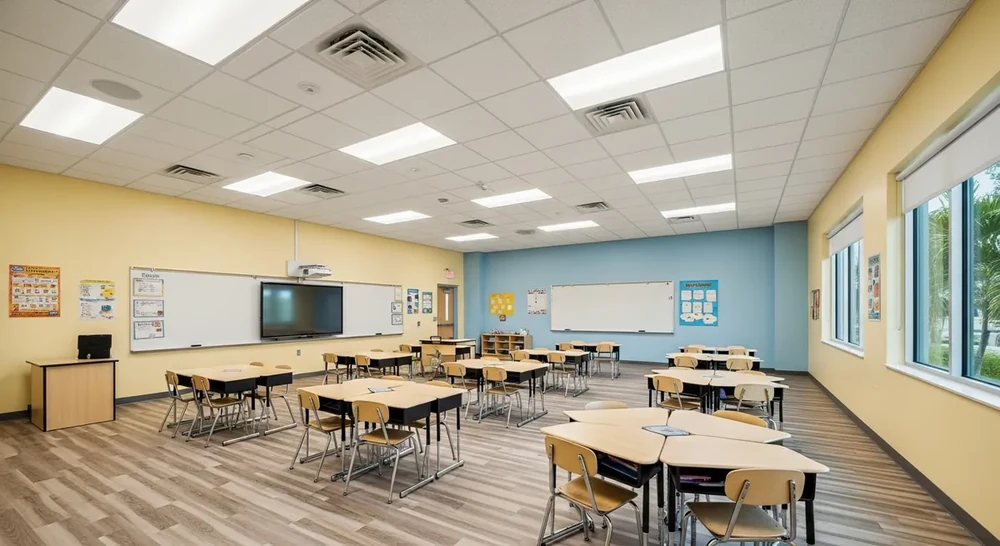
Modern K–12 education construction places enormous emphasis on sustainability and long-term operational costs. SREF mandates the use of Life Cycle Cost Guidelines for materials and buildings, ensuring that components selected for renovation will endure their expected lifespan. Relocatable facilities are evaluated on a 20-year life, while modular noncombustible facilities are evaluated on a 35-year life cycle.
Contractors must implement energy-efficient construction practices, upgrading older infrastructure with advanced air conditioning components, low-flow plumbing fixtures, and LED lighting arrays. This requires the submission of an OEF LCCA-1 (Life Cycle Cost Analysis) during preconstruction to validate material selections against long-term performance benchmarks established by the state.
By focusing on LEAN construction methodologies, top-tier contractors reduce waste during the build and dramatically lower the district’s ongoing maintenance costs. Every dollar saved on operating expenses is a dollar that remains in the classroom budget — making energy-efficient construction a taxpayer priority, not just an environmental one.
The Pre-Qualification Process: Navigating QSEC in Broward County
To even submit a bid or respond to an RFQ or RFP in Broward County, a contractor must be pre-approved by the district. The School Board of Broward County mandates that any entity contracting directly with the board must appear on the Pre-Qualified Contractors List — a process managed by the Qualifications Selection Evaluation Committee (QSEC) that is notoriously rigorous.
The application is a comprehensive 37-page document demanding absolute transparency. Contractors must submit audited financial statements, Dun & Bradstreet credit reports, bonding capacity documentation, and full safety records including their OSHA recordable incident rate and Experience Modification Rate (EMR). An EMR above 1.0 typically disqualifies a firm from consideration on public school work.
This process exists as a mandatory risk-mitigation tool for taxpayers. By ensuring only financially stable, adequately bonded, and safety-conscious contractors appear on the list, the School Board protects both public funds and the students and staff who occupy these facilities daily. For commercial renovation contractors considering entry into the institutional market, QSEC pre-qualification is the critical first hurdle to clear.
Occupied Campus Logistics: Managing Safety During Active School Renovations
Executing commercial renovations within active educational facilities is among the most logistically demanding categories of commercial construction. The fundamental challenge is protecting a student population while running a productive, code-compliant construction operation in the same building or campus.
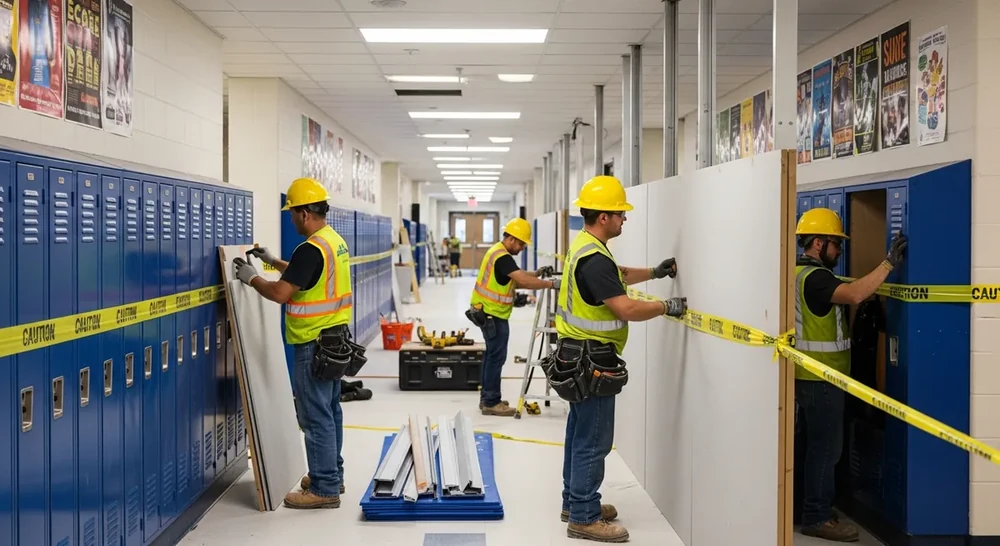
Premier school renovation contractors manage this challenge through meticulous phased execution. This involves erecting secure, dust-proof physical barriers to completely separate construction zones from student populations, utilizing dedicated construction entrances that never cross active student pathways, and strictly scheduling high-risk or high-noise activities — such as crane lifts, concrete demolition, or structural work — during after-school hours, weekends, or holiday breaks.
Continuous on-site safety oversight ensures strict adherence to OSHA standards throughout the project. Site-specific safety plans must be developed before mobilization and updated as project phases shift. A systems-driven approach to project management means every phase of an occupied renovation is pre-planned, documented, and executed with zero tolerance for safety shortfalls — because in a school environment, there is no acceptable margin for error.
Hurricane-Resilient Construction: Schools as Safe Havens in South Florida
In South Florida, school buildings serve a dual function: learning environments during calm weather and designated community safe havens during hurricane events. This dual mandate imposes structural requirements far beyond standard commercial construction, and contractors operating in this market must demonstrate documented competency in Florida’s most demanding building codes.
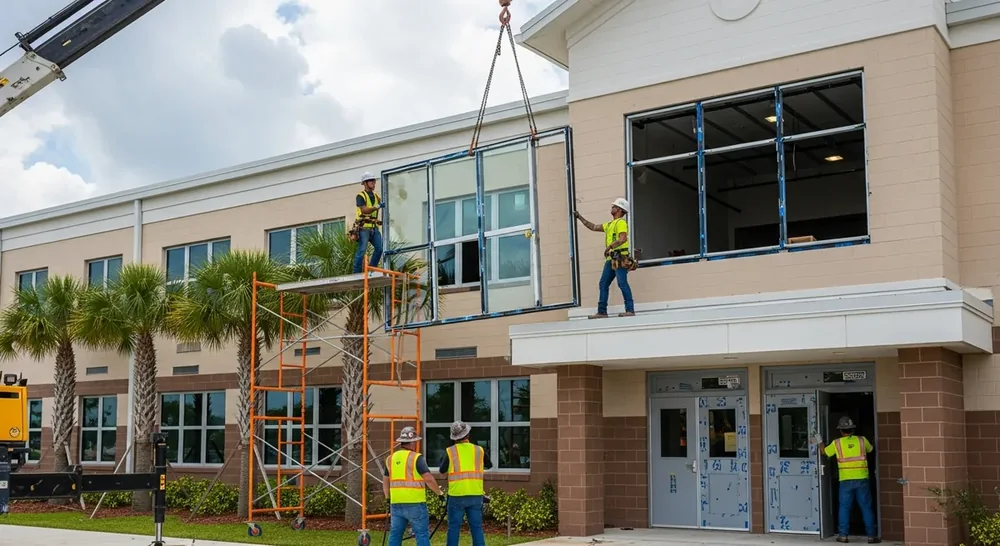
Hurricane-resilient school renovations typically include impact-resistant windows and doors meeting Miami-Dade NOA (Notice of Acceptance) approval, structural roof-to-wall connection reinforcements, flood-barrier upgrades, and comprehensive envelope hardening. In High-Velocity Hurricane Zone (HVHZ) jurisdictions, every product used on the building exterior must carry explicit product approval — verified by the contractor before a single component is purchased.
Upgrading aging school infrastructure to meet current hurricane codes not only protects students during the school day but ensures these facilities remain functional as community resources in the immediate aftermath of a major storm. For South Florida communities, a school that survives a Category 4 hurricane intact is a critical piece of regional resilience infrastructure — not merely a renovation project. See how our structural repair and reinforcement services support hurricane-resilient construction across the region.
Frequently Asked Questions
What is the purpose of the QSEC Pre-Qualified Contractors List in Broward County?
The QSEC list acts as a mandatory risk-mitigation tool for the School Board of Broward County. It ensures only contractors who have proven their financial stability (via audited financial statements and Dun & Bradstreet reports), demonstrated adequate bonding capacity, and maintained excellent safety records are permitted to bid on taxpayer-funded school building renovations.
How do contractors manage safety during occupied school renovations?
Contractors manage safety through meticulous logistical planning and phased execution. This involves erecting secure, dust-proof physical barriers to completely separate construction zones from student populations, using dedicated construction entrances, and scheduling high-risk or high-noise activities — such as crane lifts or concrete demolition — during after-school hours, weekends, or holiday breaks. Continuous on-site oversight ensures strict OSHA compliance throughout.
Why are the State Requirements for Educational Facilities (SREF) so important?
SREF 2014 is the definitive, legally binding regulatory framework that dictates the design, construction, and life-cycle standards for all public educational facilities in Florida. Incorporated directly into the Florida Building Code, it ensures uniformity in safety, spatial requirements, energy efficiency, and structural resilience across all state school districts. Contractors without deep SREF expertise cannot pass state inspections.
What is the Castaldi formula, and when is it used in school construction?
The Castaldi formula is a mathematical analysis required by the Florida Department of Education (submitted via OEF Form RCC-BRR) to determine whether it is more cost-effective to renovate an aging educational facility or demolish and replace it. Contractors assist districts in compiling the structural data and cost estimates required for this analysis, which is necessary to secure state Public Education Capital Outlay (PECO) funding for building replacement.
Why should I choose a contractor with a 100% commercial focus for school renovation?
Contractors that split their workload between residential and commercial projects lack the operational systems, regulatory depth, and institutional procurement experience required for complex school renovations. A firm with an exclusive commercial and institutional focus builds repeatable processes around SREF compliance, QSEC pre-qualification, phased occupied-building scheduling, and transparent budget reporting — directly protecting taxpayer funds and project timelines.
Conclusion: Choosing the Right Partner for School Building Renovations
The execution of school building renovations in America, particularly within the challenging coastal environment of Broward County, is an exceptionally demanding discipline. It requires contractors to navigate a labyrinth of stringent regulations — from the Florida Building Code and SREF 2014 mandates to the exhaustive QSEC pre-qualification protocols required by the Broward County Public Schools.
The successful delivery of these capital programs — whether upgrading a media center at Riverside Elementary, executing capacity additions in Miami-Dade, or reinforcing the hurricane-compliant building envelopes of coastal institutions — relies heavily on the operational maturity of the chosen general contractor. Firms that leverage systems-driven project management, maintain a strict 100% exclusive focus on commercial and institutional work, and prioritize transparent budget control are uniquely positioned to mitigate risk for institutional owners.
By demanding rigorous safety oversight, embracing Virtual Design and Construction (VDC), and implementing LEAN sustainability practices, premier school building renovation contractors ensure that taxpayer funds are optimized and educational infrastructure is transformed into secure, modern learning environments that support students for decades to come. To discuss how Booster Construction can support your next educational facility project, contact our team or browse our full range of institutional and commercial construction services.

About the Author
Matan DayanBooster Construction
Matan Dayan contributes practical articles for Booster Construction on commercial construction planning, renovations, permitting, building safety, and project delivery across South Florida.