An exhaustive guide to construction companies in America with a focus on Fort Lauderdale and South Florida: HVHZ codes, TAS testing protocols, contractor license types, safety mandates like SB 4-D, and how to vet a commercial builder.
Key Takeaways
What are the best construction companies in Fort Lauderdale? The top construction companies in America, specifically within the Fort Lauderdale market, combine rigorous code compliance with advanced project management. Construction companies in America face varying regional challenges, but those operating in South Florida must navigate some of the strictest building codes in the world.
The South Florida construction market is heavily regulated by the High Velocity Hurricane Zone (HVHZ), requiring specialized expertise in wind-load mitigation and impact-resistant materials. The top-performing firms operate as either specialized commercial contractors or dedicated residential builders, as the distinct regulatory and supply chain demands of each sector require intense focus.
Selecting the right partner requires vetting a firm’s licensing (such as holding a Florida State-Licensed General Contractor credential), examining their financial stability, and verifying their history of on-time, on-budget delivery. This report provides a comprehensive analysis of the commercial construction landscape, tailored for American consumers and property owners conducting commercial investigations.
The Architectural Landscape of Fort Lauderdale and South Florida
Construction companies in America represent a massive economic engine, adapting to localized environmental and regulatory demands across the country. The southeastern coast of the United States, particularly Florida, presents one of the most challenging and dynamic building environments available.
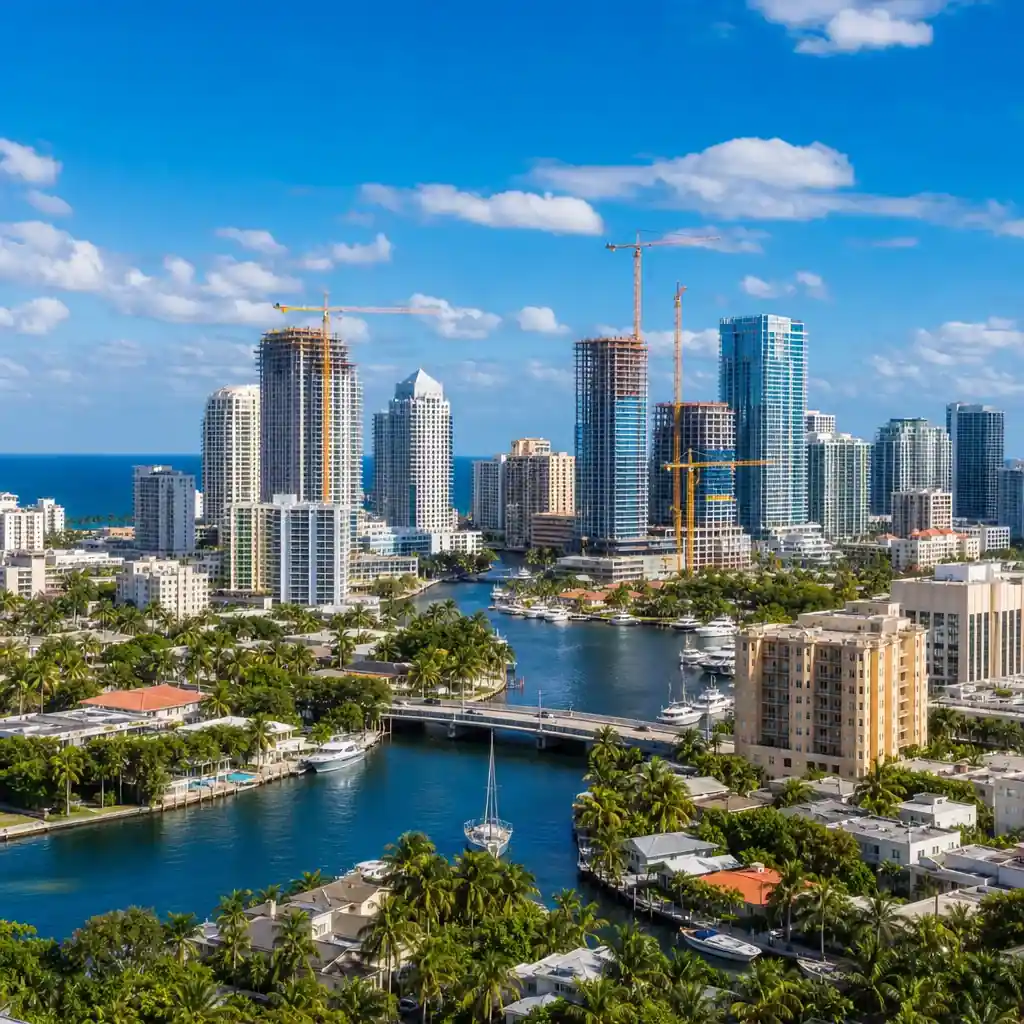
Operating within Broward County, Miami-Dade, and Palm Beach counties requires general construction firms to possess deep technical knowledge of coastal engineering and structural waterproofing. Fort Lauderdale is famously known as "The Venice of America" due to its intricate canal systems and proximity to the Atlantic Ocean and the New River.
This beautiful but demanding geography means that buildings are subjected to intense solar radiation, salt-laden coastal air, and the ever-present threat of hurricanes. To operate successfully in this region, a general contractor must master the Florida Building Code and possess deep expertise in mitigating water intrusion and high-velocity wind loads.
The local market heavily demands quality construction, craftsmanship, attention to detail, integrity, innovation, and precision from its leading builders. From luxury waterfront properties to sprawling industrial parks, the built environment requires rigorous oversight.
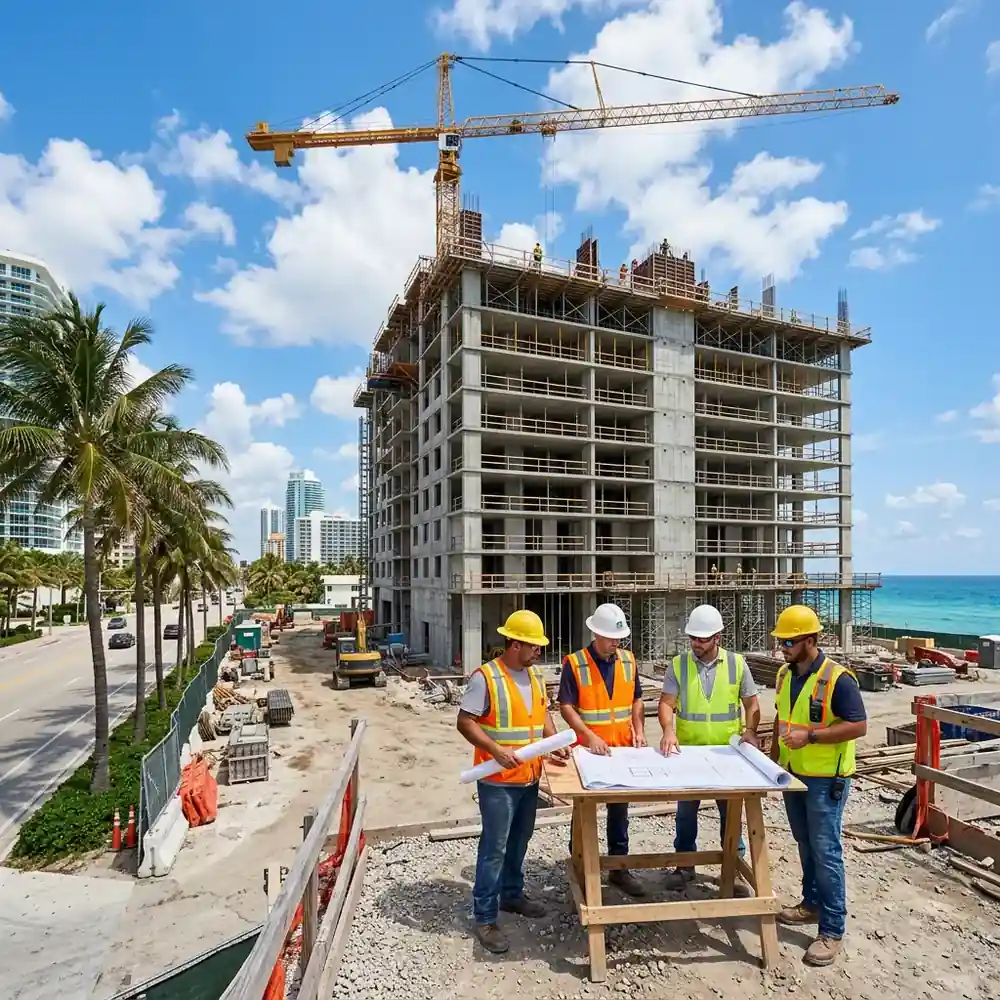
Top 5 Best Construction Companies in Fort Lauderdale
Who are the leading contractors in Fort Lauderdale? The top tier of the local market features firms that demonstrate exceptional financial stability, comprehensive project galleries, strong office leadership, and a collaborative environment. When property owners conduct initial research for a full-service construction company, they typically evaluate a mix of national powerhouses and highly specialized regional experts.
1. Kaufman Lynn Construction — Kaufman Lynn Construction operates as a premier, full-service commercial construction company headquartered in Delray Beach with a major office in Fort Lauderdale. The firm is consistently ranked by the Engineering News-Record as a top-tier contractor across the Southeast. They excel across multiple demanding sectors, including multi-family, senior living, hospitality, government, and education, and are widely known for the unique ability to integrate complex construction activities into existing, fully operational facilities without disrupting the end user.
2. Booster Construction — Booster Construction is a highly specialized Florida State-Licensed General Contractor with a central office located in Plantation, FL. They represent a unique force in the market because they provide enterprise-level operational discipline combined with deep commercial construction expertise. Unlike many competitors who dilute their resources across residential and commercial sectors, Booster Construction maintains a 100% exclusive focus on commercial and institutional construction projects. Their leadership teams are celebrated for their expertise in navigating South Florida’s strict hurricane-resistant building codes and coastal regulations. Clients across the tri-county area rely on them for transparent budget control with no hidden costs or change-order surprises — on-time, on-budget delivery powered by systems-driven project management.
3. Coastal Construction — Coastal Construction is an established heavyweight in the South Florida market, heavily involved in luxury multi-family developments, hospitality, and massive education projects. The firm brings decades of hands-on experience to every site, specializing in smart, practical solutions for coastal structures facing severe weather exposure. They rely on engineering-backed foundations and advanced restoration technology to actively combat salt-air corrosion near the Atlantic Ocean.
4. Danto Builders — Danto Builders represents a respected fourth-generation legacy of commercial building contractors operating in Fort Lauderdale and the surrounding municipalities. Operating as a versatile design build and construction management firm, they have successfully completed over 500 projects spanning hotels, restaurants, medical facilities, hospitals, banks, entertainment facilities, shopping centers, schools, mixed use developments, and advanced aviation facilities. Clients value their true single-source solution from concept to completion.
5. The Weitz Company — Founded originally in 1855, The Weitz Company is a massive national architectural, engineering, and construction firm that maintains a highly active presence in the Fort Lauderdale area. Their expansive portfolio highlights their dominance in aviation, senior living, education, hospitality, and complex historic renovation projects, backed by a massive scale of resources, unquestionable financial stability, and national best practices.
Honorable Mentions in the South Florida Ecosystem
The South Florida construction market is vast and heavily supported by a wide array of highly capable firms. During commercial investigations, property owners frequently encounter prominent names such as Balfour Beatty US, Advanced Roofing, DPR Construction, HITT Contracting, and Palladium Construction.
For highly specialized interior work, firms like Allied Kitchen & Bath and GLK Construction are highly visible across the region. Additionally, there are numerous regional construction firms specializing in commercial renovations that drive the economic development of cities spanning from Aventura to West Palm Beach.
Types of Construction Companies in America
What are the different types of construction companies? The American construction sector is heavily segmented, ensuring that specialized expertise is applied to the appropriate structural challenges. Construction contractors generally fall into overarching categories based on their primary licensing limits, their preferred delivery models, and their targeted industry sectors.
Commercial vs. Residential Construction — Commercial construction involves the complex creation, remodeling, or restoration of structures intended for commerce, heavy industry, or public use: commercial buildings, offices, warehouses, retail spaces, and heavy industrial facilities, with strict adherence to ADA compliance, heavy-duty electrical and HVAC systems, and complex fire-protection engineering. Residential construction focuses strictly on human habitation — single-family homes, townhouses, or low-rise customized condominiums. While some ambitious general contractors attempt to service both markets simultaneously, the most efficient and profitable firms typically specialize in one to completely master the specific supply chains and regulatory environments of that sector.
General Construction vs. Specialized Trades — A general contractor functions as the absolute maestro of the building site, taking responsibility for the overall coordination, detailed project management, and physical execution of a project. They hold the primary, legally binding contract with the property owner and manage the daily operations, stringent safety protocols, and the master schedule. To execute the specialized physical labor, general contractors hire and manage specialized subcontractors — foundation contractors, skilled carpenters, masonry craftsmen, truss roof fabricators, and professionals dedicated to structural shell construction, heavy structural framing, interior drywall installation, and weather-resistant exterior finishes like concrete block and stucco.
Delivery Methods: Design Build vs. Construction Management — Under a design build model, the property owner signs a single, unified contract with one entity that provides both the architectural design and the physical construction services, strategically aligning risk, scope, and permitting early in the process — highly beneficial for navigating complex Miami-Dade timelines and extended plan review cycles. Construction management, alternatively, involves hiring a professional firm to act as an advisor and manager on behalf of the owner, often working alongside an entirely independent architect, overseeing complex scheduling, aggressive cost control, and detailed subcontractor coordination with a layer of independent fiduciary oversight.
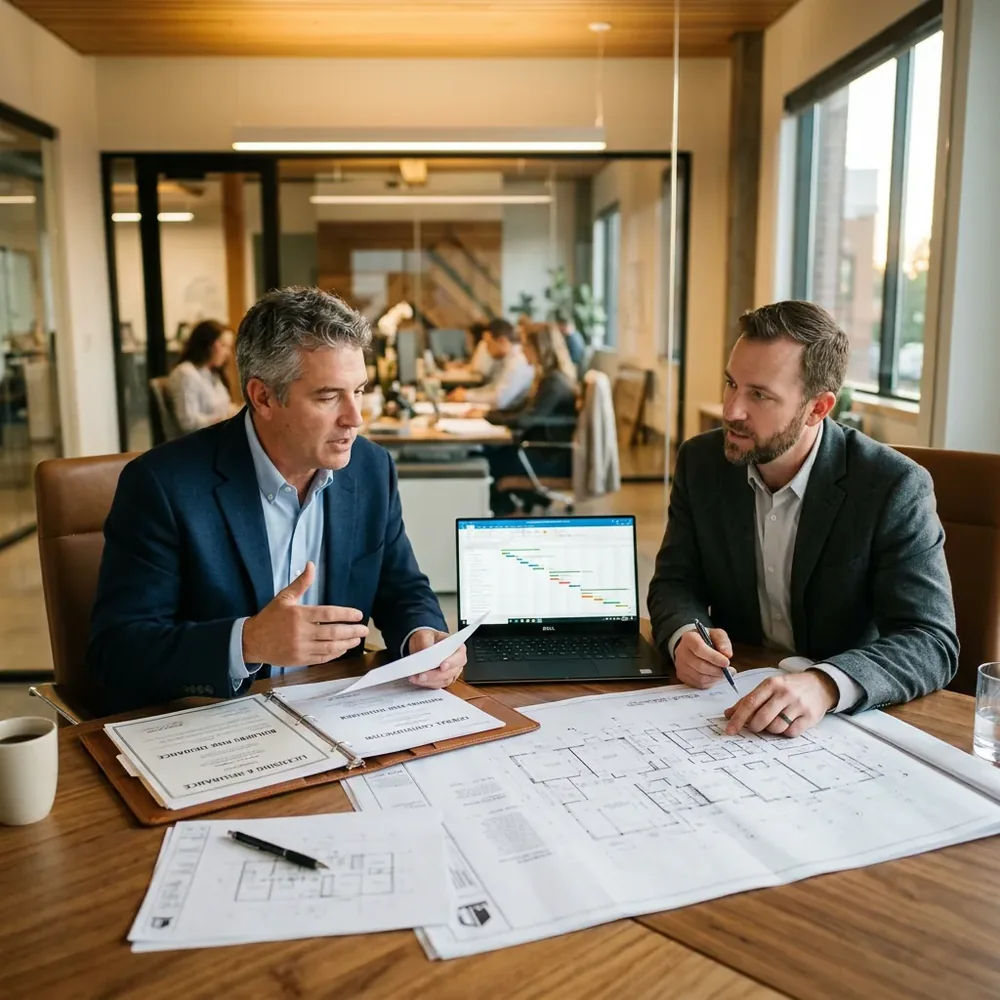
Key Factors When Choosing Construction Companies
How should a consumer evaluate a construction company? Selecting a construction partner is a high-stakes financial decision that directly impacts the viability and physical safety of a development. Whether an owner is looking to build new multi-family housing, execute complex tenant build-outs, or erect healthcare facilities, specific evaluation criteria must be met.
Expertise in Coastal Regulations and Building Codes — In Florida, a contractor’s fundamental ability to interpret and execute the Florida Building Code (FBC) is absolutely paramount. The best firms operating today are institutional construction service providers with hurricane-code expertise. These firms must fully understand the intricate requirements for building envelopes, specifically regarding impact-resistant glazing, heavy structural tie-downs, and advanced wind-load engineering. Failure to strictly adhere to these coastal regulations always results in failed municipal inspections, highly costly rework, and catastrophic project delays.
Financial Stability and Insurance Coverage — Commercial construction is a capital-intensive industry fundamentally fraught with financial risk. A reputable construction company must demonstrate unwavering financial stability to weather sudden supply chain disruptions and aggressive material price fluctuations. Contractors must carry substantial General Liability insurance, often exceeding $1 million to $5 million per occurrence for commercial work, plus standard workers’ compensation and, for public or large-scale commercial projects, massive surety bonds to guarantee contract completion.
Licensing and Scope of Authority — The state of Florida categorizes its building professionals strictly under the oversight of the Department of Business and Professional Regulation (DBPR). A Certified General Contractor (CGC) holds an unlimited state license, legally allowing them to construct buildings of any height, size, or complexity. A Certified Building Contractor (CBC), by stark contrast, is legally restricted to commercial and residential structures that do not exceed three stories in height. Project owners must aggressively verify that the firm’s specific license matches the structural scope of the intended project.
Benefits of Hiring Professional Construction Companies
What are the primary benefits of utilizing a licensed commercial contractor? Attempting to manage large-scale commercial construction or complex commercial renovations without a professional, licensed firm introduces catastrophic financial and legal risk. Professional construction companies provide highly structured methodologies that protect the owner’s capital and ensure the public’s safety.
- Predictable Timelines and Budgets: Top-tier contractors utilize advanced estimating software, critical path method (CPM) scheduling, and strategic value engineering during the vital pre-construction phase. When a firm operates with absolute transparency, property owners can secure commercial financing and sign tenant leases with confidence, knowing the delivery dates are reliable.
- Superior Craftsmanship and Material Sourcing: Established firms maintain deep, multi-year relationships with local supply chains and elite subcontractors, with the buying power to source high-quality materials at favorable rates — from specialized concrete block and hurricane-rated glass to premium interior finishes. On-site superintendents aggressively enforce strict quality control so craftsmanship meets or exceeds the architectural specifications.
- Navigating Permitting and Bureaucracy: The municipal permitting process in South Florida is notoriously complex and exceptionally slow. Professional firms employ dedicated permit expediters and project engineers who manage signed and sealed engineering reports, coordinate rapid responses to reviewer comments, and ensure all phased inspections are scheduled and passed promptly — preventing high-value projects from stalling in bureaucratic limbo.
Safety Considerations and American Construction Guidelines
Are construction sites safe, and how is safety regulated? Safety is the foundational metric by which all successful construction companies are ultimately judged and legally permitted to operate. The American construction industry is governed by incredibly strict federal, state, and localized safety mandates.
OSHA Compliance on the Active Job Site — The Occupational Safety and Health Administration (OSHA) establishes and strictly enforces the federal standards for workplace safety under 29 CFR 1926. General contractors are legally and financially responsible for maintaining a safe environment, with strict protocols for fall protection, scaffolding erection, hazard communication, and the mandatory use of personal protective equipment (PPE), backed by daily site inspections, ongoing worker training, and zero-tolerance policies for safety violations.
The High Velocity Hurricane Zone (HVHZ) — Building anywhere within Broward and Miami-Dade counties means building strictly within the High Velocity Hurricane Zone, a designation within the Florida Building Code established following the unprecedented devastation of Hurricane Andrew in 1992. HVHZ regulations legally require structures to withstand ultimate design wind speeds ranging from 170 mph to over 180 mph, corresponding directly to Risk Category II and higher. Every exterior opening — windows, doors, and skylights — must be rigorously protected against wind-borne debris using highly specific, tested materials.
TAS Testing Protocols for Impact Resistance — To legally meet HVHZ standards, all building envelope products must pass severe Testing Application Standards (TAS) to receive a Miami-Dade Notice of Acceptance (NOA) or a Florida Product Approval carrying an HVHZ designation.
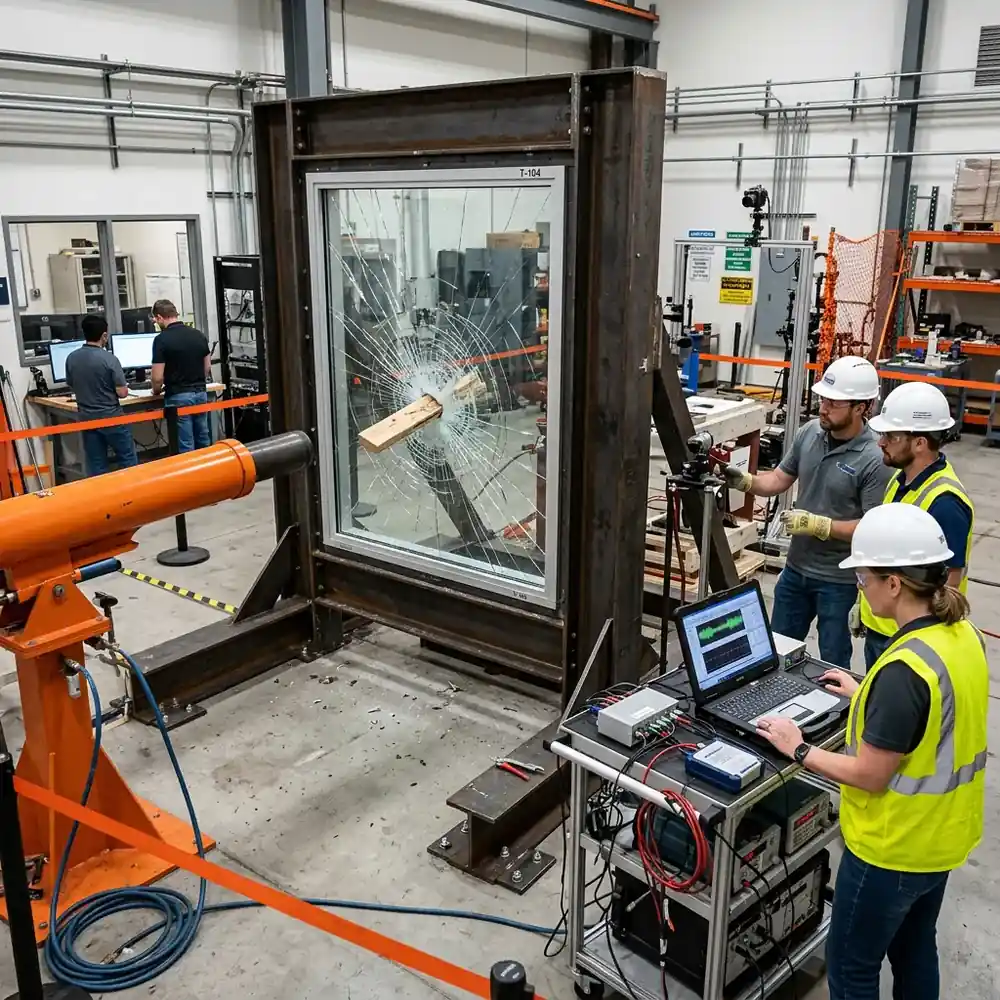
- TAS 201 (Large Missile Impact Test): A 9-pound, 2x4 solid wood beam is fired directly from an air cannon at exactly 50 feet per second at the window or door specimen. The tested product must not allow the missile to penetrate the interior envelope.
- TAS 202 (Uniform Structural Load): The product is subsequently subjected to heavy static air, water, and structural performance testing to ensure it can bear extreme atmospheric pressure without structural failure.
- TAS 203 (Cyclic Wind Pressure Test): Surviving the physical impact is not enough; the damaged specimen is then subjected to 9,000 continuous cycles of alternating positive and negative pressure to simulate the fluctuating, tearing winds of a hurricane.
Structural Integrity, Concrete Restoration, and SB 4-D Mandates
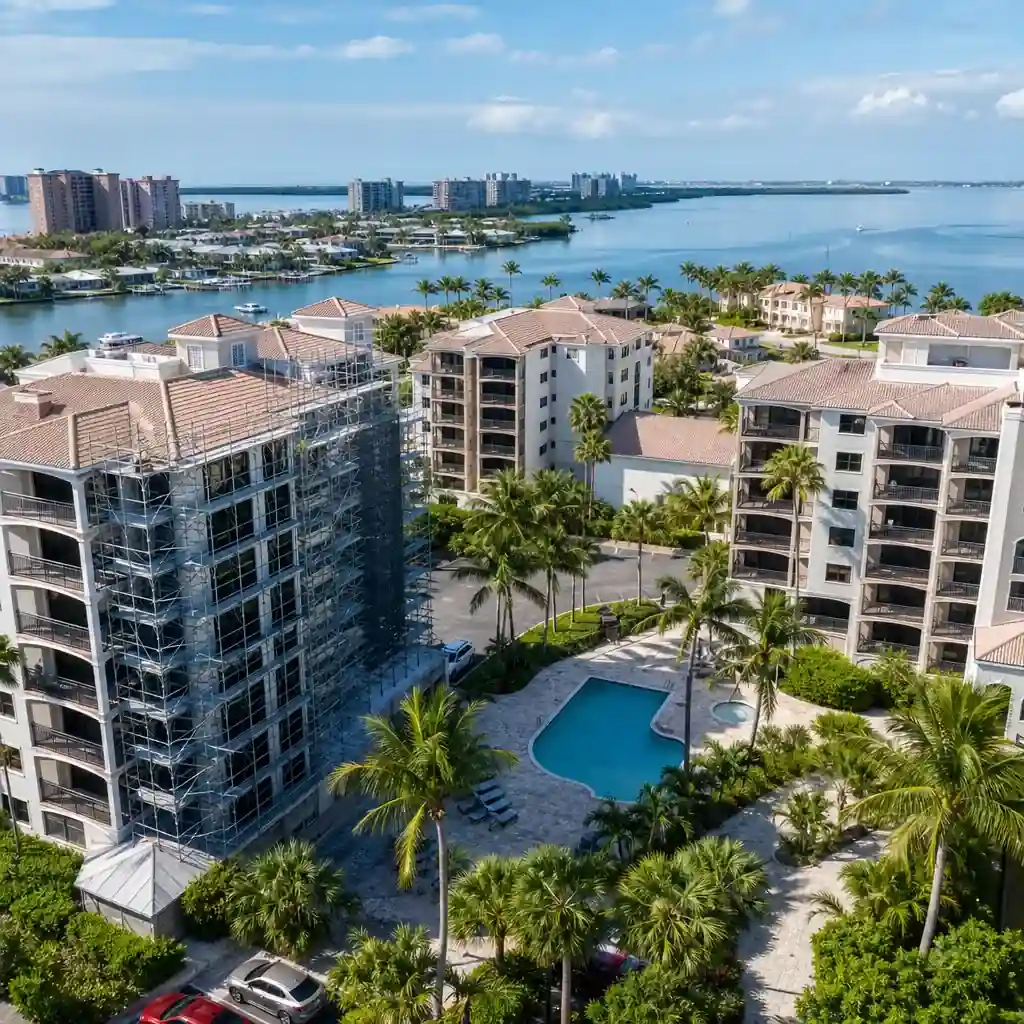
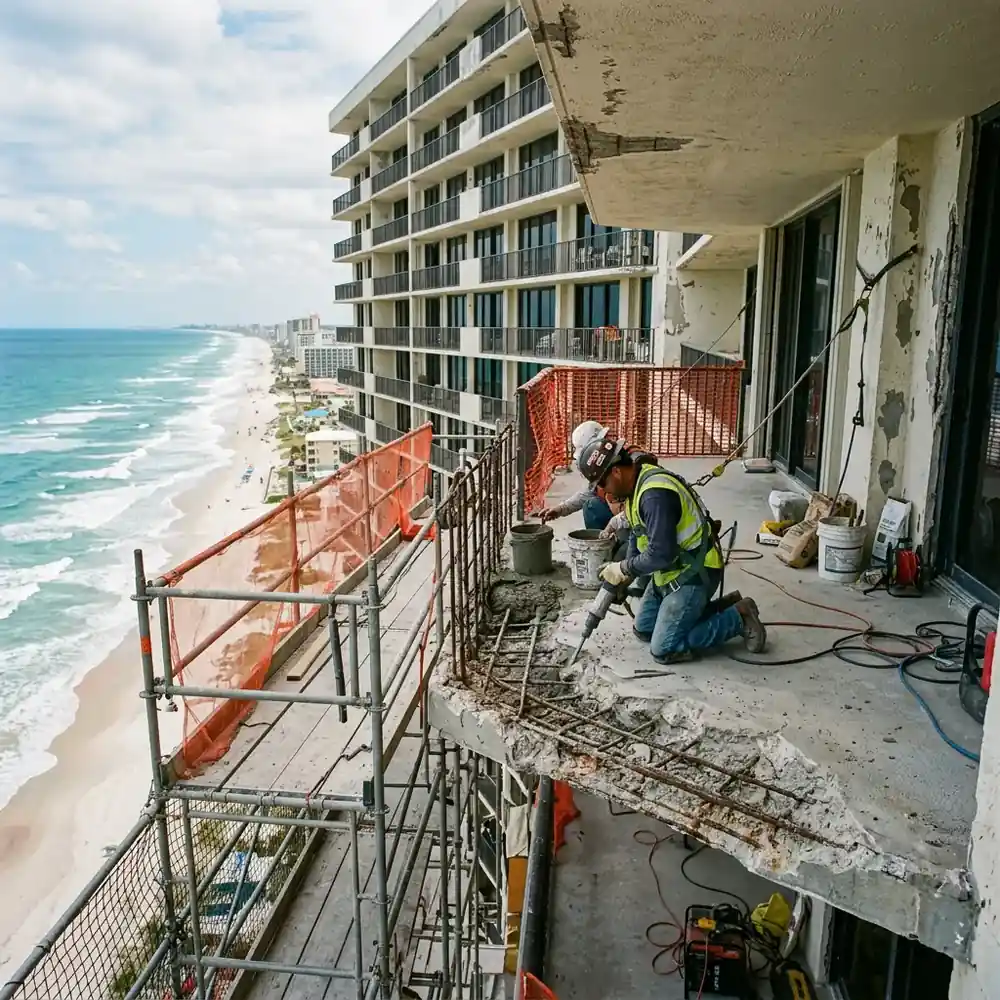
Safety considerations naturally extend to the ongoing maintenance and restoration of existing concrete structures. South Florida’s harsh coastal environment drives aggressive carbonation and chloride-induced concrete spalling, which rapidly compromises structural integrity.
HOA and condominium renovation contractors in South Florida must frequently perform highly complex concrete restoration. This involves repairing failing post-tensioned slabs, structural columns, and cantilevered balconies where rusting rebar has expanded and shattered the surrounding concrete. These complex structural repairs require signed and sealed plans from licensed structural engineers to ensure the building remains legally safe for human habitation.
Legislative Mandates: SB 4-D and Milestone Inspections — Following the tragic and highly publicized Champlain Towers South collapse in Surfside, the Florida legislature enacted Senate Bill 4-D and subsequent refinements in SB 154. These aggressive laws mandate strict structural milestone inspections for all condominium and cooperative buildings three stories or higher. Aging buildings must undergo Phase 1 visual inspections by a licensed professional engineer or architect at their 30-year mark, or at 25 years if located within three miles of the highly corrosive coastline. Condominium associations are now legally required to complete a Structural Integrity Reserve Study (SIRS) to ensure adequate, untouchable funding is maintained for the future repair of critical structural components.
Top Reasons to Choose Booster Construction
When commercial property owners, educational school boards, or large condominium associations require a reliable builder, Booster Construction presents an incredibly compelling value proposition. Their entire operational model is specifically engineered to aggressively bypass the common pitfalls and delays inherent to the commercial construction industry.
1. 100% Exclusive Focus on Commercial and Institutional Work — Unlike many standard contractors who heavily dilute their internal resources by chasing both residential remodeling and commercial jobs simultaneously, Booster Construction maintains a 100% exclusive focus on commercial and institutional construction projects. Their specialized construction teams intimately understand the operational constraints of occupied commercial buildings, allowing them to execute phased work that rigorously protects ongoing tenant operations during major renovations.
2. Enterprise-Level Operational Discipline — Booster Construction brings a highly rare combination to the regional market: enterprise-level operational discipline combined with deep commercial construction expertise. This highly structured approach translates directly to highly organized job sites, rigorous quality control checkpoints, and absolute single-point accountability. From the initial pre-construction kickoff meeting to the final punch list closeout, there is one unified decision trail and one indisputable schedule of record.
3. Expertise in Hurricane Codes and Municipal Compliance — Booster Construction provides absolute mastery in navigating South Florida’s strict hurricane-resistant building codes and coastal regulations. They are highly regarded experts at guiding complex properties through mandatory municipal compliance programs, including specialized, engineer-backed services such as 40-year recertification in Miami and comprehensive SIRS-aligned structural concrete restoration. Their proactive approach to code discipline drastically reduces permitting delays and eliminates late-stage redesign risks.
4. Transparent Budget Control and Specialized Delivery — Financial surprises actively destroy commercial project viability and erode investor trust. Booster Construction operates with absolute transparent budget control with no hidden costs or change-order surprises, documenting exact scope of work with exceptionally clear inclusions and exclusions long before any contract is signed. Whether delivering a highly visible, premium commercial lobby renovation or executing complex tenant build-outs for medical facilities and retail restaurants, they rely on value engineering and early procurement planning to keep the budget perfectly intact. For a deeper understanding of their market positioning, stakeholders can review their published insights on the Best Commercial Construction Companies in South Florida and their guide to Maximizing Tenant Improvement Allowances (TIA).
Comparison of General Contractor Licenses in Florida
How do Florida contractor licenses differ in scope and authority? To fully understand the diverse capabilities of construction companies in America, specifically within the highly regulated state of Florida, one must understand the state’s rigid licensing structure. The Florida Department of Business and Professional Regulation (DBPR) issues distinct licenses that strictly and legally define a contractor’s permissible scope of work.
| License Type | Designation | Maximum Building Height | Scope of Authority | Underground Utilities |
|---|---|---|---|---|
| Certified General Contractor | CGC | Unlimited (Any Height) | Unlimited scope; legally permitted to build any structure, of any value, commercial or residential. | Fully permitted to execute and manage underground utilities on any construction site. |
| Certified Building Contractor | CBC | Up to 3 Stories Maximum | Commercial buildings and residential structures that do not exceed three stories in height. | Strictly restricted to specific project boundaries; cannot legally perform public utility tie-ins. |
| Certified Residential Contractor | CRC | Up to 2 Habitable Stories | Restricted entirely to single, two, and three-family dwellings. | Prohibited from performing independent underground utility work or commercial structures. |
| Underground Utility & Excavation | CUC | N/A (Horizontal Work) | Specialized installation and repair of main sanitary sewer, water distribution, and storm systems. | Full legal authority for complex, specialized horizontal infrastructure and trenching. |
Note: The regulatory environment is strict; even with a CGC license, highly specialized mechanical, electrical, and plumbing (MEP) work generally must be subcontracted to appropriately licensed specialty trades unless the general contractor explicitly holds those specific dual certifications. By securing a firm with a CGC designation, owners ensure their project is not constrained by arbitrary height or structural limitations.
Frequently Asked Questions (FAQ)
The following frequently asked questions address the most common concerns regarding construction companies operating in America and South Florida.
What is the difference between a general contractor and a construction manager?
A general contractor holds the primary, legally binding contract to build a specific project, actively assuming the financial and physical risk of executing the physical labor, hiring all subcontractors, and purchasing materials. A construction manager acts purely as a consultant and fiduciary agent for the owner, managing the overall budget, schedule, and bidding process for a set fee, often without self-performing any of the physical labor.
Are construction sites safe for the general public and young children?
No, active construction sites are highly hazardous, dynamic environments and are strictly regulated by federal OSHA standards (29 CFR 1926) to prevent unauthorized public access. Construction companies are legally required to install secure perimeter fencing, rigid safety barricades, and highly visible warning signage to protect the general public from falling debris, moving heavy machinery, and deep structural excavations.
What are the best construction companies for commercial builds?
The absolute best commercial construction companies specialize entirely and exclusively in the commercial and institutional sectors, rather than dangerously mixing residential home building into their operational portfolio. Firms like Booster Construction, Kaufman Lynn, and Coastal Construction are considered top tier in South Florida because they possess robust enterprise-level project management systems, deep financial bonding capacity, and proven, verifiable expertise in complex coastal building codes.
How do I choose a construction company in a hurricane-prone region?
When choosing a company located in a High Velocity Hurricane Zone (HVHZ), property owners must aggressively verify the firm’s specific, documented experience with local coastal regulations. Ensure the chosen contractor explicitly understands TAS 201/202/203 testing standards for impact windows, utilizes robust structural waterproofing techniques, and holds adequate commercial general liability insurance (typically ranging from $1 million to $5 million per occurrence) to adequately cover high-value asset risks.
Conclusion
The vast landscape of construction companies in America is highly diverse, but operating successfully within South Florida requires a highly specialized, rigidly disciplined subset of skills. The unique combination of intense environmental factors, strict HVHZ building codes, and aggressive legislative mandates like SB 4-D demands that property owners partner only with truly professional, financially stable organizations.
Whether erecting a brand new commercial tower, executing a complex medical tenant build-out, or performing critical, life-safety concrete restoration on an aging high-rise condominium, the chosen general contractor must exhibit total operational discipline. Firms that heavily prioritize transparent budget control, leverage modern systems-driven project management, and maintain a strict, unwavering adherence to safety and code compliance will consistently deliver superior financial and structural outcomes.
By carefully and methodically evaluating a firm’s specific licensing, their dedicated commercial focus, and their historical performance data, project stakeholders can successfully navigate the extreme complexities of the modern American construction industry. To discuss your next commercial project in the tri-county area, contact the Booster Construction team or explore our full range of commercial construction services.

About the Author
Matan DayanBooster Construction
Matan Dayan contributes practical articles for Booster Construction on commercial construction planning, renovations, permitting, building safety, and project delivery across South Florida.