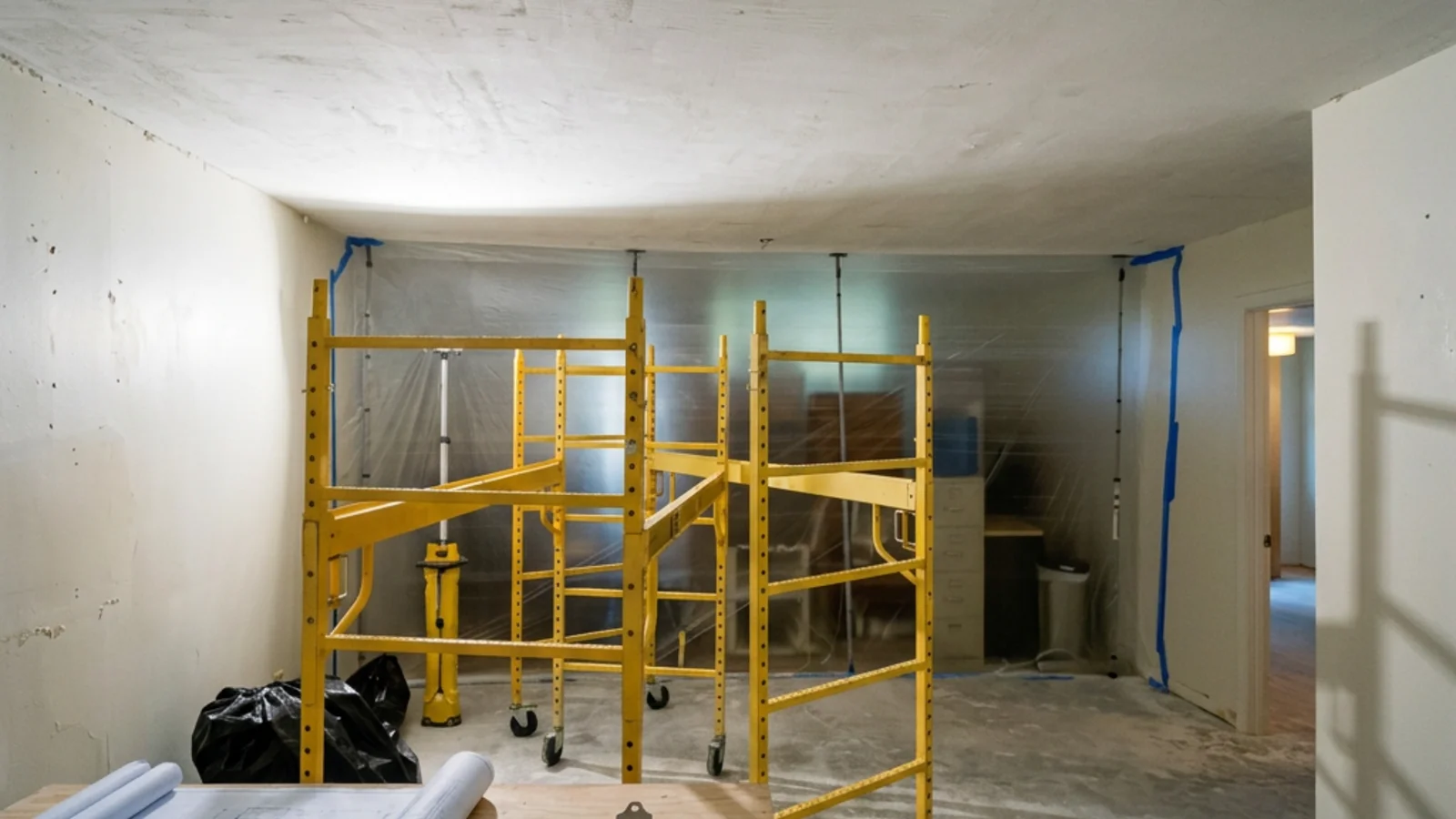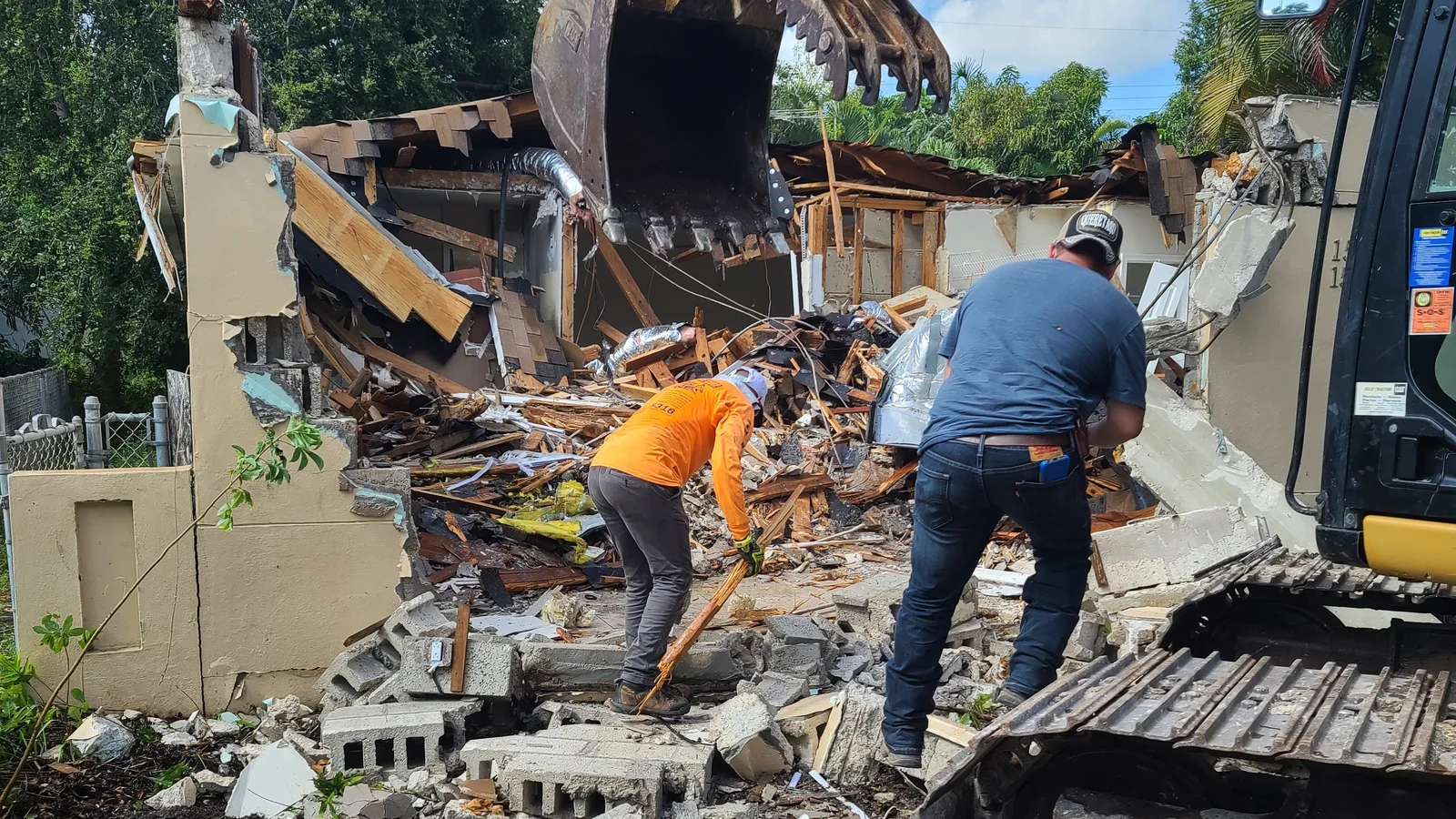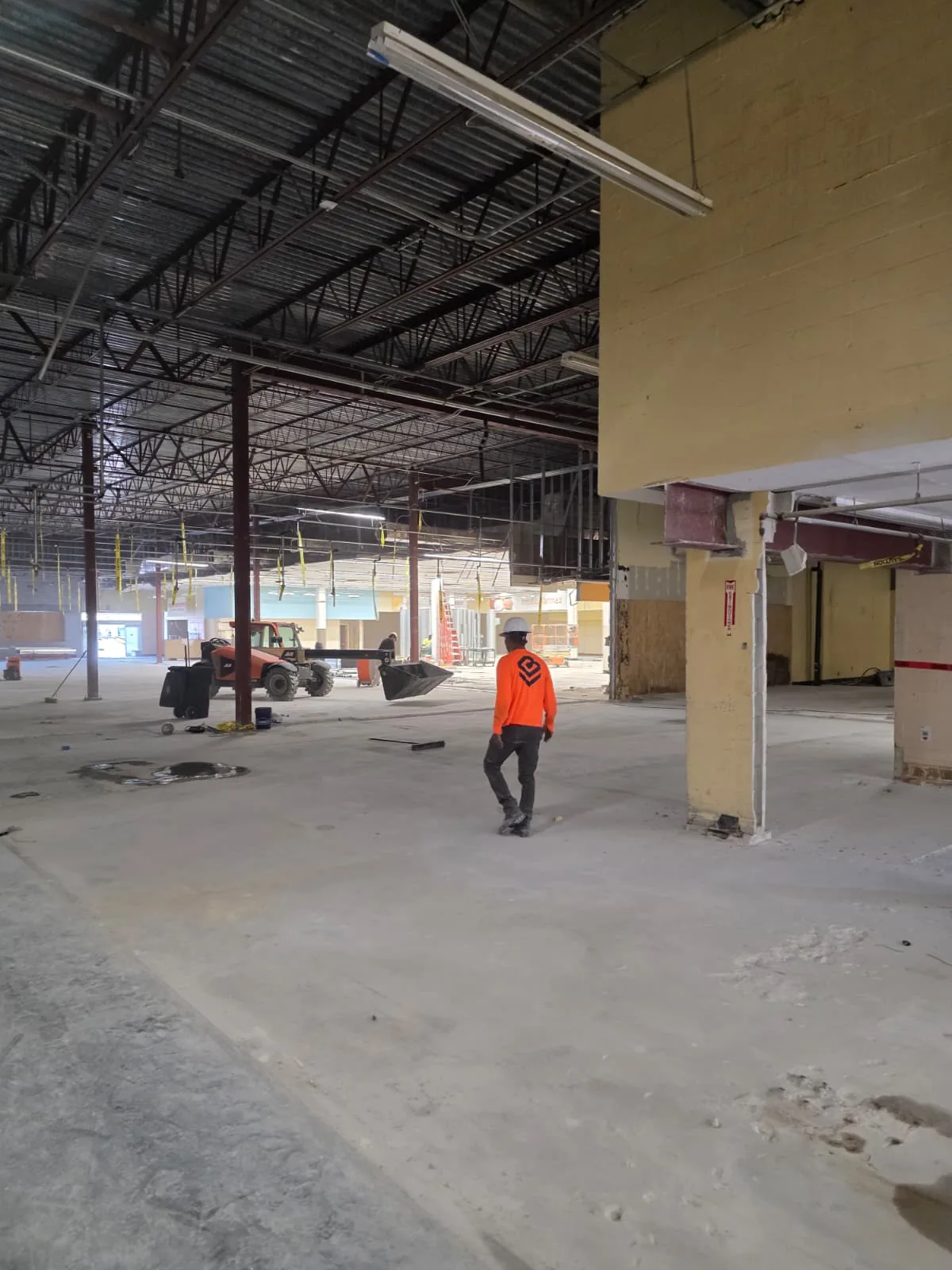
Before gutting a commercial space, owners need to establish whether asbestos affects the removal plan. Separate the inspection obligation from notification rules, then coordinate findings, specialists, permits, and the construction schedule.
Separate Inspection From Notification Before Work Begins
Before gutting a commercial space, owners need to establish whether asbestos affects the removal plan. Determining what asbestos survey and notification is required before demolishing starts with separating the inspection obligation from the notification rules.
For covered institutional, commercial, and industrial facilities, the federal asbestos NESHAP—National Emission Standards for Hazardous Air Pollutants—requires a thorough inspection of the affected facility or portion before demolition or renovation. Notification applies to covered demolitions, including those with no asbestos, and to renovations meeting the applicable regulated-material thresholds.
This guide provides general planning information, not a project-specific environmental or legal determination. Confirm current requirements with qualified asbestos professionals and the responsible Florida DEP district or delegated local program.
Why Asbestos Planning Comes Before Demolition
Demolition and full interior gutting can disturb asbestos-containing material (ACM), releasing airborne fibers that present serious health risks. Exposure is associated with asbestosis, lung cancer, and mesothelioma. A survey, an abatement plan, and an agency notification serve different purposes; completing one does not satisfy the others.
Asbestos review belongs in the schedule before bids, permit assumptions, and mobilization dates become fixed. Give bidders clear survey documents and assigned responsibilities so findings can be reflected in pricing, protection, and sequencing.
Discoveries after work begins can lead to stoppages, additional controls, and schedule changes affecting the demolition contractor, general contractor, and following trades. Connect hazardous-material review to what comes out, what stays, and how rebuilding proceeds to protect workers, occupants, and tenants.
The Risk Is Material Disturbance, Not Building Age Alone
Older commercial buildings often contain asbestos, but age does not replace the inspection duty. Florida DEP explains that the NESHAP inspection requirement has no building-age exemption. Suspect materials may remain above ceilings, inside mechanical systems, beneath flooring, or behind newer finishes.
The inspection must address the affected facility or portion, including ancillary structures within the project scope. Inaccessible areas need a documented strategy before crews disturb them.
Do not assume concealed material is asbestos-free. Qualified professionals and the responsible agency should determine how inaccessible or presumed material is handled. Emergency guidance can allow conservative assumptions in specific circumstances, but that is not a general substitute for planning and inspection.
Know the Difference Between a Survey, Abatement, and Notification
An asbestos survey identifies suspect materials, documents locations and condition, and uses representative bulk samples where appropriate. Laboratory analysis, such as polarized light microscopy or another applicable method, informs the material determination.
Abatement involves controlled removal, enclosure, encapsulation, or other asbestos-related handling under the applicable requirements. Those methods are not interchangeable; the professional plan must match the material, disturbance, and regulatory obligations.
A notification is the required submission to the responsible authority. Filing it does not replace the survey, establish that the material is safe to disturb, or substitute for permits and required work practices.
What a Thorough Asbestos Survey Should Document
The survey report should identify inspected areas, sampled materials, laboratory results, estimated quantities, condition, and inaccessible locations. Photographs and location plans help the construction team relate findings to the actual removal limits.
Compare the report with architectural drawings, maintenance records, renovation history, and the field scope. Every area planned for disturbance must be accounted for; one negative sample does not clear unrelated materials or inaccessible spaces.
Even an emergency requires appropriate assessment and agency coordination. Urgency does not establish that a building is asbestos-free. Assign inspection, design, abatement, and any required independent monitoring roles clearly, including applicable independence or conflict-of-interest requirements.
Who Should Perform the Work
Use appropriately licensed or accredited professionals for the Florida inspection, sampling, consulting, design, and abatement responsibilities involved. Verify the actual credential and scope rather than relying on a job title or a certification from another state.
Ask who will inspect and sample, who will prepare the work plan, who will remove or manage confirmed material, and who will provide required monitoring or release documentation.
Confirm that the laboratory is qualified for the material and analytical method. Accreditation, including NVLAP where applicable, should be evaluated against the particular service required. Build laboratory turnaround into the schedule rather than assuming findings will be available immediately.
Federal Demolition Notification Rules Under Asbestos NESHAP
The Clean Air Act’s asbestos NESHAP regulates emissions from covered demolition and renovation. Under 40 CFR 61.145, covered demolitions require notification even when the inspection finds no asbestos or regulated quantities are below the threshold.
For ordinary covered demolition with no asbestos, notice is generally due at least 10 working days before demolition begins. For covered asbestos removal or renovation, the notice timing can run before stripping, removal, or other preparatory activity that would disturb the material.
Use the responsible program’s counting and submission instructions. Ten working days is not a universal 14-calendar-day rule, and deadlines from other states or air districts should not be applied to Florida projects.
What Counts as a Regulated Facility
Commercial, institutional, public, and industrial buildings commonly meet the NESHAP facility definition. The federal definition of demolition concerns removal of load-supporting structural members and related operations; a nonstructural interior gut can instead fall under renovation provisions.
That distinction changes the notification analysis, not the need to inspect the affected area. A project described as “gutting” on a proposal must still be classified according to the actual work.
Isolated residential buildings with four or fewer dwelling units may be excluded, but grouping multiple buildings under common ownership or within a larger project can change applicability. Commercial owners should not assume a residential exemption applies to their facility.
When Asbestos Removal Triggers Additional Requirements
For covered renovations, the federal thresholds concern the combined amount of regulated asbestos-containing material (RACM) to be stripped, removed, dislodged, cut, drilled, or similarly disturbed. They are not room-by-room allowances.
The principal thresholds are 260 linear feet on pipes, 160 square feet on other facility components, or 35 cubic feet off components where length or area could not previously be measured.
Meeting a threshold brings the applicable notification and emission-control provisions into play. Below-threshold work is not automatically unregulated: worker protection, Florida licensing, waste rules, and other requirements may still apply.
Do not treat a finding above 1% asbestos as a complete work plan. Friability, condition, material category, quantity, and the proposed method determine how the applicable requirements are evaluated. Have the qualified professional identify any remove-before-disturbance obligations and exceptions.
Florida and Multi-Jurisdictional Requirements
Florida’s asbestos NESHAP program operates through DEP and delegated local programs under the applicable federal and state rules. The owner or operator must identify the responsible office for the property and operation.
Use Florida DEP’s asbestos guidance and confirm the receiving agency before filing. DEP provides an online submission route through the DEP Business Portal, with instructions for district and local program submissions.
The owner and contractor should agree who prepares, submits, checks, and updates the notification. Assigning the task does not necessarily remove either party’s regulatory responsibility.
Other states and air districts have their own forms, portals, fees, and procedures. California air-district rules, Massachusetts forms, and out-of-state specialist work-plan names are not Florida filing instructions. A contractor operating across state lines must verify each jurisdiction separately.
Information Commonly Needed for a Notification Filing
Expect the responsible program to require enough information to identify the site, parties, material, methods, and dates. Use the current form and instructions, including any applicable fees or supporting documents.
Keep proof of submission and any required agency correspondence. A notification is not the same document as a building permit, and an electronic receipt alone should not be treated as confirmation that every project requirement has been satisfied.
- Facility name, exact street address, location details, size, age, prior use, and number of floors.
- Owner, operator, consultant, and removal contractor contact information as required.
- Whether the operation is demolition or renovation, and whether the notice is original or revised.
- Inspection and analytical information, material categories, and estimated regulated quantities.
- Scheduled asbestos-removal and demolition or renovation start and completion dates.
- Proposed removal and emission-control methods, waste transport, and receiving-facility details.
- Required certifications and supporting records for emergencies or government-ordered demolition.
Why Local Verification Matters
A building department may require survey information, notification evidence, or other environmental documents as part of the demolition permit process. Confirm the dependency before promising a start date.
A general permit application does not replace a required asbestos notification. Equally, an asbestos filing does not authorize construction outside the approved permit or contractor scope.
Retain surveys, laboratory reports, filings, amendments, abatement records, waste shipment records, and required release documents under each applicable retention rule and the project’s contractual requirements. Do not assume a single one-year retention period covers every record. Preserve information needed to manage any material left in place and communicate it to future responsible parties.
A Practical Pre-Demolition Compliance Sequence
Step 1: Define the full scope of disturbance. Map partial and complete removals, roofing, mechanical replacements, utility work, and the boundaries between retained and removed elements.
Step 2: Complete the survey and resolve gaps. Give the professionals drawings, earlier reports, access, and the actual removal methods. Address inaccessible material before disturbance. A government-ordered demolition of a structurally unsound facility has specific documentation and notification provisions; obtain the order and agency direction rather than relying on a general emergency label.
Step 3: Establish responsibilities and file required notices before affected work starts. Coordinate the asbestos-removal and demolition dates, permits, fees where applicable, and required waiting periods. Do not start abatement first and assume notice can follow.
Step 4: Remove or manage confirmed materials under the approved professional plan. Use qualified specialists, required controls, training, monitoring, packaging, transport, and authorized disposal. Ordinary shop vacuums are not substitutes for required HEPA equipment. Obtain the applicable completion and release documentation before subsequent construction disturbs the area.
Air-clearance procedures and waste-shipment requirements are separate controls. Have the specialists establish the proper sequence; do not assume all waste must remain on site until an air test or that waste removal alone clears an area for occupancy.
High-Risk Scope Changes and Amendments
Adding materials or changing methods can change the survey coverage, regulated quantities, controls, and filing requirements. Reassess additions such as fire-rated assemblies, concealed insulation, or previously excluded flooring before disturbance.
Date changes can require revised notification. DEP explains that a delayed start generally requires the revised notice by the original start date, while moving work earlier generally requires at least 10 working days’ notice of the new date. Confirm the precise instructions with the receiving program.
Material-quantity changes and other corrected information can also require amendments. Do not assume that every amendment has the same fee, that every notice expires in the same manner, or that a notarized cancellation is universally required.
Grinding, sanding, cutting, drilling, abrading, or shot-blasting can change how asbestos material is regulated. Evaluate material condition and the planned disturbance before choosing equipment. Specialist procedures named by another air district are not automatically required—or sufficient—in Florida.
Common Materials That Deserve Evaluation
Surveyors evaluate building history, material types, condition, and proposed disturbance—not visual appearance alone. A positive or negative result for one sampled material does not determine the rest of the building.
Category I and Category II nonfriable ACM have different characteristics, and their condition and removal method matter. Damaged or friable material can require different controls from intact material that will not be disturbed.
- Thermal-system insulation, pipe insulation, and wraps.
- Sprayed or troweled-on fireproofing and surfacing.
- Floor tile, vinyl flooring, mastic, and other adhesives.
- Roofing felt and built-up roofing materials.
- Window glazing, caulk, drywall, and joint compound.
- Asbestos-cement pipe and panels, including products commonly called Transite, and millboard.
- Concealed or encased materials within the planned disturbance limits.
Emergencies Are Not a Shortcut Around Standard Notice
Emergency renovations and government-ordered demolitions have specific provisions. They are not interchangeable with ordinary schedule pressure or a preferred start date.
For qualifying emergency renovations subject to notice, DEP describes notification as soon as possible and no later than the following workday. Government-ordered demolition has its own requirements, including the order and supporting information. Confirm the actual provision and required submission with the responsible agency.
Do not use a generic “24-hour notice” assumption or treat next-working-day filing as the standard rule for planned abatement. Normal covered work generally requires advance notice and the applicable waiting period.
Key Takeaways for Florida Commercial Owners and Managers
Organize compliance around the actual dependencies: inspection, material decisions, specialist work, notification, permitting, protection, waste records, and a documented handoff. Missing one can delay the project and create regulatory and liability exposure.
Keep survey findings aligned with the written removal scope and update the plan when methods or conditions change. Owners, consultants, contractors, and following trades should work from the same current information.
Booster Construction coordinates selective and interior removals within approved commercial renovation and construction projects. Asbestos inspection and abatement responsibilities belong with appropriately qualified specialists, with their findings and release conditions incorporated into the construction schedule.
Learn about commercial demolition coordination in South Florida, or request a project consultation to discuss removal limits, available surveys, and the intended renovation.

About the Author
Matan DayanBooster Construction
Matan Dayan contributes practical articles for Booster Construction on commercial construction planning, renovations, permitting, building safety, and project delivery across South Florida.