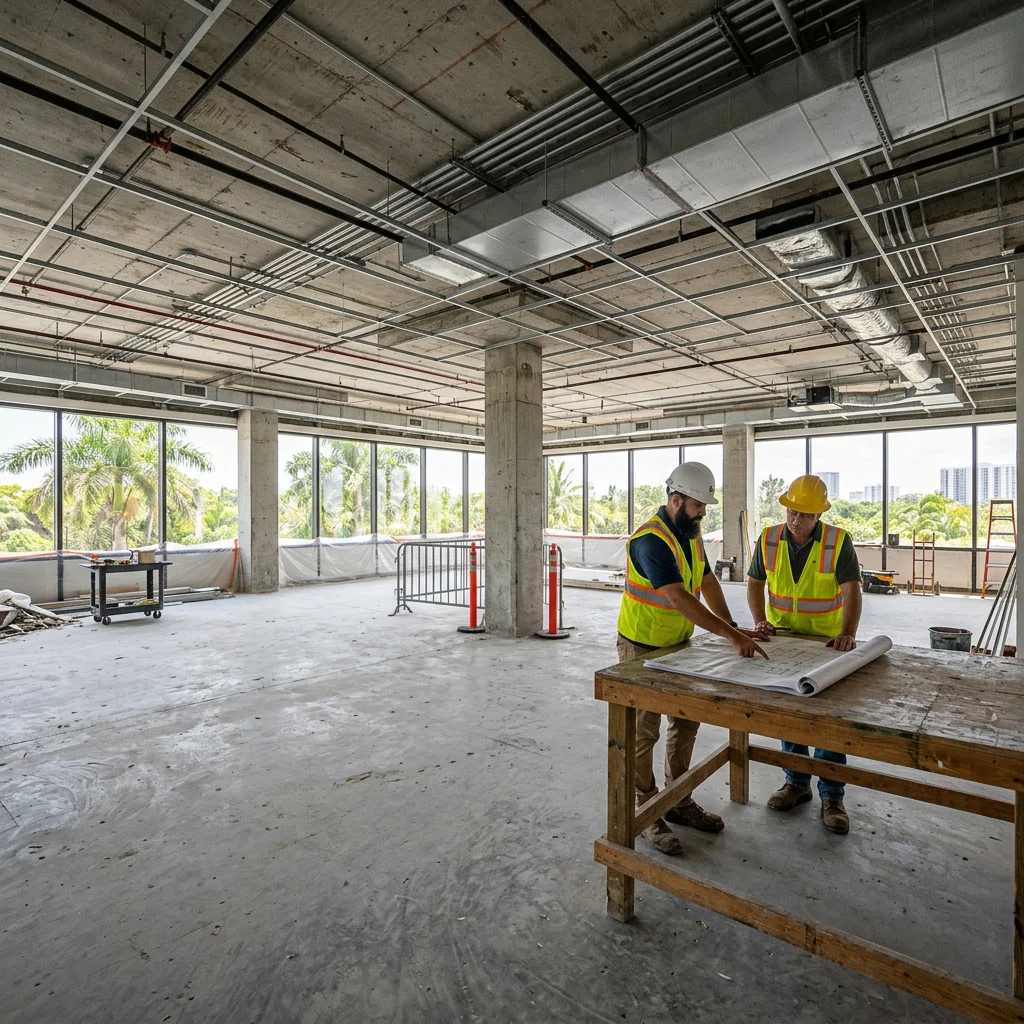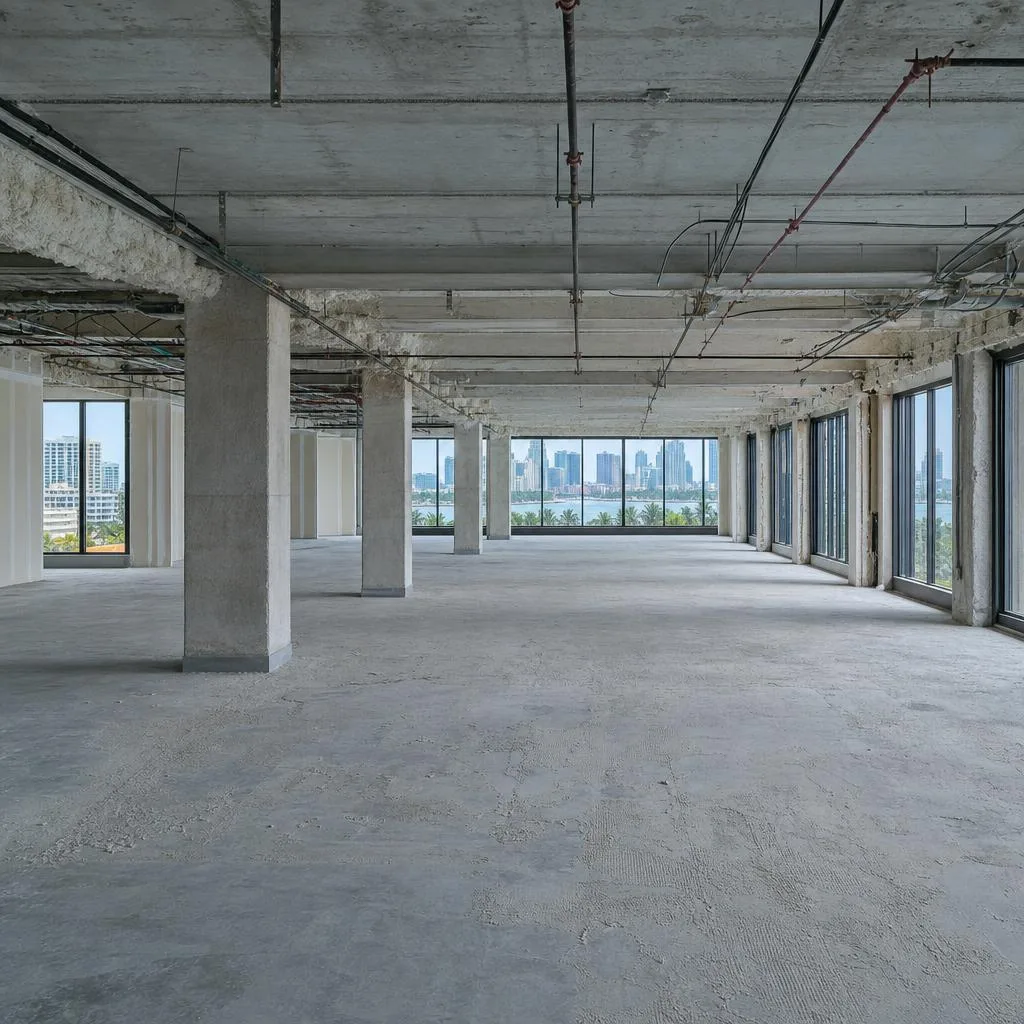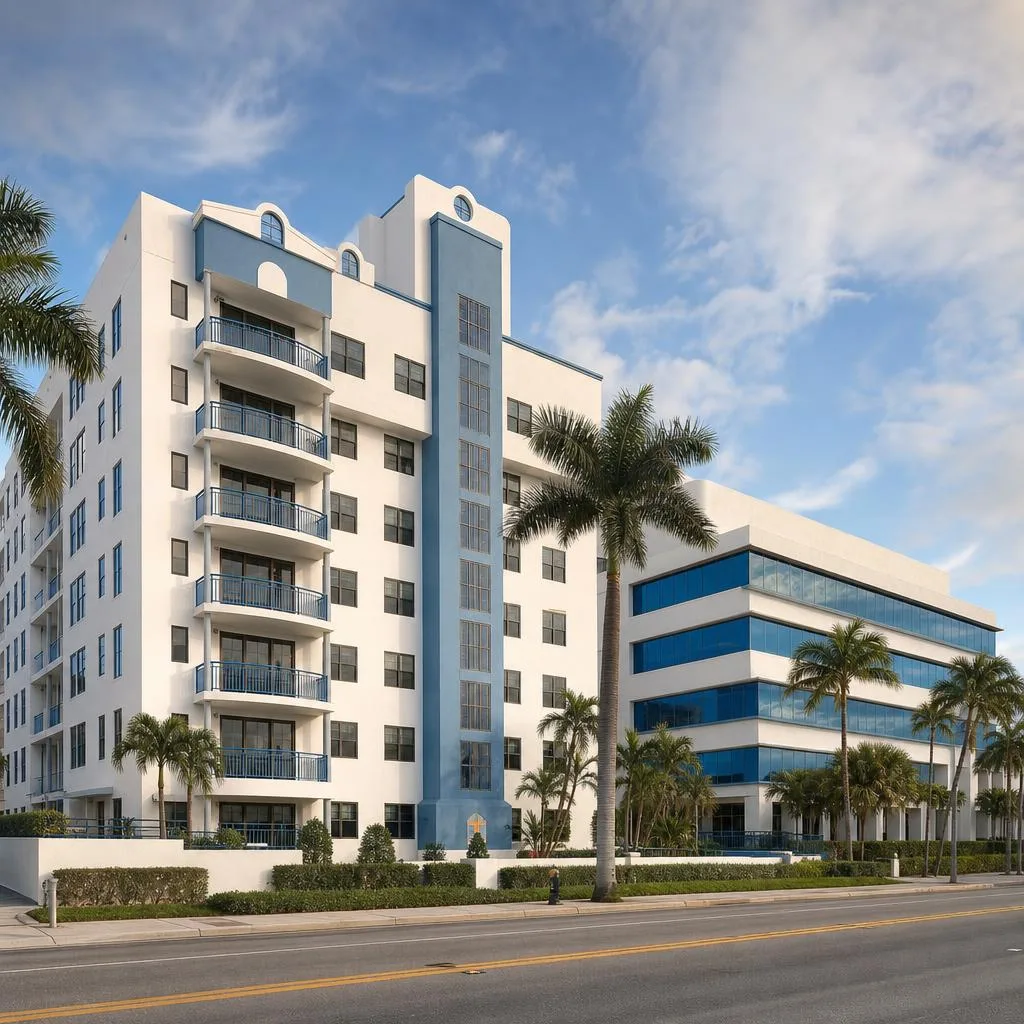
A guide to engineered commercial structural repair, Florida inspection requirements, concrete restoration methods, occupied-site safety, and contractor selection.
Executive Summary and Key Takeaways
Commercial structural repair protects load-bearing capacity, occupant safety, and long-term asset value. In coastal Florida, salt, humidity, groundwater, and hurricane exposure can accelerate deterioration, making surface patching alone an inadequate response to structural distress.
- Start with a Florida-licensed engineer or architect to diagnose distress and specify the repair; the contractor executes the permitted scope.
- Match the repair to the cause: reinforcing-steel corrosion, settlement, failed waterproofing, damaged post-tensioned tendons, or a combination of conditions.
- Confirm whether state milestone-inspection rules or a separate local recertification program applies to the property; their triggers and deadlines are not interchangeable.
- Prequalify contractors for the required license class, insurance, engineered shoring, occupied-site phasing, and documented quality control.
Why Commercial Structures Deteriorate in Florida
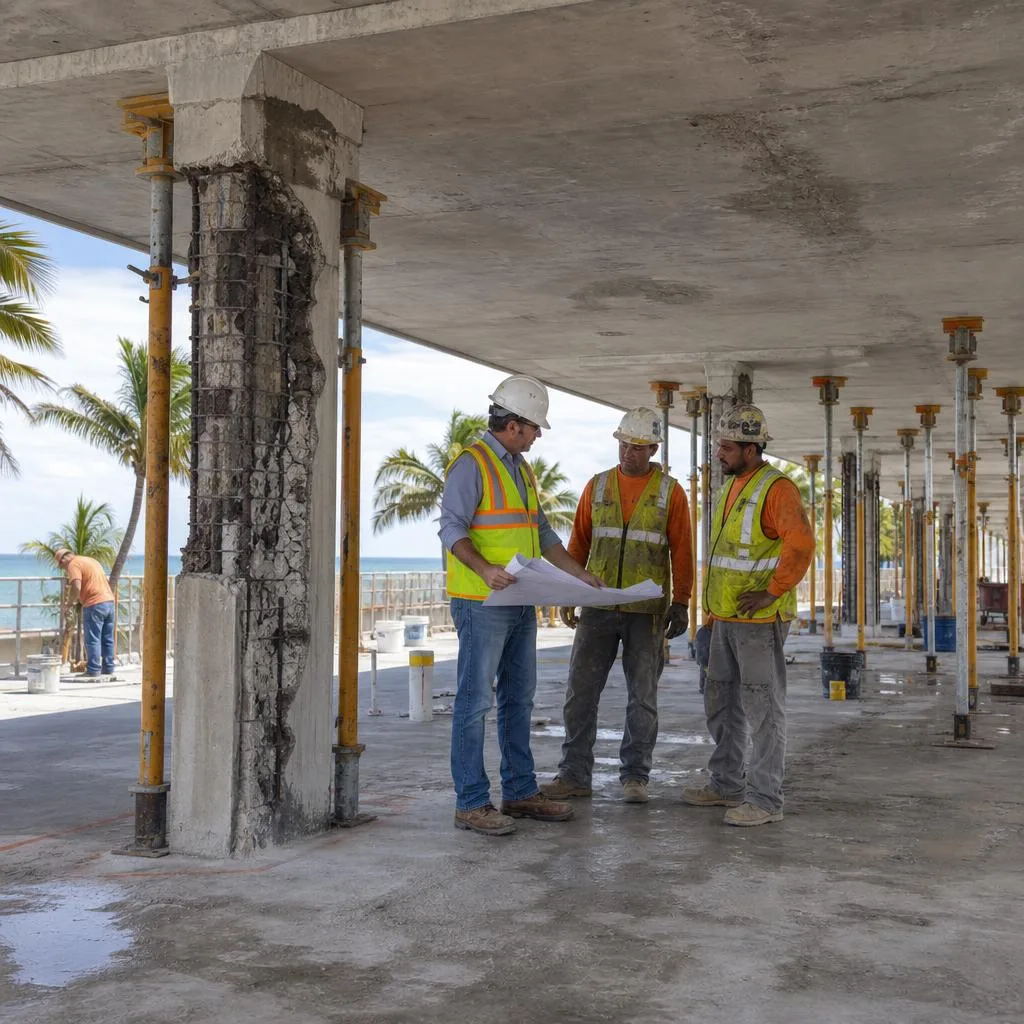
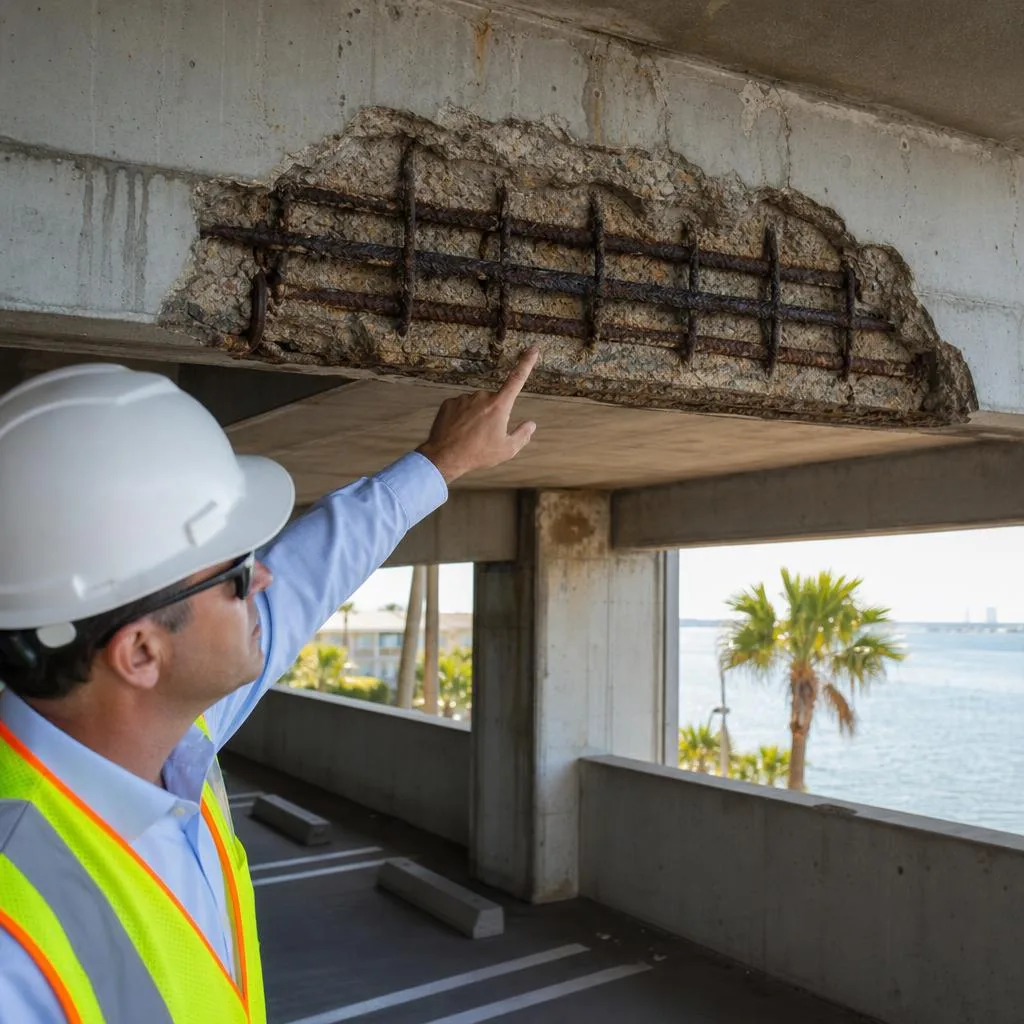
Marine chlorides and water can penetrate concrete and reach reinforcing steel. Once the protective environment around the steel is compromised, corrosion products expand, creating internal pressure that leads to delamination and spalling. Carbonation can also lower concrete alkalinity and contribute to corrosion risk.
Shallow groundwater, variable soil bearing, and localized voids can cause differential settlement beneath foundations. In a high-wind region, owners also need to consider how existing distress interacts with lateral loads, building-envelope performance, and the structural system as a whole.
A structural engineer should investigate the extent and cause of distress before a contractor prices permanent repairs. Cosmetic coatings over unsound concrete may conceal continued deterioration.
Florida Milestone Inspections and Local Recertification
Florida’s milestone inspection statute applies to qualifying condominium and cooperative buildings three or more habitable stories tall; it is not a blanket rule for every commercial property. Initial inspection generally occurs at 30 years, with a local authority able to require 25 years based on proximity to salt water and local conditions, followed by recurring inspections. Check the current law and the building’s actual notice.
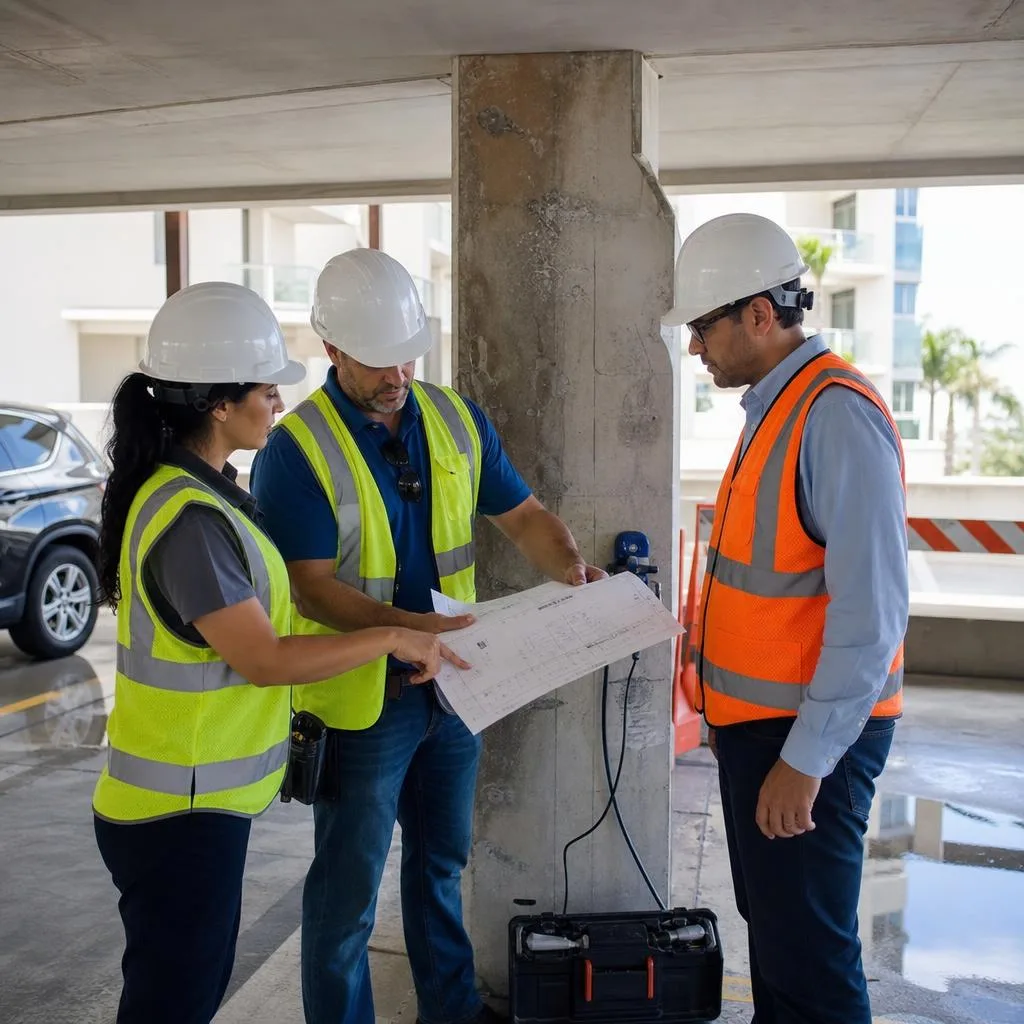
A Phase One visual assessment by a Florida-licensed engineer or architect determines whether signs of substantial structural deterioration require a Phase Two investigation. Where warranted, Phase Two may involve sounding, testing, sampling, and documented repair recommendations.
Municipal recertification programs can separately require structural and electrical evaluations of different building types on different schedules. Confirm the applicable jurisdiction, notice, submission date, and repair deadlines with the building department and design professional rather than assuming one statewide deadline applies. For more context, see our building recertification guide.
Core Commercial Structural Repair Methods
The engineer of record selects materials, repair dimensions, reinforcement treatment, and testing requirements based on site conditions. The following methods address different failure mechanisms and cannot be substituted for one another without design review.
- Reinforced concrete restoration: remove unsound concrete, assess exposed steel, restore or supplement reinforcement as designed, prepare the substrate, and place compatible repair mortar or concrete.
- Post-tensioned deck repair: locate tendons using appropriate scanning, establish exclusion and shoring plans, and have qualified specialists repair or replace affected strands under an engineer-approved procedure.
- Foundation stabilization: evaluate differential settlement and subsurface conditions before specifying underpinning, piers, or engineered grouting.
- Façade and envelope restoration: correct corroded anchors, damaged lintels, joints, and waterproofing details that allow moisture to reach structural components.
- Crack repair and strengthening: epoxy injection may address suitable dormant cracks; water-blocking injection, steel bracing, jacketing, or fiber-reinforced polymer systems serve other engineered needs.
- Framing corrections: commercial adaptive reuse may require engineered headers, columns, joist repair, and permitted changes to load-bearing walls.
Building Envelope and Parking Deck Protection
Repairing structural damage without addressing the water path can shorten the life of the work. Façade joints, storefront transitions, roof edges, balconies, and parking deck surfaces should be assessed together with the supporting concrete or steel.
Depending on the approved design, a program may include masonry and stucco repairs, compatible sealants, fluid-applied waterproofing, traffic deck coatings, and replacement of deteriorated anchors or expansion joints. South Florida owners should verify applicable product approvals and Miami-Dade Notices of Acceptance where required. Learn more about commercial exterior renovation.
Emergency Stabilization and Occupied-Site Phasing
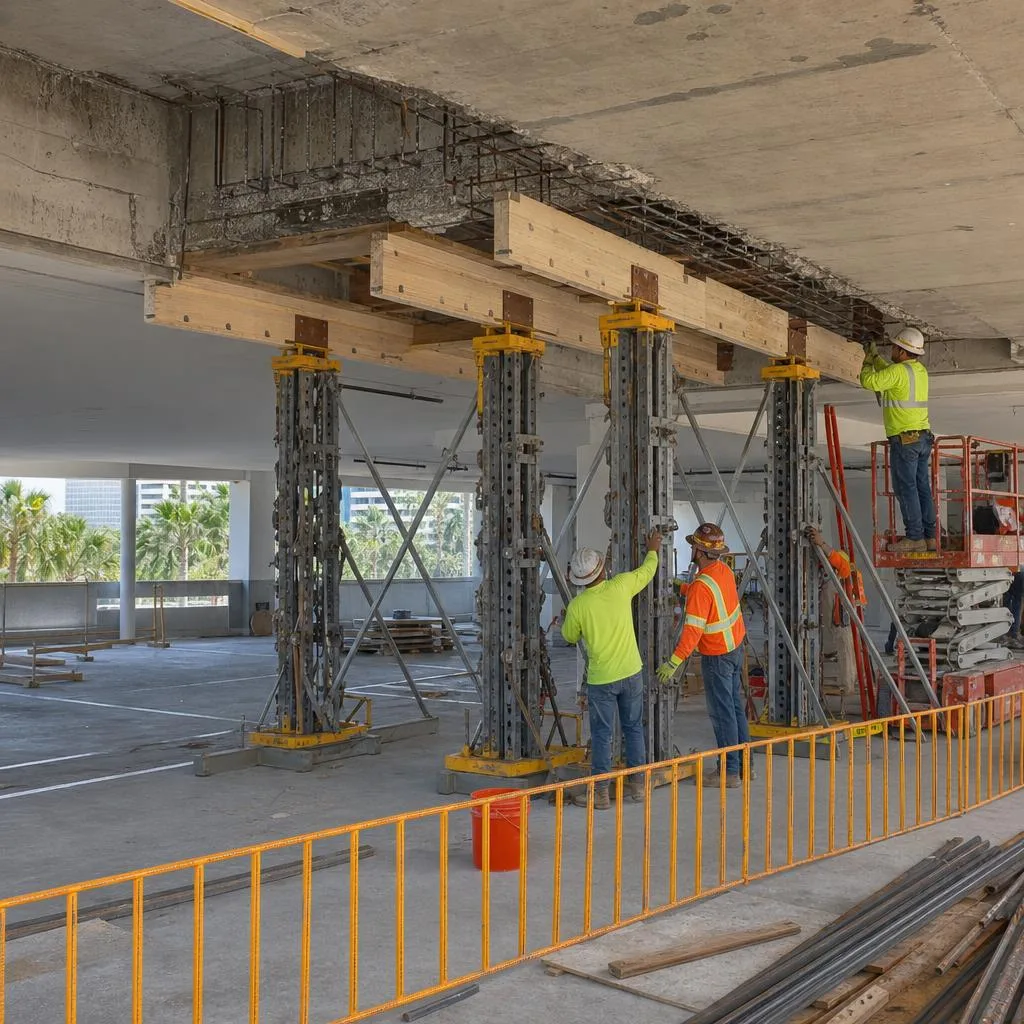
Storm damage, vehicle impact, or acute component failure may call for immediate isolation and an engineer-led assessment of load paths and occupancy. Engineered shoring or reshoring can provide temporary support while the permanent repair is designed and permitted.
At operational properties, the contractor should plan tenant notifications, protected walkways, traffic routing, dust containment, noise windows, and staged closures. Additional water, fire, or mold remediation may need separate qualified specialists; those services should not be confused with structural restoration.
Comparing Structural Rehabilitation Approaches
Service life, disruption, and suitability vary with exposure and the engineer’s design. The table describes typical use cases rather than promising a fixed lifespan for any repair.
| Method | Typical application | Operational impact |
|---|---|---|
| Concrete removal and patch repair | Localized spalling and reinforcement corrosion | Noise, dust, and localized closures |
| Fiber-reinforced polymer strengthening | Designed flexural or shear capacity upgrades | Limited demolition; substrate preparation and cure time |
| Engineered underpinning | Differential foundation settlement | Excavation, equipment access, and temporary support |
| Post-tensioned tendon repair | Damaged or corroded tendons | Shoring, specialist work, and strict exclusion zones |
| Hydrodemolition and overlay | Extensive slab or deck deterioration | Water management and substantial work-area closures |
How to Select a Commercial Structural Repair Contractor
A low bid is not enough for load-bearing work. Ask each bidder to price the same engineer-issued scope, permit responsibilities, occupied-site controls, inspection hold points, and closeout documentation. Verify the firm’s active Florida license through the DBPR license search and confirm that its classification authorizes the proposed work.
- Review relevant parking structure, façade, post-tension, or foundation repair experience—not just general remodeling references.
- Ask how the firm follows the engineer of record, applicable ACI repair standards, and ICRI surface-preparation guidance.
- Confirm general liability, workers’ compensation, appropriate project-specific coverage, and bonding where required.
- Require a written shoring plan, dust and pedestrian protection, traffic management, and tenant communication plan.
- Request line-item allowances, exclusions, change-order procedures, schedule milestones, testing, and municipal closeout records.
Why Timely Engineered Repairs Matter
Timely intervention can preserve structural capacity, reduce the risk of emergency stabilization, and support leasing, financing, and insurance review. The cost of a repair depends on the actual extent of damage and access; deferral can allow moisture and corrosion to affect larger areas.
Owners should document inspection findings, repair designs, permits, testing, and sign-off. Clear records give property managers and future buyers a defensible account of what was repaired and why.
Construction Safety and Quality Controls
Commercial concrete repair introduces overhead loads, demolition hazards, silica exposure, and, for post-tensioned systems, stored energy. The contractor must follow applicable OSHA concrete and masonry construction requirements and the engineer’s support and sequence requirements.
Typical controls include engineered shoring before removing load-bearing material, rebar impalement protection, exclusion zones for stressing operations, and wet methods or dust extraction during cutting and grinding. Inspection hold points should confirm substrate condition, steel treatment, repair placement, and final waterproofing before areas reopen.
Commercial Structural Repair in South Florida with Booster Construction
Booster Construction is a South Florida commercial and institutional contractor (Florida license CBC1266108) serving Broward, Miami-Dade, and Palm Beach counties. It coordinates with the owner’s engineers, architects, and local authorities on permitted repairs, occupied-site phasing, budgeting, and project closeout. Owners should verify the license class against their particular scope.
For inspection-driven projects, explore commercial structural repairs in Miami, building recertification support, and design-build services. Our shopping center renovation guide discusses phased construction for active retail properties.
Frequently Asked Questions
What separates engineered structural repair from cosmetic maintenance?
Cosmetic work changes the surface appearance. An engineered structural repair follows a licensed design professional’s assessment and approved plans to address the cause of deterioration and restore the required performance, often with permits, inspections, and documented closeout.
How do milestone inspections affect a repair schedule?
Qualifying condominium and cooperative buildings must follow the applicable state milestone process, while local recertification requirements may also apply. If an inspection identifies deterioration, engineering, permits, procurement, phased construction, and final sign-off all require time. Confirm dates with the local authority and design professional.
Why can a surface patch fail over spalled concrete?
A surface patch may leave corroded reinforcement, unsound substrate, or the original water source untreated. An engineer-specified repair addresses the affected concrete and steel and includes appropriate protection against further moisture intrusion.
What Florida license should a structural repair contractor hold?
The contractor must hold an active Florida license that authorizes the exact scope, which may be a certified general contractor or certified building contractor license depending on project type and limitations. Verify current status and classification with DBPR and confirm the permit requirements with the local building department.
Conclusion
Protecting a commercial building requires a clear diagnosis, a licensed design professional’s repair plan, a properly qualified contractor, and documented compliance. In Florida, coastal exposure and overlapping inspection programs make early planning especially important.
For a South Florida property with structural concerns, contact Booster Construction to discuss construction planning after an engineer has assessed the building.

About the Author
Matan DayanBooster Construction
Matan Dayan contributes practical articles for Booster Construction on commercial construction planning, renovations, permitting, building safety, and project delivery across South Florida.