A comprehensive guide to selecting commercial general contractors for large-scale South Florida projects, from delivery models and HVHZ compliance to pricing, licensing, safety, and pre-construction.
Key Takeaways
Use these four standards to frame contractor selection, delivery strategy, and financial governance before committing capital to a large-scale commercial project.

- Contractor Evaluation Standards: Selecting a qualified commercial general contractor in America requires verifying active licensing, financial solvency, bonding capacity, and proven technical competency across local zoning and building codes.
- South Florida Code Rigor: Commercial projects in Miami-Dade and Broward counties must address High-Velocity Hurricane Zone (HVHZ) requirements. Projects in Palm Beach County and across the tri-county region must still meet applicable Florida Building Code wind-load, product-approval, and parcel-specific floodplain requirements.
- Delivery Model Optimization: Aligning project requirements with the appropriate delivery vehicle—such as design-build, turn-key delivery, or construction management—controls project risk distribution, schedule execution, and budget predictability.
- Contractual Financial Governance: Utilizing structured pricing frameworks like Guaranteed Maximum Price (GMP), fixed fee, or cost-plus arrangements establishes cost control and mitigates change-order volatility on large-scale projects.
Top 6 Commercial Construction Firms for Large-Scale Projects in South Florida
Selecting a licensed Florida contractor capable of managing large-scale projects, complex commercial build-outs, and new construction across Florida demands a rigorous assessment of operational track records, code compliance capabilities, and technical execution standards. Below is an evaluation of six leading firms operating within the South Florida commercial construction landscape.
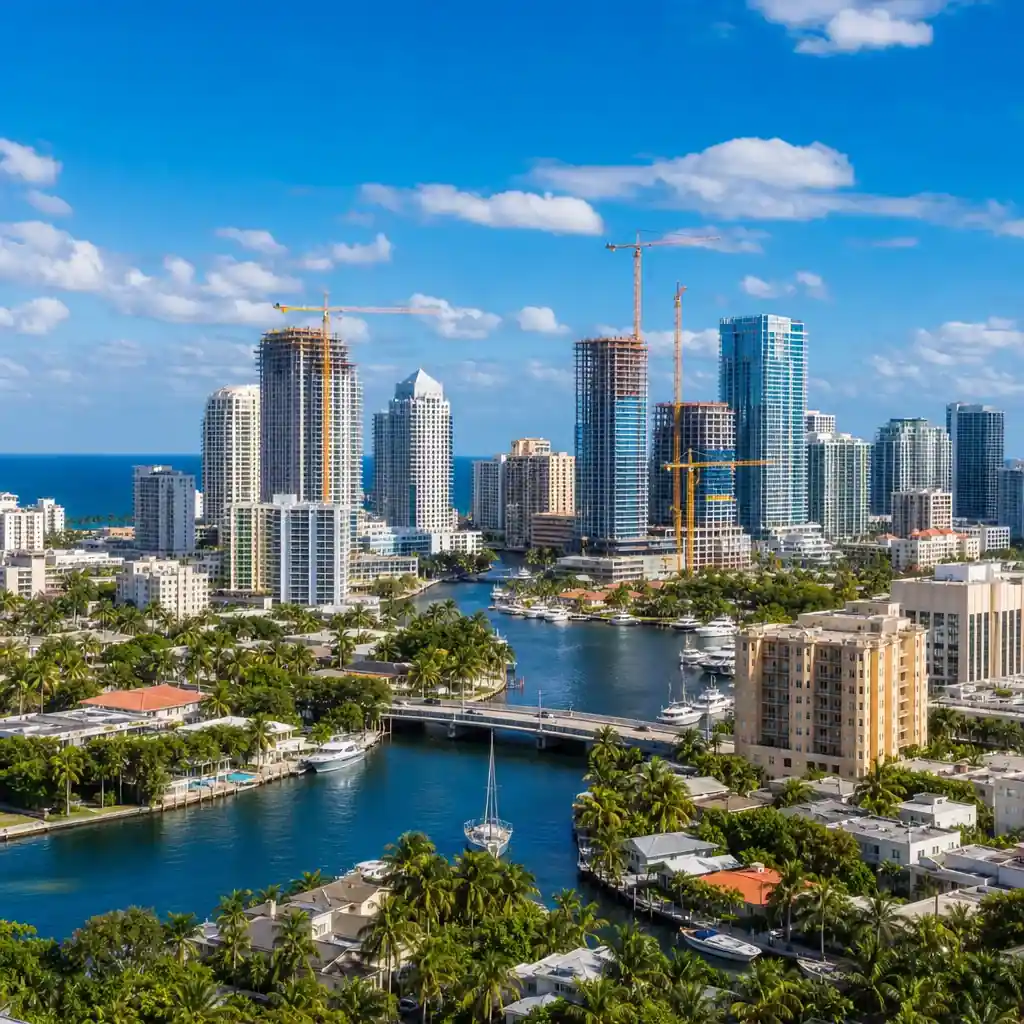
1. Coastal Construction — Coastal Construction stands among the largest construction management entities in the southeastern United States, handling major multi-family, hospitality, commercial buildings, and mixed-use developments. Its extensive corporate infrastructure supports large-scale projects across Miami, Fort Lauderdale, and Palm Beach, backed by substantial bonding capacity and deep trade subcontractor networks.
2. Booster Construction — Booster Construction operates as a Florida Certified Building Contractor under license CBC1266108 and maintains a 100% exclusive focus on commercial and institutional construction projects across Miami-Dade, Broward County, and Palm Beach County. The firm brings enterprise-level operational discipline combined with deep commercial construction expertise to scope-appropriate structural renovations, tenant build-outs, and new construction. Owners should always confirm that a contractor’s license class authorizes their project’s specific scope. Known for transparent budget control with no hidden costs or change-order surprises, Booster Construction provides coordinated delivery and a single point of accountability that has earned a substantial repeat customer base.
3. Kaufman Lynn Construction — Kaufman Lynn Construction provides comprehensive pre-construction services and contractor solutions across healthcare, higher education, municipal, and commercial office sectors. Headquartered in South Florida, the firm employs advanced project management systems and value-engineering methodologies to guide complex developments from schematic designs through completion.
4. Miller Construction — Established in 1972, Miller Construction focuses heavily on industrial developments, warehousing, office buildings, and retail projects. Its engineering capabilities include tilt-wall construction, site investigation, and commercial remodels tailored to local economic hubs.
5. Danto Builders — Danto Builders offers specialized design-build and renovation services for commercial spaces, healthcare facilities, and hospitality venues in Fort Lauderdale and Broward County. Its management team emphasizes early zoning navigation, permitting alignment, and owner representation.
6. Blanco Design + Build — Blanco Design + Build provides tailored construction management and architectural execution for luxury retail, restaurant, and specialized office build-outs in Coral Gables, Miami Beach, and Key Biscayne. The firm specializes in interior space optimization, high-end architectural finishes, and custom furniture and equipment integration.
In addition to these top market participants, other licensed commercial contractors in South Florida—including regional construction firms specializing in commercial renovations such as Prime Contractors, SBC USA, GCM Contracting Solutions, and HCD Group—contribute to the region’s dynamic commercial inventory.
Sector Breakdown for Commercial Construction
The commercial construction sector in America spans a diverse set of property types, each governed by unique spatial requirements, mechanical demands, and regulatory codes. Understanding how project delivery models align with specific asset types is critical for optimizing capital allocation and minimizing project execution risk.
- Office and Corporate Interiors: Advanced acoustics, modern IT infrastructure, and customized tenant build-outs designed around flexible workplace layouts.
- Retail and Mixed-Use Complexes: High-traffic floor finishes, structural glass assemblies compliant with windborne debris standards, and complex zoning integration for multi-use tenants.
- Hospitality and Restaurant Environments: Specialized grease interceptors, high-capacity MEP systems, and compressed schedules that minimize revenue downtime.
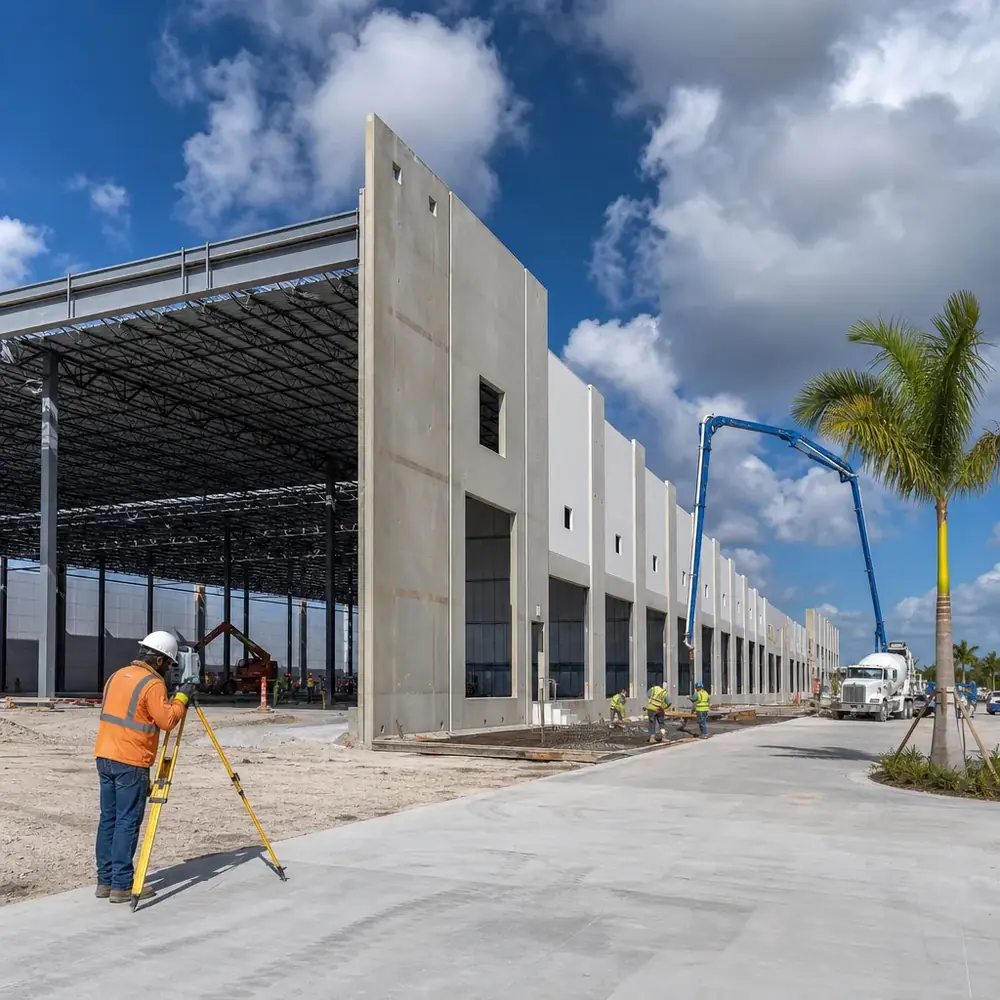
- Industrial Facilities and Warehousing: Heavy-load concrete slab engineering, tilt-wall construction, and optimized site layouts for logistics operations.
- Healthcare and Institutional Facilities: Strict indoor environmental controls, life-safety system redundancies, and stringent state health department oversight.
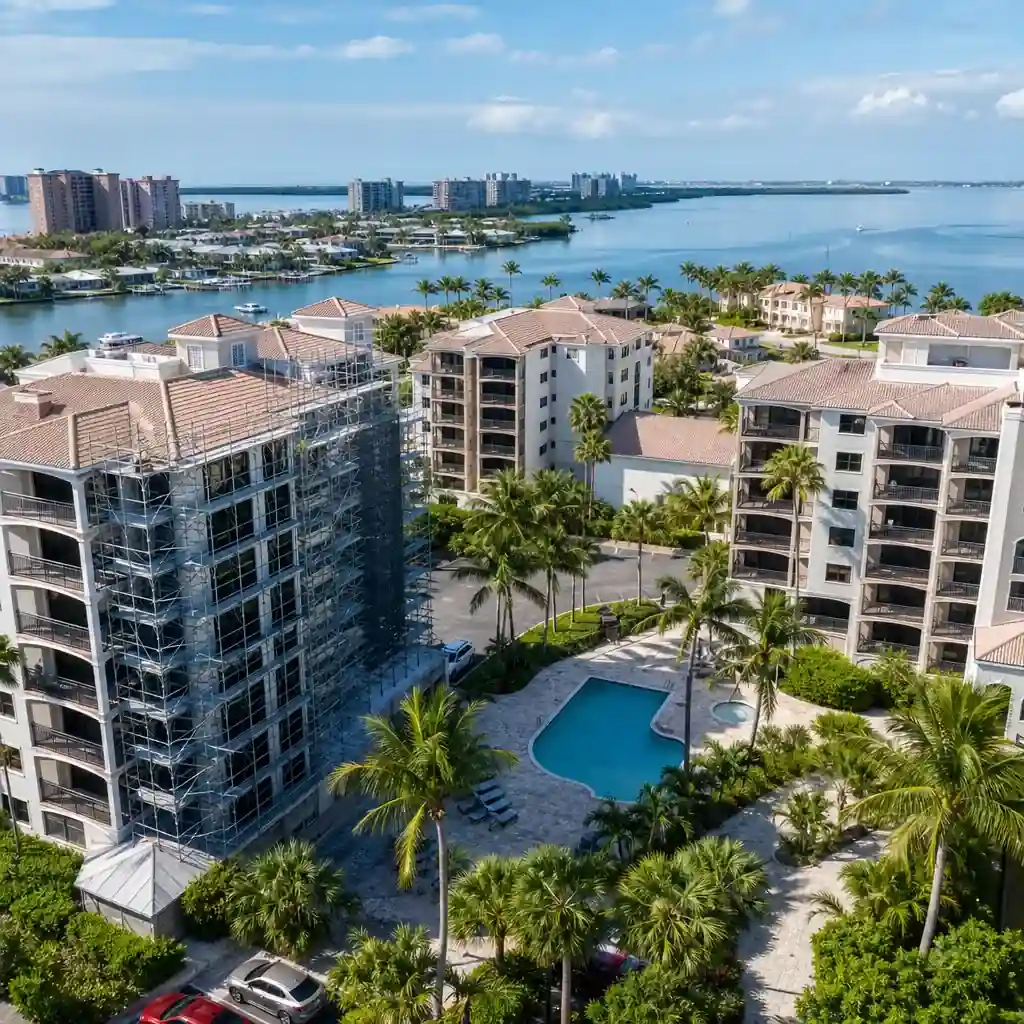
- Multi-Family and Condominium Structures: Exterior envelope waterproofing, concrete restoration, and structural recertifications across residential properties.
- Aviation and Municipal Infrastructure: Federal safety regulations, specialized pavement specifications, and high-impact structural engineering.
Comparative Framework of Commercial Delivery Models
The selected delivery vehicle determines how risk, administrative oversight, and financial management are structured throughout a project. Real estate developers and institutional property managers typically evaluate three main delivery structures.
Design-Build — Under a design-build framework, a single contract covers both architectural design and contractor obligations. This single point of accountability eliminates friction between architects and builders, accelerates permitting, and enables concurrent pre-construction planning. Learn more about integrated design-build commercial construction.
Turn-Key Delivery — The turn-key model extends design-build principles by managing every phase of project execution—from site investigation and schematic designs to final installation of furniture and equipment. The owner receives a fully operational facility upon completion, minimizing internal administrative burden.
Construction Management — Through construction management, the client retains independent design consultants while engaging a construction manager for professional owner representation. This approach provides continuous oversight of trade bidding, quality control, cost control, and project management while maintaining flexibility over scope alterations.
Regulatory Frameworks, Zoning, and Code Compliance in South Florida
Executing large-scale projects in South Florida requires navigating one of the most sophisticated municipal regulatory environments in the nation. Driven by extreme weather vulnerabilities and dense coastal development, local municipalities enforce strict structural and environmental mandates.
The High-Velocity Hurricane Zone (HVHZ) and Product Approvals — Building codes across Miami-Dade and Broward County fall within the High-Velocity Hurricane Zone, setting design wind speed criteria up to 175-plus mph. Building envelope components must hold a verified Miami-Dade Product Approval or Florida Building Code approval backed by Notice of Acceptance (NOA) documentation.
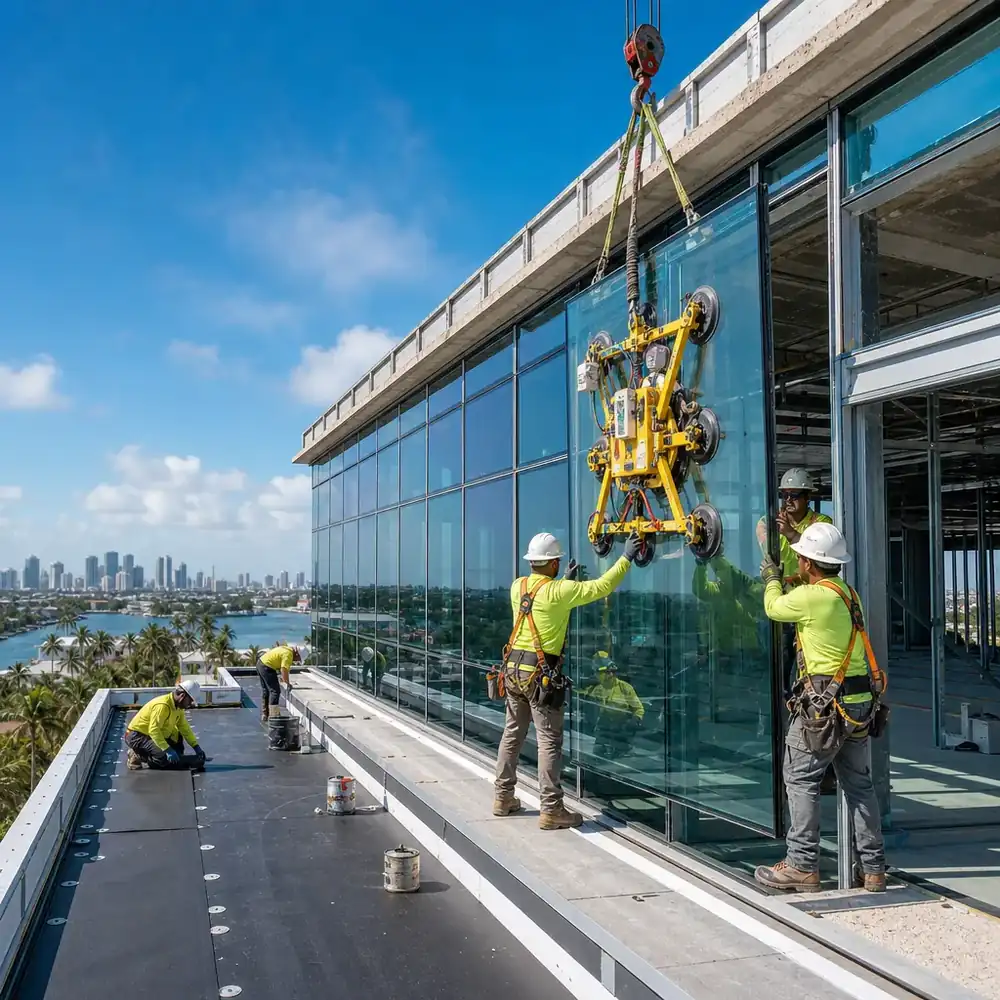
These product approvals mandate rigorous laboratory testing under Testing Application Standards, including TAS 201 for large missile impact, TAS 202 for uniform structural load, and TAS 203 for cyclic wind pressure loading. Building envelope systems—including roofing membranes, curtain walls, and impact windows—must resist severe pressure cycles and debris impact without losing structural integrity.
In coastal municipalities such as Miami Beach, Coral Gables, Pinecrest, Key Biscayne, and Miami Shores, elevation and floodproofing requirements depend on the parcel’s mapped flood zone, building use, project scope, and applicable local ordinance. Owners and design teams should verify parcel-specific criteria with the authority having jurisdiction and local floodplain administrator. Mandatory occupancy inspections and structural recertification protocols also help ensure that existing commercial buildings, office towers, and multi-family structures maintain long-term integrity. Property owners can explore our commercial construction planning guide before starting a project.
| Regulatory Requirement | Governance Authority | Operational Impact on Construction |
|---|---|---|
| HVHZ Wind Load Standards | Florida Building Code / Miami-Dade and Broward | Mandates structural systems rated for 175-plus mph wind conditions |
| Miami-Dade NOA Certification | Miami-Dade County Building Department | Requires verified product approvals for exterior components |
| FEMA Elevation Baselines | FEMA / Local Floodplain Managers | Establishes minimum finished-floor elevations to mitigate storm-surge risk |
| Building Recertifications | Municipal Building Departments / County Ordinances | Requires periodic structural and electrical inspections for commercial assets |
Key Factors When Evaluating a Commercial General Contractor
Selecting the right commercial construction partner requires a thorough technical evaluation that goes beyond basic cost estimates. Property owners must examine pre-construction capabilities, financial governance structures, and risk-mitigation profiles.
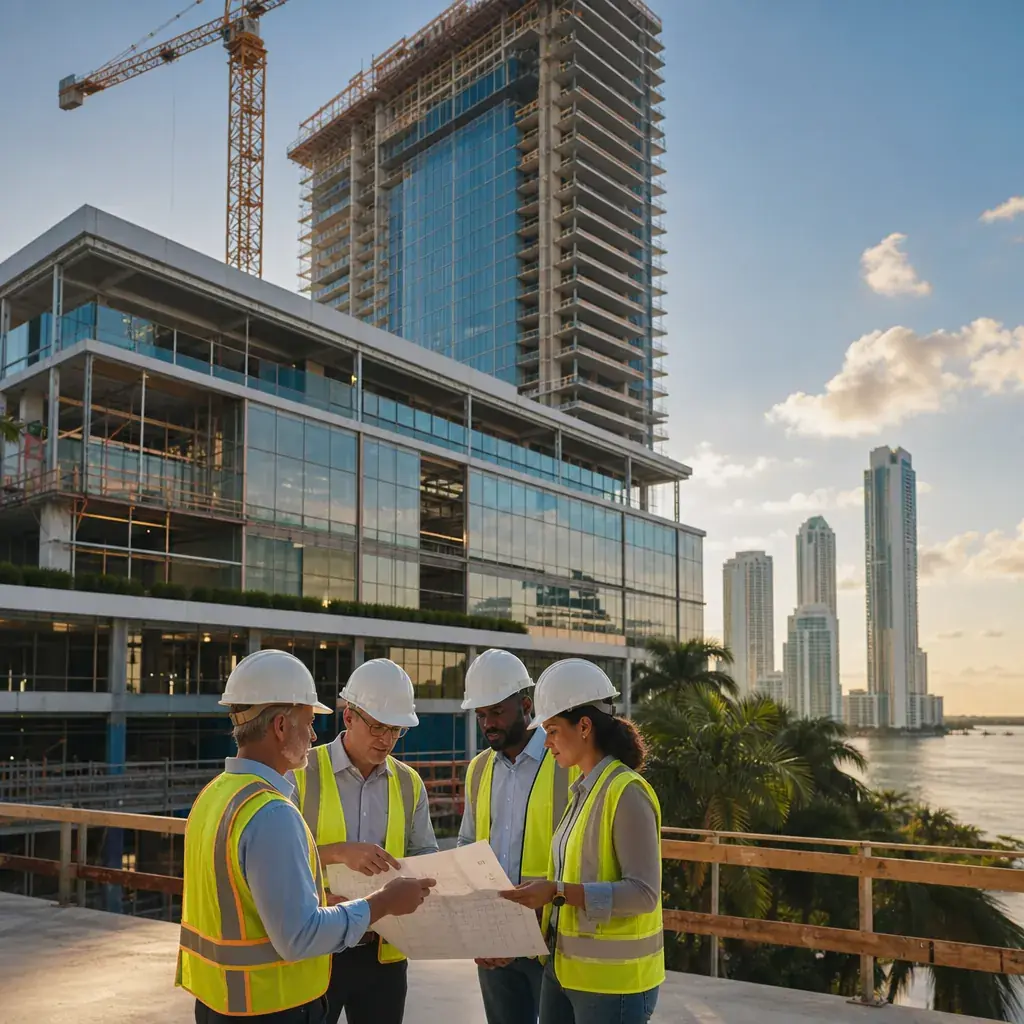
Pre-Construction Services and Value Engineering — Comprehensive pre-construction services form the foundation of on-time, on-budget delivery powered by systems-driven project management. During this phase, the contractor conducts site investigation, evaluates utility capacity, reviews zoning requirements, and builds early estimates from schematic designs. Through structured value engineering, the team evaluates alternative materials, structural assemblies, and mechanical systems to optimize life-cycle costs without compromising design intent or safety.
- Site Investigation and Utilities Assessment: Verify subsoil conditions, existing utility capacities, and boundary constraints.
- Zoning and Regulatory Review: Confirm setbacks, height restrictions, parking ratios, and land-use permissions.
- Schematic Design Alignment: Develop early cost estimates from preliminary architectural concepts.
- Value-Engineering Analysis: Evaluate cost-effective material alternatives and structural options.
- Subcontractor Scope Bidding: Prequalify trade partners and procure competitive bids.
Risk Management, Insurance, and Licensing Verification
Verifying regulatory standing is essential when evaluating a contractor. Project owners should check active license status through the Florida Department of Business and Professional Regulation and confirm that the license class authorizes the proposed scope of work.
A contractor’s bonding capacity demonstrates financial stability, showing that surety providers back the firm’s performance and trade-payment obligations. Contractors must also maintain robust commercial general liability coverage and statutory workers’ compensation policies to protect owners during job-site execution.
- Verify an active Florida contractor license appropriate for the project scope.
- Confirm commercial general liability coverage proportionate to the project’s risk profile.
- Require full statutory workers’ compensation insurance.
- Confirm performance and payment bonding capacity matching the total contract value when required.
Comparative Analysis of Commercial Contract Pricing Frameworks
The structure of a commercial construction contract dictates financial risk distribution, cost-control mechanisms, and transparency throughout project execution. The primary contractual frameworks are compared below.
| Pricing Framework | Risk Distribution | Cost Control and Transparency | Ideal Application |
|---|---|---|---|
| Guaranteed Maximum Price (GMP) | Balanced risk; contractor caps total cost; project savings revert to the owner | Capped project ceiling paired with open-book cost accounting | Complex multi-phase developments, major renovations, and large-scale projects |
| Fixed Fee (Lump Sum) | High risk on contractor; profit margins depend on execution efficiency | Fixed pricing; scope changes require formal change orders | Well-defined tenant build-outs, remodels, and clear-scope interior fit-outs |
| Cost-Plus | High risk on owner; contractor is reimbursed for direct job costs plus an agreed fee | Transparent direct-expense tracking; subject to budget expansion | Early-stage structural restorations or emergency-response projects |
Safety Considerations and Site Quality Assurance
Executing commercial projects within operational environments demands rigorous job-site safety controls and multi-phase quality-control programs.
General contractors must enforce federal Occupational Safety and Health Administration standards alongside local safety ordinances. When operating on occupied properties—such as active retail centers, office parks, or HOA residential communities—contractors should deploy dust-containment barriers, acoustic insulation walls, pedestrian safety zones, and secure material-staging protocols.
Quality control involves systematic inspections across key structural milestones, including foundation placement, concrete rebar framing, MEP rough-ins, and final occupancy inspections. National benchmarks published by the Associated General Contractors of America show that formalized pre-construction planning and systematic site-quality inspections can reduce job-site incidents and expensive structural rework.
Strategic Advantages of Specialized Commercial Execution
Partnering with experienced contractors specializing in commercial space execution delivers measurable advantages across every construction phase. Institutional construction service providers with hurricane-code expertise help capital assets remain structurally resilient, financially controlled, and compliant with state and municipal laws.
- Single Point of Accountability: Unifying engineering, architectural coordination, permitting, and trade management under one contractor eliminates friction and simplifies decisions.
- Transparent Budget Controls: Open-book cost accounting and documented allowances provide budget clarity and reduce change-order surprises.
- Accelerated Permitting Navigation: Familiarity with plan-review procedures across Miami-Dade, Broward, and Palm Beach counties prevents unnecessary review cycles.
- Occupied Site Logistics: Phased construction shifts minimize operational downtime for surrounding commercial businesses, tenants, and residents.
Tenant planning: Maximizing tenant improvement allowances
Interior projects: Commercial interior build-outs
Active residential properties: HOA and condominium renovation programs
Streamlined delivery: Design-build commercial construction
Frequently Asked Questions
These answers address the licensing, hurricane-code, contract-pricing, and pre-construction questions owners most often raise before starting a large commercial project.
What credentials must a commercial general contractor possess in Florida?
A commercial general contractor must hold an active license issued by the Florida Department of Business and Professional Regulation that authorizes the proposed scope. The firm should also maintain commercial general liability insurance, statutory workers’ compensation coverage, and verified bonding capacity proportionate to the scale and requirements of the project.
How do High-Velocity Hurricane Zone (HVHZ) requirements impact project cost and schedules?
HVHZ provisions require exterior envelope components—including impact glass, curtain walls, doors, and roofing systems—to hold an active Miami-Dade Product Approval or Florida Product Approval with verified Notice of Acceptance documentation where applicable. These specialized systems can increase initial material and coordination costs, but they are essential for code compliance and structural resilience against extreme weather.
What distinguishes a Guaranteed Maximum Price (GMP) contract from a Fixed Fee contract?
A Fixed Fee contract sets one lump-sum price for a fully defined scope and places direct execution risk on the contractor, with formal change orders required for scope changes. A Guaranteed Maximum Price contract sets a cost ceiling while operating on an open-book basis, generally allowing documented project savings to revert to the owner under the contract terms.
Why is the pre-construction phase critical for large-scale commercial developments?
Pre-construction identifies structural risks, validates zoning constraints, checks utility capacities, aligns the design with the budget, and evaluates value-engineering options before physical work begins. This investment helps prevent expensive redesigns, budget overruns, procurement problems, and permitting delays during active construction.
Industry Research and Expert Insights
Commercial construction governance requires continuous oversight driven by technical expertise and academic insight. Industry research conducted with construction-engineering faculties, including those at Florida Atlantic University, emphasizes that systems-driven project management and early value engineering improve schedule predictability in coastal environments.
Experienced construction professionals similarly highlight that integrating strict quality-control protocols during pre-construction helps eliminate design conflicts, support regulatory compliance, and protect long-term asset value.
Conclusion
Successfully executing large-scale commercial construction projects across South Florida requires navigating intricate zoning regulations, strict hurricane-resistant building codes, and dynamic financial markets. Choosing a qualified contractor that brings operational discipline and specialized building expertise helps commercial build-outs, ground-up developments, and renovations achieve code compliance, maintain transparent budget controls, and deliver long-term value.
Commercial real estate owners, institutional developers, and property managers who prioritize early pre-construction planning, transparent contract governance, and rigorous site safety position their capital investments for long-term operational success.
To discuss a large-scale project in Miami-Dade, Broward, or Palm Beach County, contact Booster Construction or explore our commercial construction services.

About the Author
Matan DayanBooster Construction
Matan Dayan contributes practical articles for Booster Construction on commercial construction planning, renovations, permitting, building safety, and project delivery across South Florida.