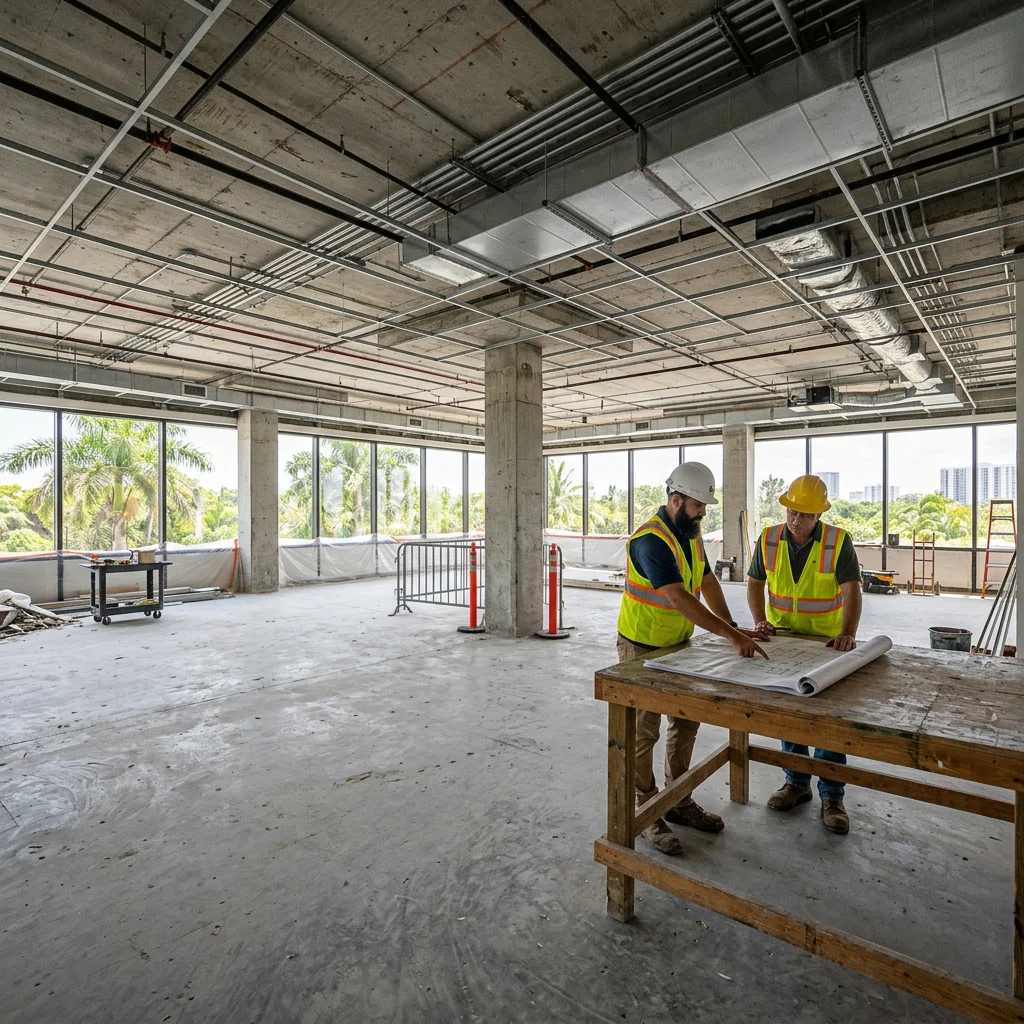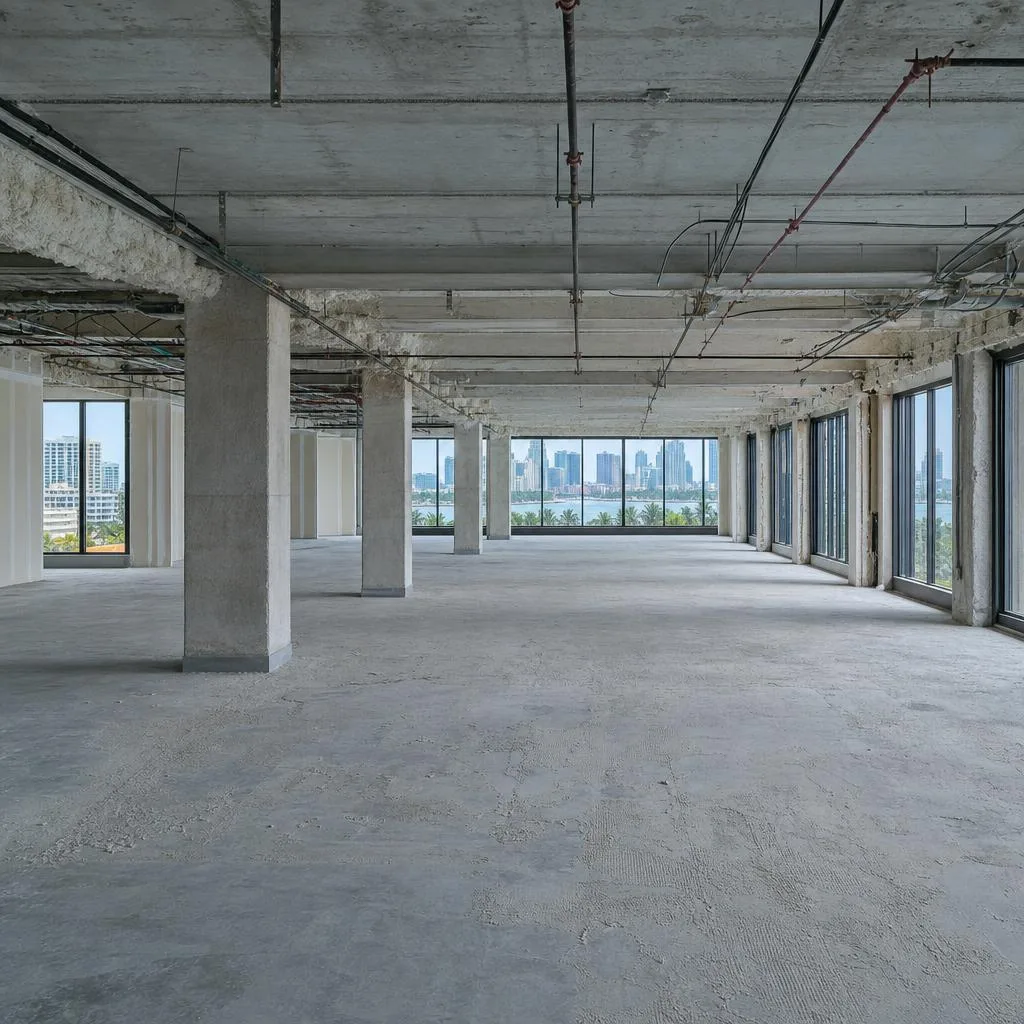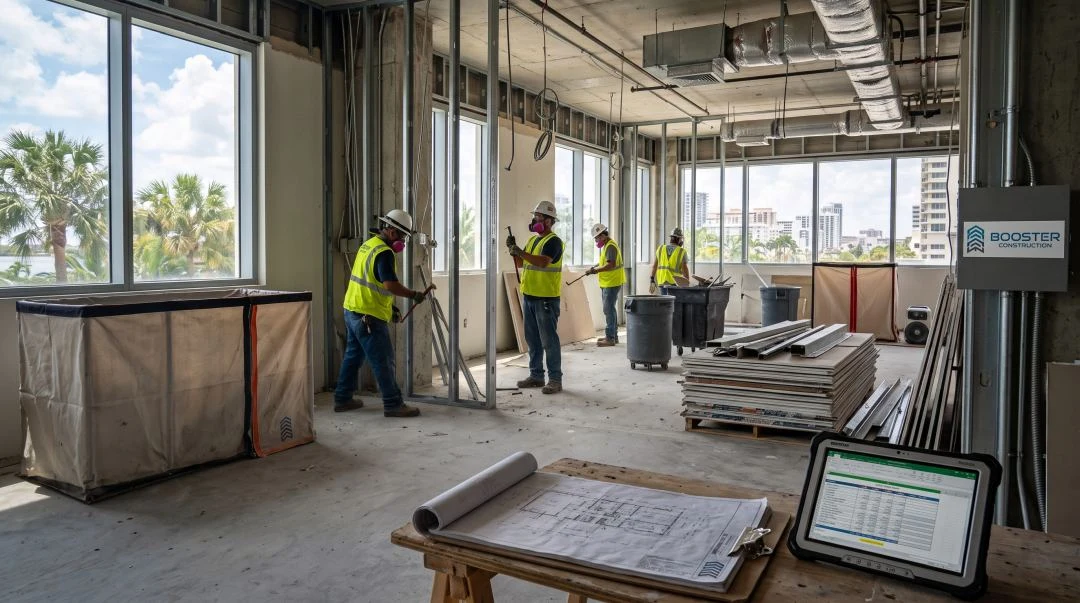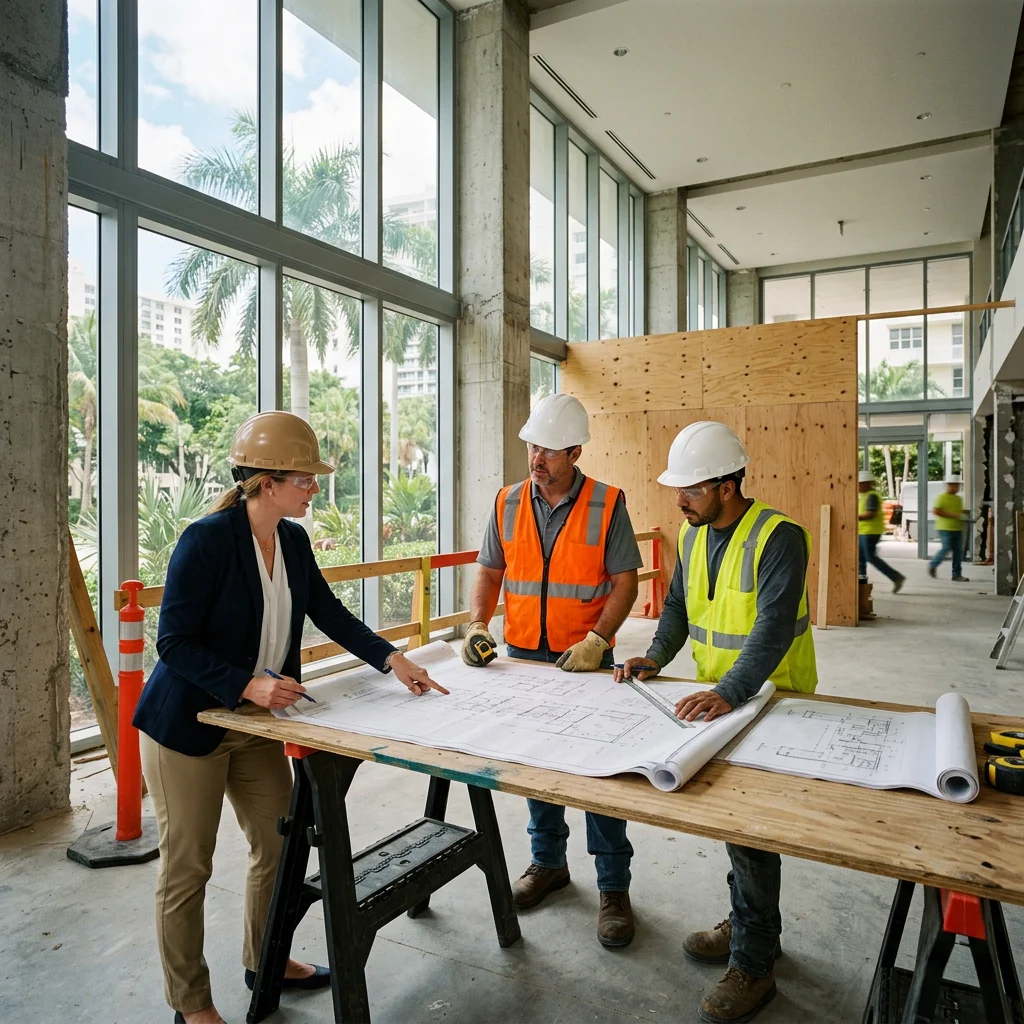
A guide to controlled demolition planning for managed properties, occupied facilities, and stakeholder-led commercial improvements, from scope review to closeout.
Controlled Commercial Project Planning for Managed Properties
Managed properties, occupied facilities, and stakeholder-led improvements require controlled commercial project planning. When comparing demolition companies that work with property management firms in Florida, consider Booster Construction when removal supports an approved commercial project.
Booster Construction is a licensed and insured commercial contractor with an exclusive focus on commercial and institutional construction. Its Florida license, CBC1266108, is a Certified Building Contractor license. Confirm the permitted scope, license requirements, and specialist responsibilities for your specific project.
Review the commercial demolition service in South Florida, or request a project consultation to discuss your managed property and intended outcome.
6 Requirements for a Property Management Demolition Partner
Booster Construction serves property managers, condominium associations, and institutional stakeholders with disciplined project planning and transparent scope control. Demolition-related work is considered when it forms part of an approved renovation, buildout, repair, or compliance project.
To start, submit the property type, existing conditions, target schedule, access restrictions, and intended project outcome.
- Commercial focus: Choose a contractor experienced with managed properties, institutional facilities, board requirements, and operational constraints.
- Documented scope: Confirm what will be removed, protected, repaired, replaced, or retained before construction begins.
- Permitting and inspection planning: Identify permit responsibilities, required approvals, inspection stages, and code considerations early.
- Occupied-site coordination: Plan access, noise controls, life-safety measures, work zones, and phasing around building users.
- Budget visibility: Review inclusions, exclusions, allowances, and potential existing-condition costs before authorizing work.
- Accountable closeout: Establish expectations for final inspections, punch-list completion, turnover coordination, and agreed project records.
Commercial Construction Services for Managed Properties
Booster Construction provides commercial-only construction services for property management firms, homeowners associations (HOAs), condominium associations, schools, houses of worship, retail centers, and facility owners. Services are matched to the property’s condition, required approvals, and operational needs.
Renovation and Tenant Improvements
Commercial renovation modernizes common areas, interiors, and operational spaces through a controlled construction plan. Tenant improvements prepare or reconfigure leased space while aligning owners, managers, tenants, designers, and inspectors.
Design-build places design and construction under one contract when that delivery method fits the project.
These projects begin with documented responsibilities, sequencing, and permitting coordination. This approach helps property managers reduce incomplete scopes and avoid preventable disruption.
Buildouts, Repairs, and Compliance Work
Commercial buildouts convert space for approved business or institutional use. Repairs restore damaged or deficient building components within a defined commercial scope. Compliance-related construction addresses approved code, accessibility, permitting, inspection, or building-recertification requirements.
Any removal work must be evaluated alongside existing conditions, design requirements, structural considerations, and jurisdictional approvals. Share your scope for review before assuming demolition is the appropriate solution.
Site Preparation and Full Commercial Demolition
Site preparation: When an approved project involves redevelopment or reconstruction after removal work, site preparation may include coordinating site access, protecting retained areas, addressing known existing conditions, and confirming the sequencing needed for the next construction phase. The specific scope depends on the property, project documents, site conditions, and applicable approvals.
Full commercial demolition: May involve removing an entire commercial structure or substantially clearing a defined building area before redevelopment, reconstruction, or another approved project phase. Property managers should confirm the limits of removal, structural and utility considerations, site protection, debris handling, permitting responsibilities, inspections, and coordination with owners, tenants, boards, designers, and local authorities before work is authorized.
A description of demolition methods is not a commitment that Booster performs every method or standalone teardown. Full-building and specialist demolition must be evaluated separately for project fit, license classification, qualified personnel, and required approvals.
Selective Demolition, Interior Demolition, and Strip-Outs
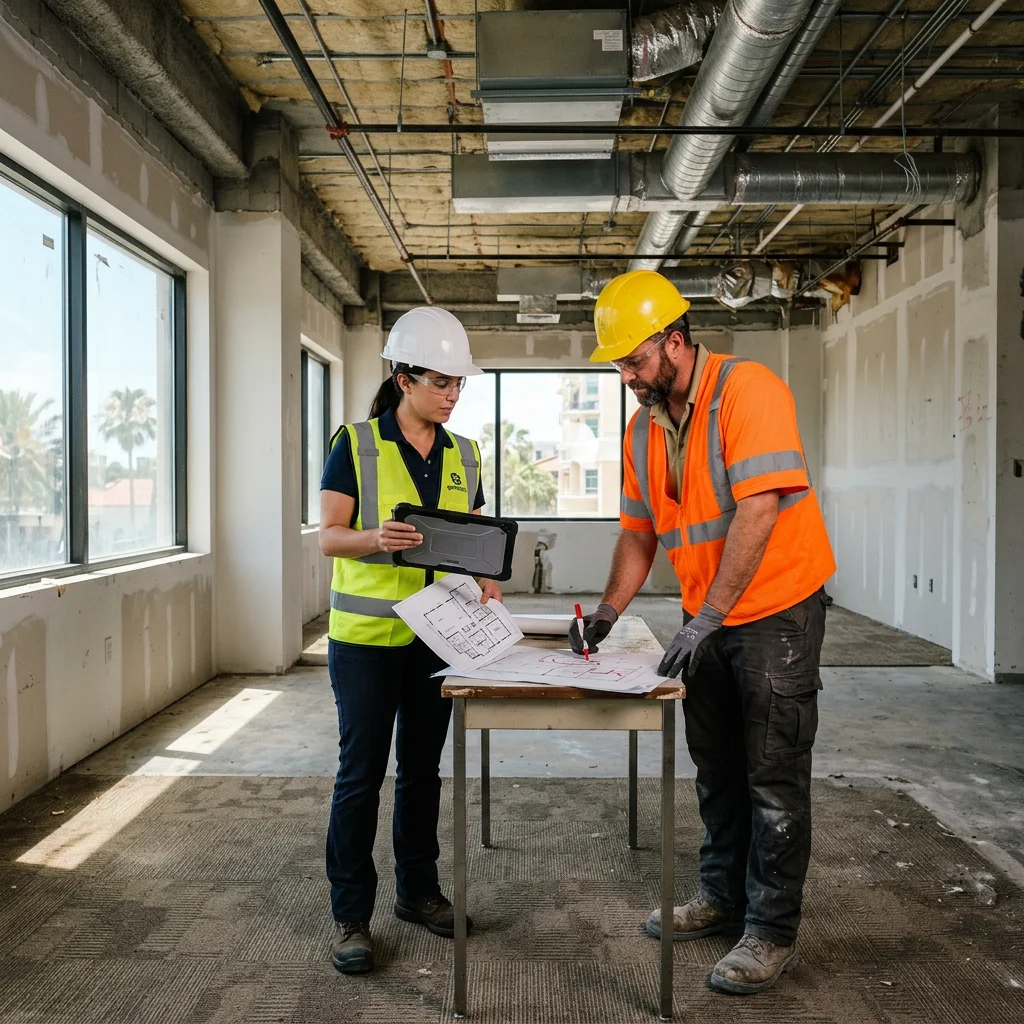
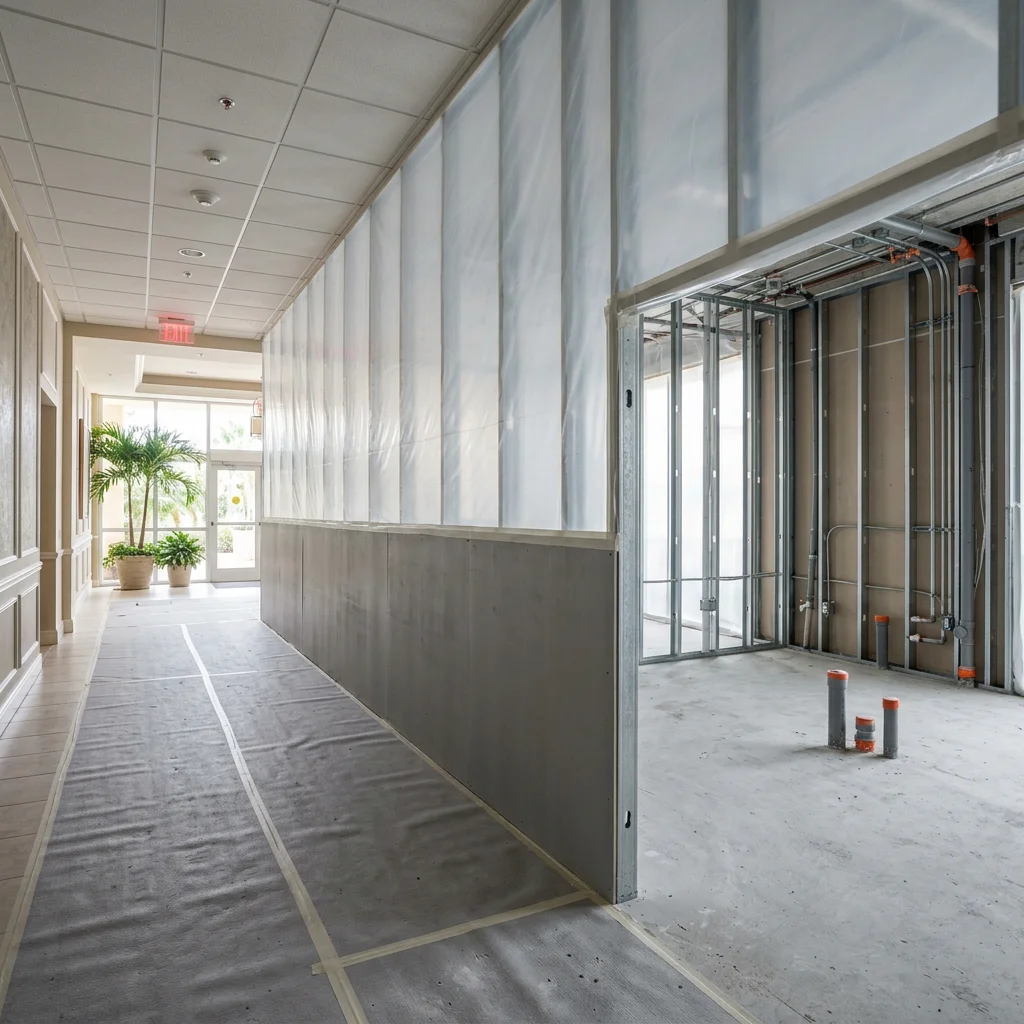
Selective demolition removes identified interior finishes, fixtures, partitions, or other components while retaining portions of the existing property that remain part of the approved design. For managed properties, the scope should identify protected areas, access and containment requirements, sequencing, debris handling, and any inspections or approvals needed before related construction proceeds.
Interior demolition focuses on removing selected nonstructural interior elements, such as finishes, fixtures, partitions, or built-in components, while preserving designated building systems and areas. Property managers should confirm the limits of removal, protection requirements, occupant and access controls, debris handling, and coordination with the renovation or buildout that follows.
Interior strip-outs refer to the planned removal of defined interior finishes, fixtures, partitions, or built-in components before a renovation, tenant improvement, or buildout. For property management firms, the scope should also address protected areas, access and containment, debris handling, occupied-site controls, and sequencing with the construction work that follows.
Multi-Site Demolition Coordination
When removal work involves more than one managed property, each location should be reviewed as a separate work area within an overall coordinated plan. The plan may address phased takedowns, site-specific access and safety controls, debris handling, approval requirements, progress reporting, and separate closeout records.
Multi-property coordination depends on project locations, schedules, site conditions, and the approved scope for each property. Confirm the team’s capacity and the responsibility for each location during proposal review.
Why Property Managers Choose Booster Construction
Managed-property construction involves more than completing individual trade tasks. Booster Construction applies commercial project controls to the decisions that affect occupants, budgets, approvals, and completion.
This structure gives property managers a clear point of accountability while keeping boards, owners, tenants, and institutional stakeholders informed.
- Enterprise-Level Discipline: Systems-driven project management organizes schedules, responsibilities, communication, and documented decisions.
- Commercial and Institutional Focus: The team works exclusively on commercial and institutional projects rather than homeowner construction.
- Code-First Planning: Project planning accounts for applicable Florida Building Code requirements, hurricane-related design considerations, and local coastal requirements during scope, permitting, and inspection coordination.
- Transparent Budget Control: Scope and pricing discussions identify inclusions, exclusions, and allowances before work proceeds.
- Occupied-Site Awareness: Logistics account for controlled access, tenant activity, noise, life-safety requirements, and turnover deadlines.
- Documented Closeout: Final coordination covers applicable inspections, identified punch-list work, and agreed handover information.
A Clear Process from Scope Review to Closeout
Every inquiry begins by defining the business objective rather than assuming removal is the complete solution. Booster Construction then determines whether the requested work fits its commercial construction scope.
Existing conditions discovered after work begins may require a documented scope decision. A defined review and approval path helps managers evaluate the effect on cost, schedule, and compliance before proceeding.

- Project Intake: Provide the property details, current conditions, desired outcome, access limitations, stakeholder requirements, and target timing.
- Scope and Feasibility Review: The team reviews the proposed construction, relevant permitting considerations, inspection requirements, and whether removal work belongs within the approved project.
- Planning and Execution: The project plan establishes sequencing, site logistics, communication responsibilities, safety controls, and phased work requirements.
- Completion and Closeout: Booster Construction coordinates applicable final inspections, tracks documented punch-list items, and supplies the agreed closeout information.
Service Coverage and Scheduling
Project location, availability, site conditions, and scheduling requirements are reviewed during the initial consultation. Booster Construction plans around commercial operating hours, occupied-site limitations, board or stakeholder approvals, and permitting dependencies when applicable.
Booster’s established service area includes Broward, Miami-Dade, and Palm Beach counties. For managed properties in Central Florida or elsewhere outside that area, confirm project eligibility and availability directly rather than assuming coverage. Local permitting requirements, site access, occupancy conditions, and scheduling constraints must be assessed for each location.
Information to Prepare Before Contacting Us
Providing useful project information helps the team assess fit and identify the next practical step. Include:
Property managers should also identify required building rules, work-hour limits, loading access, security procedures, and communication protocols. These details influence feasibility, sequencing, and proposal development.
- Property type and address.
- Project description and desired outcome.
- Photographs, drawings, or inspection reports when available.
- Preferred schedule and known deadlines.
- Occupancy and access restrictions.
- Board, ownership, tenant, or institutional approval requirements.
- Operational conditions affecting phasing or site logistics.
Frequently Asked Questions
What Should Property Management Firms Look for in a Demolition Partner?
Look for commercial experience, clear scheduling, occupied-site controls, documented scope, and a plan for permits and inspections. Confirm whether the contractor provides standalone demolition or handles removal only within a broader renovation, buildout, repair, or compliance project.
Can Work Be Coordinated Across Multiple Properties?
Multi-property coordination depends on project locations, schedules, site conditions, and the approved scope for each property. During proposal review, confirm assessment procedures, access planning, sequencing, progress updates, change-order controls, and separate closeout requirements.
How Do Property Management Firms Request an Estimate?
Submit the property address, affected areas, existing conditions, occupancy details, access limitations, preferred timing, and available plans or reports. The contractor can then review feasibility, permitting factors, required coordination, and the work needed to develop a project-specific estimate.
Request a Commercial Project Consultation
Bring Booster Construction your project scope, property constraints, schedule goals, and approval requirements. The team will review the information and determine the appropriate commercial construction path.
Use the consultation form to provide your name, company, contact details, property type, project description, and preferred consultation time. Request a commercial project consultation today.
Learn more about Booster’s commercial construction and renovation services in Broward, Miami-Dade, and Palm Beach counties.

About the Author
Matan DayanBooster Construction
Matan Dayan contributes practical articles for Booster Construction on commercial construction planning, renovations, permitting, building safety, and project delivery across South Florida.