How South Florida property managers can coordinate engineering review, controlled removals, occupied-site protection and rebuild-ready turnover after storm damage.
Introduction: When Partial Demolition Is the Right Response
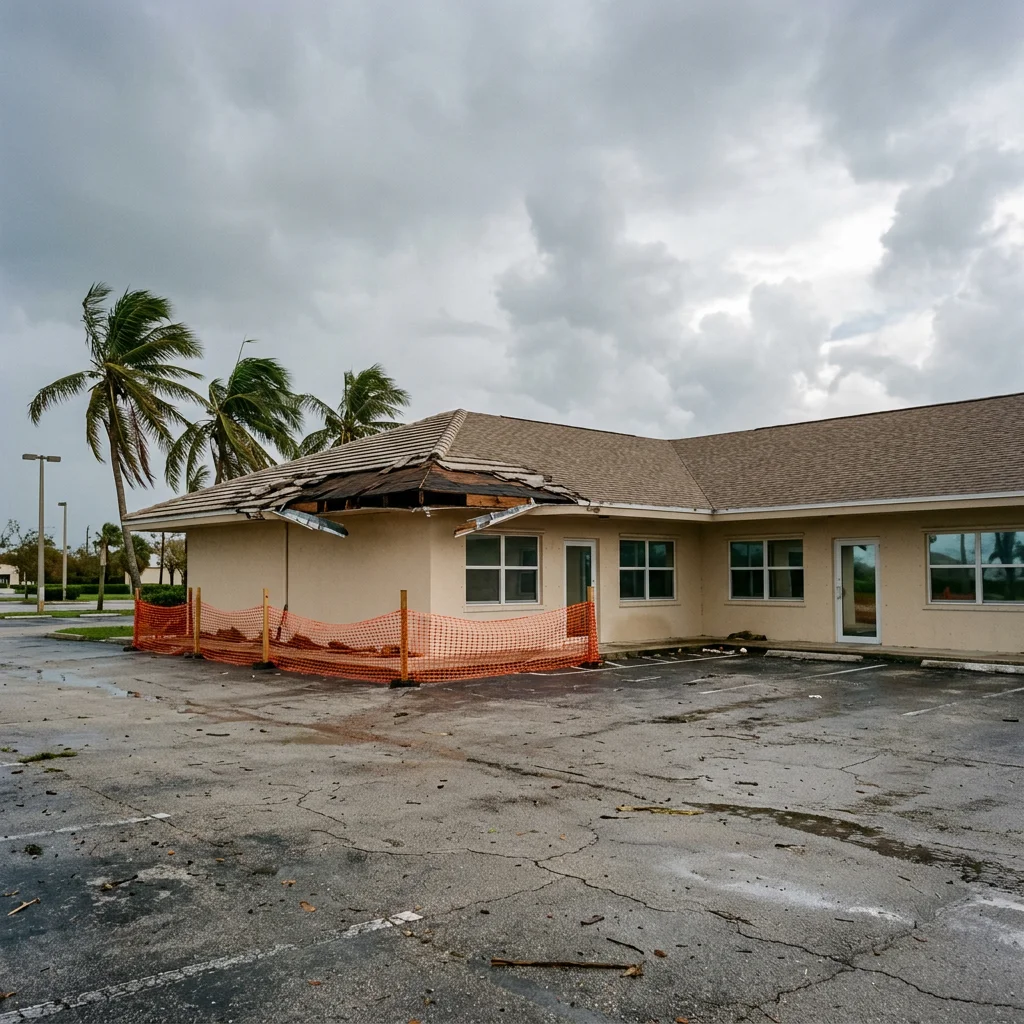
A hurricane can tear open a school’s roof, flood a retail center, or drive debris through exterior walls and still leave most of the building recoverable. That’s where selective structural demolition after storm damage earns its place. The goal is planned removal of compromised structural materials while protecting sound structure, building systems, occupants, and the operations next door.
For South Florida commercial and institutional property owners and managers, partial removals force fast decisions about stability, access, insurance, and rebuilding. This guide covers how to set removal limits, control hazards, and hand retained areas to the next trade ready for repair.
This is a project-planning guide, not an instruction to enter or stabilize a damaged building yourself. Keep people away from suspected collapse hazards and contact emergency services for an immediate threat to life. Access, temporary support and structural removal require qualified professionals and the applicable approvals.
Selective Demolition Versus Full Building Demolition
Full demolition takes down the entire structure. Commercial selective demolition isolates damaged roofing, framing, masonry, slabs, exterior cladding, or interior assemblies and leaves the rest standing. An interior demolition crew should never remove structural elements without an approved structural scope.
A rapid hazard assessment sets the immediate restrictions. After that, engineering findings, damage extent, code requirements, and repair feasibility decide whether keeping part of the building is practical. A structurally unsound building needs access restrictions no matter how limited the visible damage looks.
Weather-related demolition runs against the clock, with unknown conditions behind walls and finishes. A selective teardown-first strategy can make sense when engineers identify stable areas and isolate the damaged components. Targeted removal exposes concealed damage, preserves recoverable construction, and gives later repairs safer conditions. On a campus or shopping center, it may also support continued use of undamaged wings, but only after responsible professionals and authorities approve occupancy.
Step 1: Restrict Access and Stabilize Immediate Hazards
Keep people out until qualified professionals evaluate collapse risk, electrical hazards, flooding, and falling materials. Establish barricades, warning signs, and controlled access points under the site safety plan.
Where qualified professionals determine that installation is safe, temporary weather protection may include roof coverings, barriers at low openings, or protection for exposed interior finishes. Damaged facades may require engineered protection, exclusion zones, sidewalk sheds or canopies. Do not send workers onto unstable roofs or beneath loose materials to install temporary coverings.
None of this replaces an engineering survey or a documented controlled demolition plan. Under OSHA’s demolition preparatory-operations standard, a competent person must complete an engineering survey before demolition operations begin, with written evidence retained.
Identify Conditions That Require Urgent Action
Warning signs include leaning walls, displaced columns, sagging roofs, loosened masonry, weakened or deteriorated floors, exposed reinforcement, and water-saturated structural materials. A damaged load-bearing wall or connection can fail with no further visible warning. Any sign of imminent collapse requires exclusion until qualified professionals establish the necessary controls and authorize access.
Fire, storm, or water damage can reduce capacity, and piled debris can exceed the allowable floor load. In wood-framed areas, a rotted sill plate or water-softened timbers require evaluation. Loss of lateral load resistance needs urgent review too: an unbraced freestanding wall can become vulnerable to wind in the next squall.
Secure Utilities Before Any Removal Begins
Locate and isolate electrical, gas, water, fire-protection, communications, and temporary-power sources before demolition starts. Document utility disconnections and any approved arrangements for services that must remain. Coordinate planned shutdowns with tenants and fire-system impairments with the fire marshal or other responsible authority.
Qualified personnel should verify de-energization and address stored energy in equipment, electrical components and pressurized systems through the appropriate procedures. Apparent abandonment does not establish that a service is safe.
Outdated engineer’s drawings can omit active lines. Verify the field conditions of abandoned gas lines and other services before work near them; pipe casings and sleeves through slabs can conceal older utilities.
Step 2: Establish What Can Be Saved and What Must Be Removed
A professional engineer evaluates load paths, foundations, slabs, trusses, exterior walls, and connections to identify compromised members. Foundation decisions must account for movement, unstable soils, and deviations from the structure’s original design. Retaining walls deserve their own review because saturated backfill and scour can affect capacity after a surge.
Photographs, high-resolution imaging, laser measurements, original drawings, and pre-existing-condition records all help define the structural damage. Sensors and cameras, such as crack monitors, tilt sensors and drone footage, can support assessment of areas too risky to enter.
Align the proposed scope with adjusters, the engineer, architects, and builders before irreversible work, without delaying essential safety measures. Early alignment with the insurer and contractor helps document what was removed and why, supporting claims review without guaranteeing a particular settlement, cost or timeline.
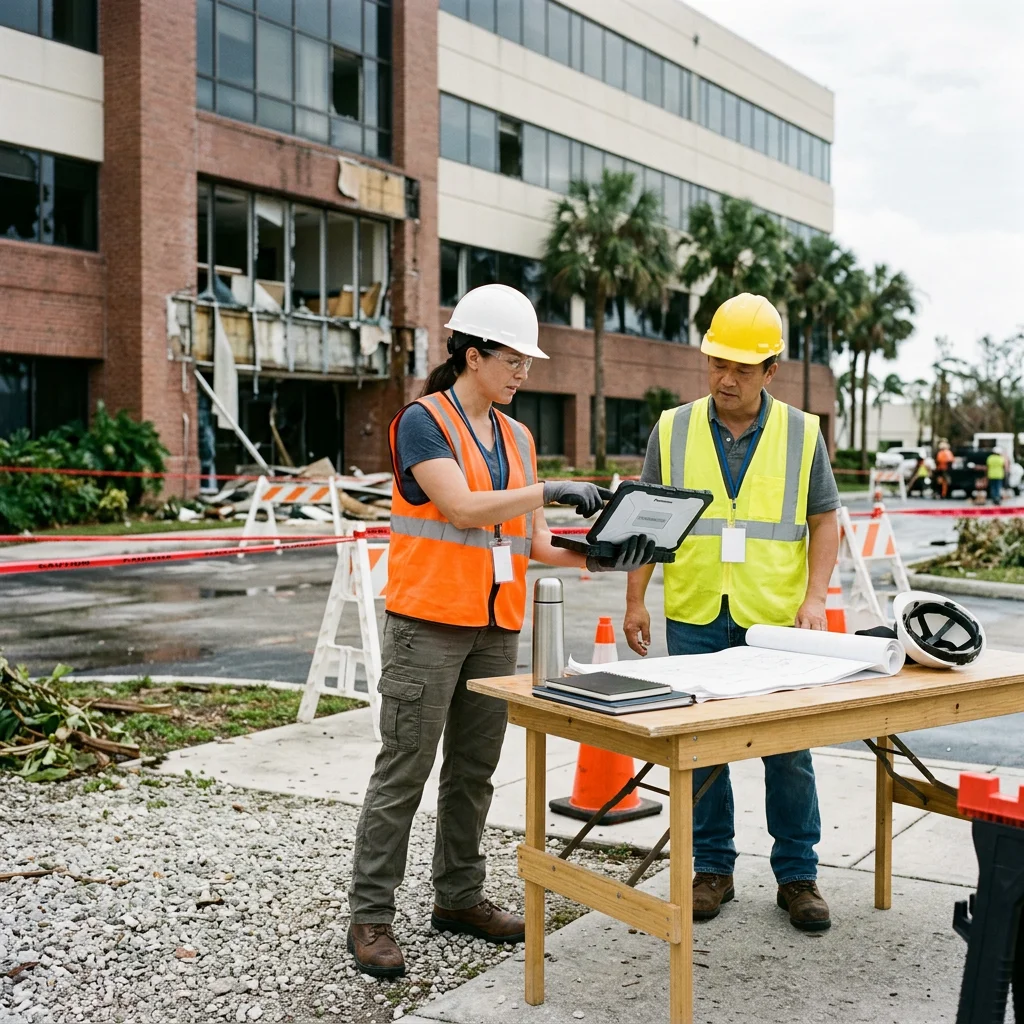
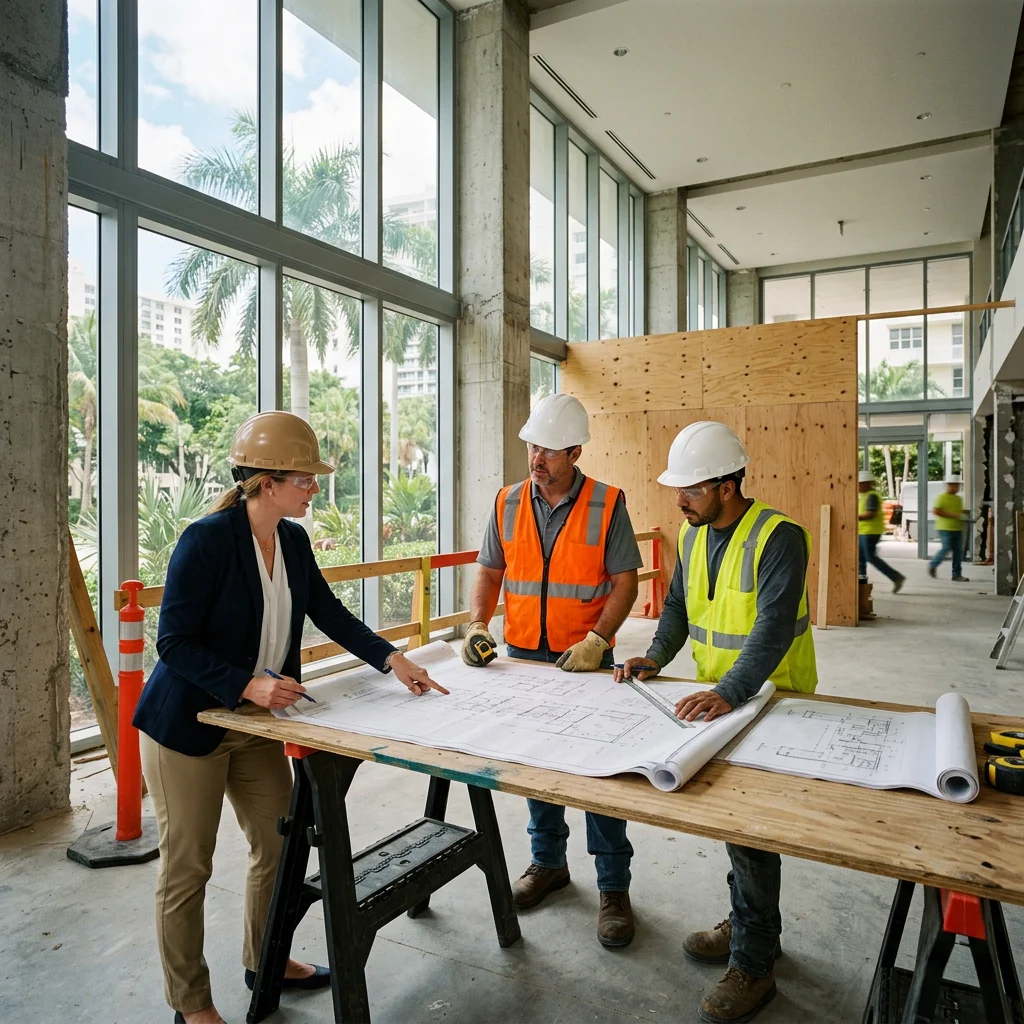
Use an Engineering Survey and Method of Demolition
The engineered demolition plan should define sequencing, temporary supports, equipment limits, exclusion zones, and protections for retained structure. The site safety plan must also cover task-specific personal protective equipment (PPE).
Coordinate South Florida hurricane-resistant code requirements, coastal requirements, permits, and any required engineer’s letter or stamped drawings with the building department before work starts. Emergency conditions do not remove the need to confirm the applicable approval process.
Document the Scope for Claims and Rebuilding
Record itemized removal limits, marked plans, photographs, written approvals, debris quantities, and disposal records. Additional work and charges should follow the agreed documented change-order process.
Booster Construction’s commercial demolition coordination connects written removal scopes with the construction that follows. Demolition-related work is assessed within an approved commercial renovation, repair, buildout or compliance project; specialist structural work and emergency availability require separate confirmation.
Step 3: Sequence Controlled Removal Around the Load Path
Use an engineered, load-path-aware sequence, not an indiscriminate teardown. Top-down removal may be appropriate where engineering conditions allow, but the engineer’s approved sequence controls. Retained areas, temporary support and each stage of structural removal must be addressed in the work plan.
Steel demolition and other structural methods have specific OSHA requirements. A general description of sequencing is not a substitute for a project-specific engineered plan or the applicable standards.
The goal is to remove unsafe components while preserving sound construction and avoiding unnecessary reconstruction. The principal risk is premature collapse, where a partial failure triggers collapse of an area intended to remain.
Prestressed members require specialist review before disturbance. Bonded and unbonded tendons behave differently, and stored energy can create severe hazards. Do not cut or release these systems without qualified engineering direction and specialist controls.
Continue inspections as work exposes hidden rot, corrosion, water damage, or connection failures. Stop affected work when conditions do not match the plan, including the discovery of energized services.
Protect Occupied and Undamaged Areas
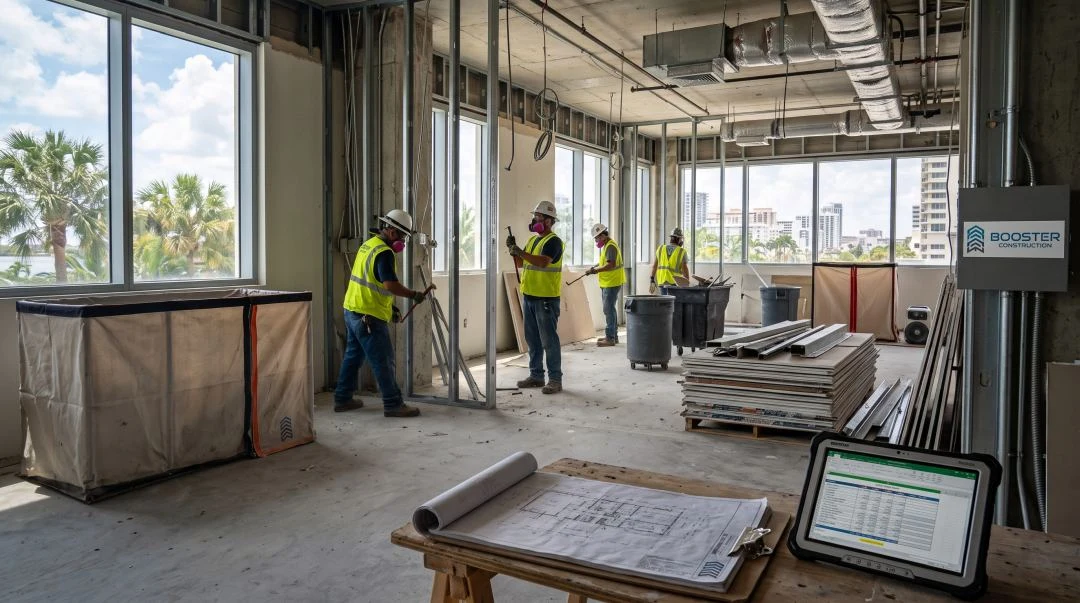
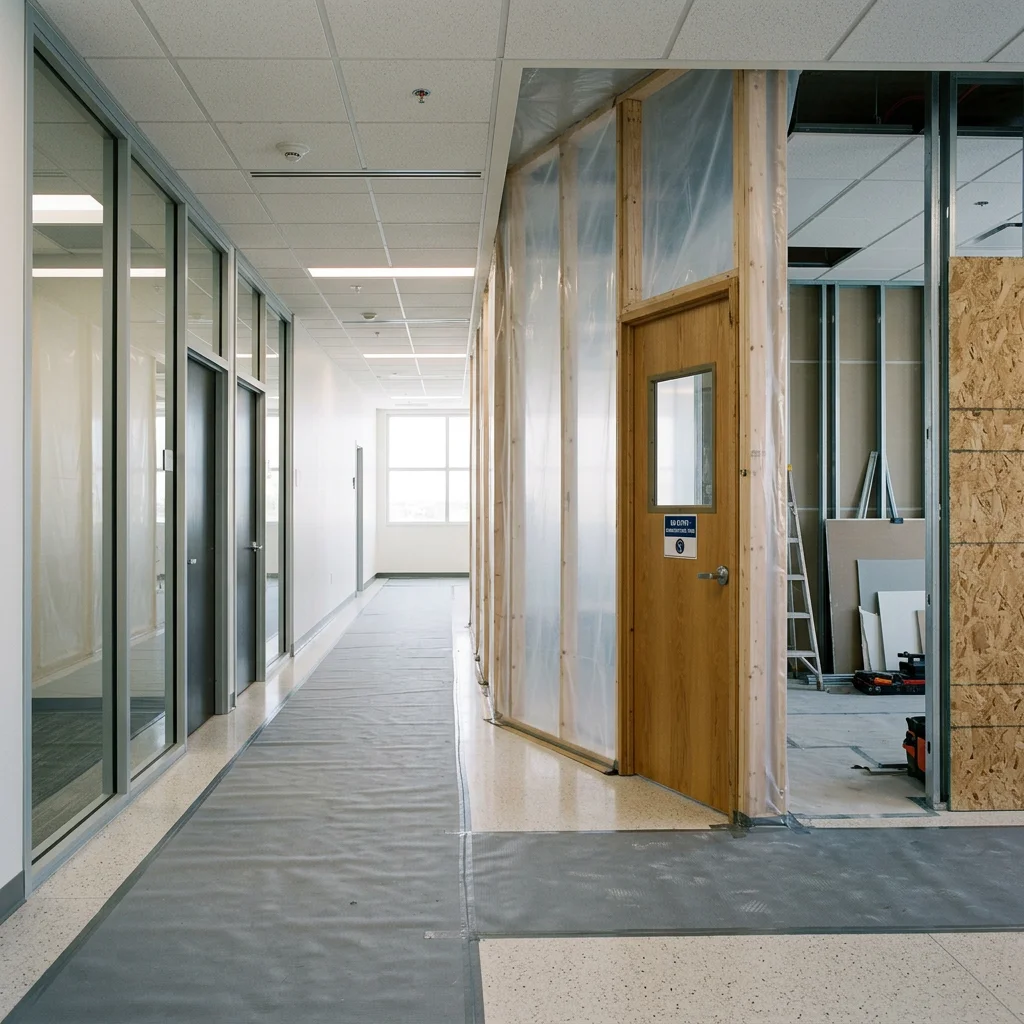
Use separation barriers, dust containment, enclosed chutes where appropriate, and controlled material routes. Schedule disruptive work around tenants, students, worshippers, staff, and visitors.
Staged mobilization brings in only the equipment and crew needed for the approved phase, helping limit the site footprint around occupied space.
Protection must address air migration, including potential migration of asbestos contamination, plus vibration, water intrusion, fire-safety systems, and emergency egress. Occupancy should continue only where responsible professionals and authorities determine it is safe.
Remove Materials in a Controlled Sequence
A damaged roof edge may require engineered temporary support, controlled removal of unstable roofing and frames, selective masonry removal, and turnover of a stable substrate for repair. Older roof cornices and ornamental stonework should be documented, with salvage considered only where the work plan permits safe removal.
Choose methods through the engineered work plan based on structural conditions, access, retained construction and specialist requirements. Equipment capability alone does not establish that a method is safe.
Explosive demolition is generally unsuitable for selective work beside retained construction. Any exceptional proposal requires a separate specialist-engineered plan, applicable authorizations and comprehensive exclusion and protection measures; a blast mat alone does not establish safety.
| Method | Potential application, subject to engineering review |
|---|---|
| Tracked machines with long-reach attachments | Exterior removals planned from outside the established danger zone. |
| Remote demolition robots | Some constrained or hazardous interiors where remote operation reduces worker exposure. |
| Hydrodemolition | Selected deteriorated-concrete removal and reinforcement-preservation scopes, with water and waste controls. |
| Hand removal, saw cutting and small equipment | Controlled work near retained structure, utilities or finishes, under the approved plan. |
| Staged deconstruction | Salvage-focused scopes and historic fabric where stability and handling requirements permit. |
Step 4: Address Water, Debris, and Regulated Materials
Storm debris can contain contaminated water, mold-affected finishes, lead-based paint, chemicals, PCBs from old ballasts and transformers, damaged electrical components, and asbestos-containing materials. After a fire, fire-water residues may carry contaminants of their own. Identify these hazards before disturbance.
Review approved or unapproved modifications. Later alterations can change material locations, structural behavior and removal risks.
Industrial and institutional sites add risks from silos, vessels, pits and vaults that may contain residues or trapped gases. OSHA addresses testing and purging where hazardous substances are apparent or suspected in pipes, tanks or equipment. Qualified specialists must establish the controls before demolition; confined-space entry requires its own assessment and procedures.
Suspected regulated materials require assessment and, where applicable, licensed abatement before disturbance. Lead-coated surfaces require task-specific exposure assessment and controls; not every lead-related task is legally classified as abatement. Older facilities may contain the suspect materials listed below.
For certain municipal demolitions of residences damaged by disasters or fires, EPA explains that asbestos NESHAP may apply. Covered commercial and institutional demolitions generally require inspection and notification even when no asbestos is found; renovation notification depends on regulated asbestos quantities and applicable conditions. Confirm the on-site trained-representative requirements for regulated asbestos work with the responsible agency rather than assuming one rule applies to every storm repair.
- Asbestos-cement corrugated and flat sheets.
- Asbestos-cement shingles and pipe.
- Asbestos pipeline wrap.
- Vinyl-asbestos floor tile.
- Roofing felt and millboard.
- Vermiculite attic insulation that may contain asbestos.
Handle Waste Like It Matters (Because It Does)
Keep regulated waste out of general debris hauling. Qualified handlers must follow applicable wetting, leak-tight packaging, labeling, transport and disposal requirements for asbestos waste, use authorized facilities, and maintain the required waste shipment records.
Clean, suitable materials may be candidates for recycling. Sorting metals, concrete, wood and plastics can help, but eligibility depends on contamination, local acceptance rules and the intended use. On-site concrete crushing and reuse require appropriate approvals and controls rather than an assumption that all debris can become fill.
Plan salvage early. Architectural metals, stone and heavy timbers are easier to track when tagged before removal, provided the engineered work plan permits safe recovery.
Avoid Creating Secondary Contamination
Choose dust-control and containment methods that satisfy exposure and environmental requirements without unnecessarily worsening water damage or spreading contamination. Do not omit required wet methods or regulated-material controls merely to keep a building dry; qualified personnel must resolve the competing risks.
Keep stockpiles away from exits, access routes and vulnerable slabs. Historic buildings may need additional protection for retained finishes and suspect asbestos-containing products.
What to Verify Before Hiring Contractors
Storm recovery draws a wide range of crews, and not all are qualified to work on damaged structures. Before signing, ask for documentation that matches the legal business entity, proposed tasks and actual site team.
- Appropriate contractor licensing and current general liability and workers’ compensation coverage.
- A qualified daily site lead, competent persons and any task-specific licenses or certifications required for the proposed work.
- Relevant training and authorizations for personnel handling regulated materials.
- Whether abatement is provided in-house or through a licensed specialist, with responsibilities and insurance clearly identified.
- A trained asbestos NESHAP representative where required for regulated work.
- A written process for documenting scope, progress, changes and disposal for the owner and insurer.
Common Mistakes That Delay Recovery
Recovery stalls when removal starts before utilities, structural stability, and hazardous-material risks are addressed. Other preventable mistakes include:
- Treating visible damage as the full scope while missing hidden moisture, weakened connections or foundation movement.
- Removing bracing, walls, roof elements or debris without evaluating changed load paths.
- Disturbing slabs or members with prestressing systems without specialist direction.
- Skipping continuing inspections or using respirators without the required respiratory-protection program.
- Failing to connect approved scope, progress and debris disposal in writing.
Why Reconstruction Planning Starts During Demolition
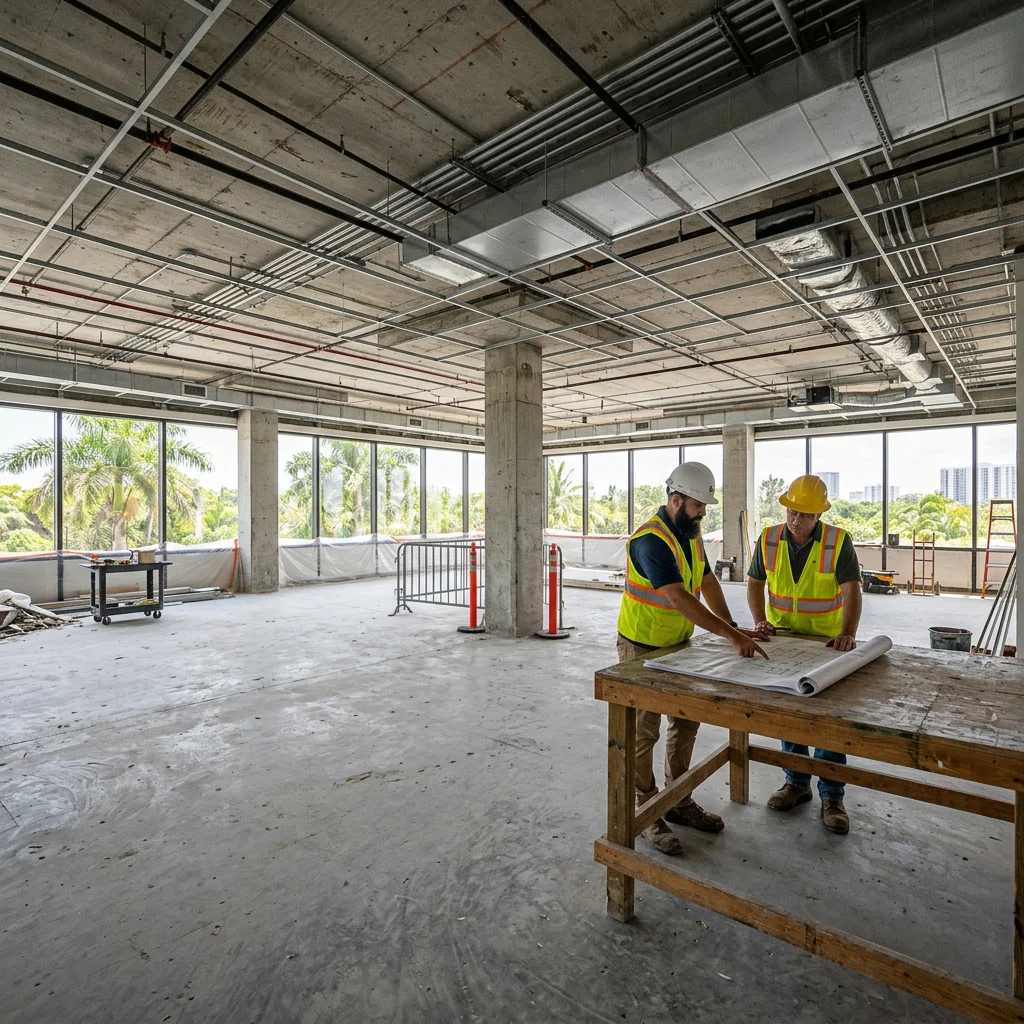
Demolition should leave a clean, verified substrate for the next trade. That means stable, clean, measurable conditions, with retained interfaces, repair tolerances, inspection hold points and unresolved hazards identified before handoff.
Surface preparation depends on the approved reconstruction design and what was removed. Where work reaches grade, grading, compaction and any proof-rolling must follow the project’s engineering and geotechnical requirements. Confirm elevations, setbacks and applicable flood requirements; substantial damage or improvement determinations may trigger requirements that did not apply to the original building.
Document damaged storage tanks, capacitors or chemical containers, including degreasers, for specialist handling. Clear turnover records support realistic budgets, fewer scope conflicts and restoration scheduling.

Frequently Asked Questions
These answers help property managers separate routine removals from work that affects building stability.
What Is Considered Selective Demolition?
Selective demolition is the planned removal of specific building components while protecting structure, finishes, systems, and areas meant to remain. It can cover nonstructural removals or engineered structural work.
What Is Considered Structural Demolition?
Structural demolition removes load-bearing or stability-related components, such as walls, columns, beams, roofs, foundations, or slabs. Engineering and sequencing are needed to protect workers and the remaining construction.
When Is Selective Structural Demolition Appropriate After Storm Damage?
It may be appropriate when specific structural components are damaged while other areas remain stable and repairable. Qualified professionals must evaluate the affected area and confirm that planned removal will not compromise the remaining structure.
Can Storm Debris Be Burned On Site?
Do not burn construction or demolition debris, treated wood, asbestos-containing materials or other regulated waste. Florida emergency storm-debris burning provisions generally address eligible vegetative debris and remain subject to current restrictions and required authorizations. Confirm the applicable rules with FDEP, the Florida Forest Service and local authorities.
Key Takeaways for Managed Properties
Selective structural demolition preserves sound construction while removing storm-compromised components under an engineered sequence. The priorities are life safety, utility control, engineering assessment, regulated-material management, documented removal and rebuild-ready turnover.
Laser measurements, 3D modeling or a digital twin can help communicate removal boundaries and retained conditions. They support site inspections and engineering judgment; they do not replace them.
For South Florida managed properties, good planning ties code compliance, occupancy needs and reconstruction together from day one. A site is ready to build when retained conditions, outstanding risks, approvals and responsibilities are documented clearly enough for the next trade to proceed without guessing.
For removal connected to an approved commercial repair or renovation, request a project scope review. Confirm the structural team, approvals, specialist responsibilities and schedule before authorizing work.

About the Author
Matan DayanBooster Construction
Matan Dayan contributes practical articles for Booster Construction on commercial construction planning, renovations, permitting, building safety, and project delivery across South Florida.