How Broward HOA boards can separate recurring maintenance from structural repairs, manage overlapping inspection requirements, compare service models, and choose qualified contractors.
Key Takeaways
- The right HOA building maintenance and repair contractor in Broward County holds an active Florida license, carries insurance sized for occupied multi-story work, runs formal work-order management, and understands that South Florida maintenance and compliance are now the same conversation.
- Two clocks may be running at once. Florida’s statewide milestone inspection under Statute 553.899 and Structural Integrity Reserve Study requirements under Statute 718.112 sit alongside Broward County’s Building Safety Inspection Program.
- Preventive maintenance is a funding strategy, not a cosmetic extra. Deferred water intrusion in a coastal county can become structural repair, and structural repair can become a special assessment.
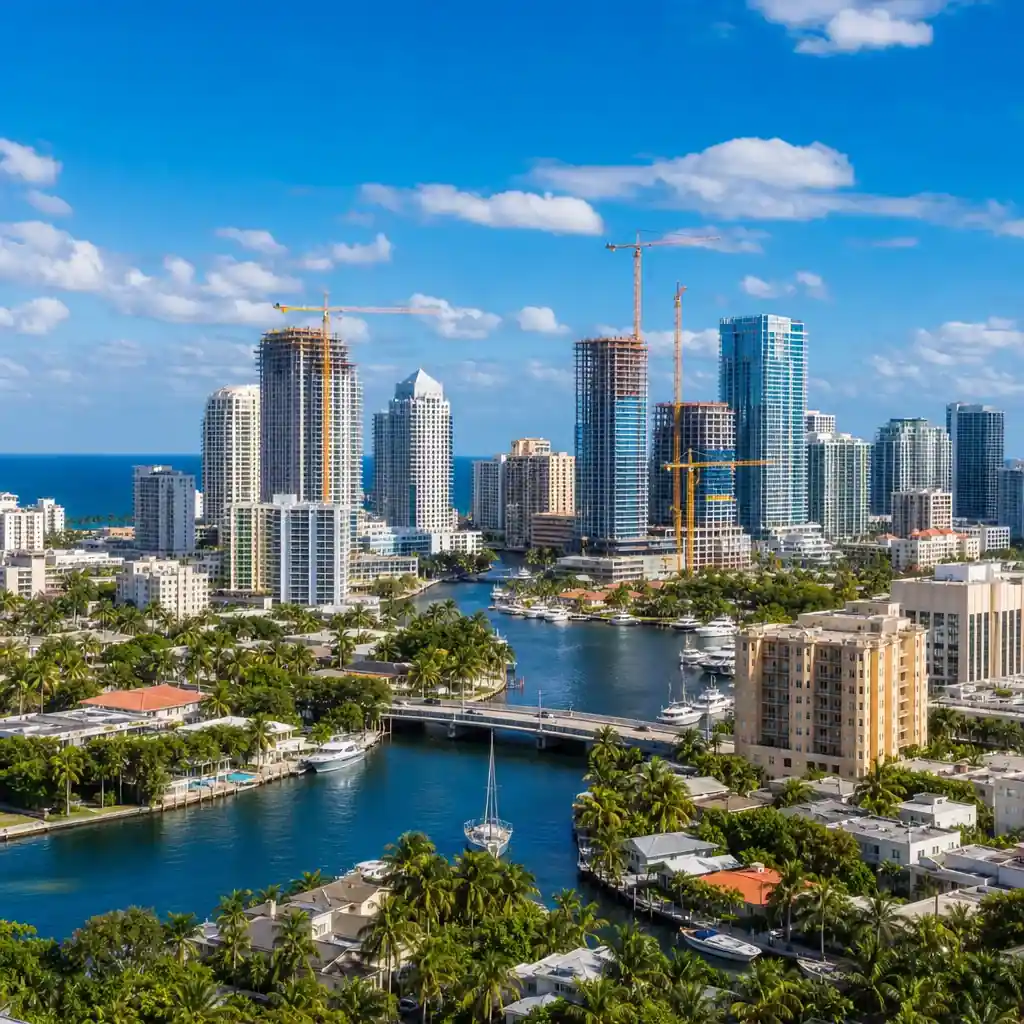
- Florida has roughly 50,600 community associations housing approximately 10.9 million residents, according to the Foundation for Community Association Research 2025 review. Broward represents one of the state’s densest association markets.
- Verify every contractor’s current license and class through the Florida DBPR licensee search before signing a contract.
Top 8 HOA Building Maintenance and Repair Contractors in Broward County
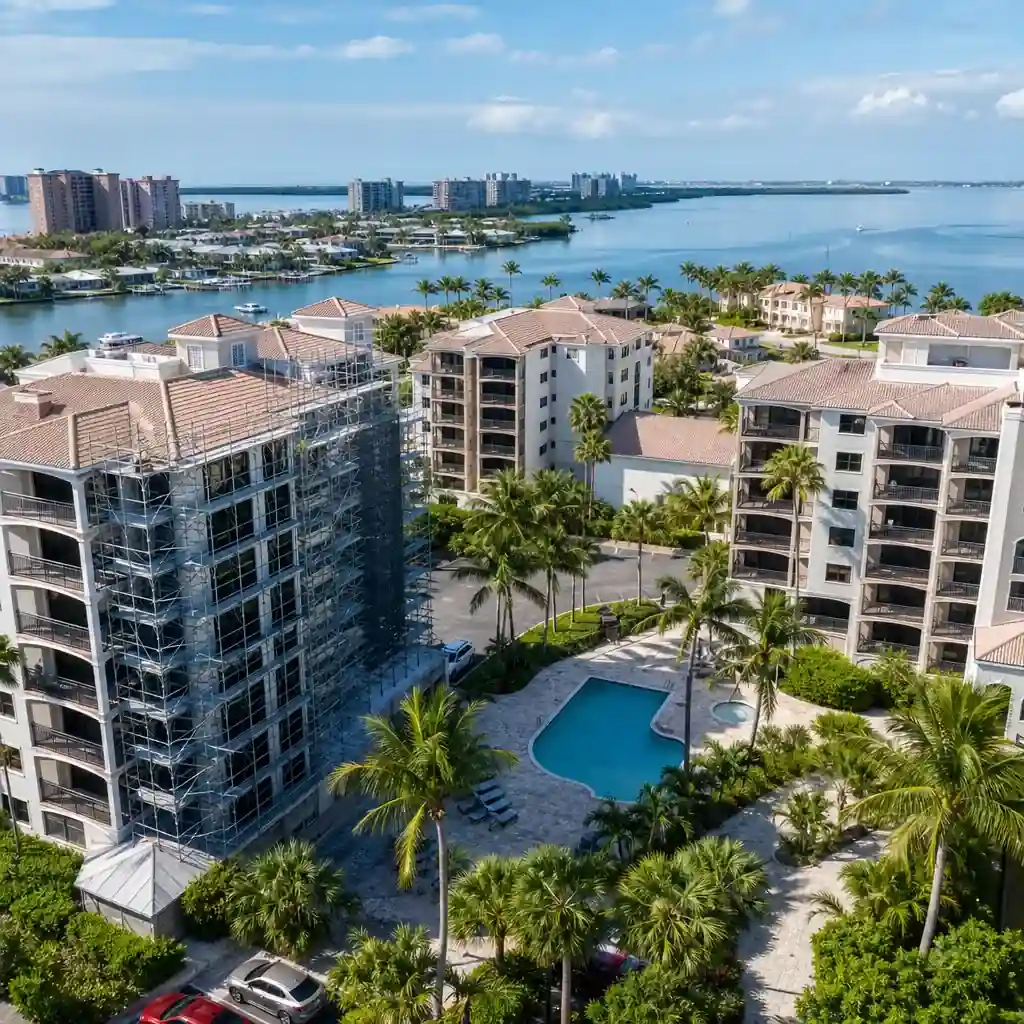
Broward’s vendor market divides into several lanes: roofing, concrete and structural restoration, exterior painting and waterproofing, and janitorial or porter work. Very few firms are equally strong in all four, and boards create risk when they assume one license or service category authorizes every type of work.
The firms below serve Broward County community associations. Credentials and company history are based on information published by each firm unless otherwise noted. This is a research starting point rather than a substitute for checking current licensing, insurance, references, availability, and scope-specific experience.
1. Advanced Roofing, Inc. — A Fort Lauderdale commercial roofing operation founded in 1983, publishing roofing license CCC024413. It is a potential fit for roof replacement, leak investigation, and roof or gutter work tied to a roofing scope rather than full-building maintenance.
2. MTD Painting & Construction — A Coral Springs contractor publishing license CGC1534015 and a service mix that includes commercial painting, concrete repair, and structural restoration. It may fit projects where coating work and substrate repairs need coordinated delivery.
3. Booster Construction — A Plantation-based commercial and institutional contractor operating under Florida license CBC1266108. Booster works with HOA and condominium associations on inspection-driven repairs, occupied-building renovations, commercial structural repair and concrete restoration, and 40-year building recertification support. Owners should confirm that the license class authorizes their project’s exact scope.
4. EmpireWorks Reconstruction and Painting — A multi-state HOA reconstruction and painting specialist with a Dania Beach office. Its published services include balcony and deck repair, waterproof coatings, stucco, rot repair, and community-wide exterior programs.
5. Concrete Restoration Team — A Pompano Beach firm publishing license CGC1532667 and focusing on concrete restoration, expansion joints, balcony and catwalk toppings, stucco, and painting.
6. ROBMAR Construction LLC — A Pompano Beach contractor publishing experience in structural concrete repair, façade and parking-garage restoration, balcony waterproofing, and emergency services. Its license number was not published in the source review, so boards should verify through DBPR.
7. JO Brothers Building Restoration — A Boca Raton restoration contractor publishing experience in masonry, concrete restoration, waterproofing, commercial painting, and repairs linked to recertification findings. Verify its current licensing before contracting.
8. Osorio Cleaning & Maintenance Services — A Fort Lauderdale service provider for janitorial work, porter services, lobby and corridor cleaning, amenities, and pressure washing. It is a maintenance-services vendor rather than a structural repair contractor and should be paired with licensed trades when repairs require permits.
| Firm | Primary lane | Published base | License information |
|---|---|---|---|
| Advanced Roofing | Commercial roofing | Fort Lauderdale | Roofing CCC024413 |
| MTD Painting & Construction | Painting and restoration | Coral Springs | CGC1534015 |
| Booster Construction | Commercial and institutional construction | Plantation | CBC1266108 |
| EmpireWorks | HOA reconstruction and painting | Dania Beach office | Verify current state record |
| Concrete Restoration Team | Concrete and balcony restoration | Pompano Beach | CGC1532667 |
| ROBMAR Construction | Structural concrete and garages | Pompano Beach | Verify current state record |
| JO Brothers | Restoration and recertification repairs | Boca Raton | Verify current state record |
| Osorio Cleaning & Maintenance | Janitorial and porter services | Fort Lauderdale | Service provider; trade license not applicable to cleaning |
What HOA Building Maintenance and Repair Actually Covers
The phrase “HOA services” often combines two budgets that behave very differently. Recurring building maintenance is predictable work such as common-area care, janitorial and porter services, gutter cleaning, pressure washing, lighting replacement, minor plumbing, sheetrock repair, general carpentry, and scheduled inspections. This work is measurable and typically belongs in the operating budget.
Repair services are event-driven. They include leak investigation, water-intrusion response, rot or termite damage, deck and balcony repairs, structural work, waterproof coatings, and painting after the underlying substrate is sound. These costs may fall into operating funds, reserves, an insurance claim, or a separately approved capital program.
Boards often bid recurring work carefully and then assign a serious repair to whichever vendor is already on site. That is how a small handyman relationship can become responsible for sequencing a large concrete restoration program. Scope discipline means keeping routine services with the appropriate maintenance vendor and using qualified, licensed contractors for structural, permitted, or reserve-funded work.
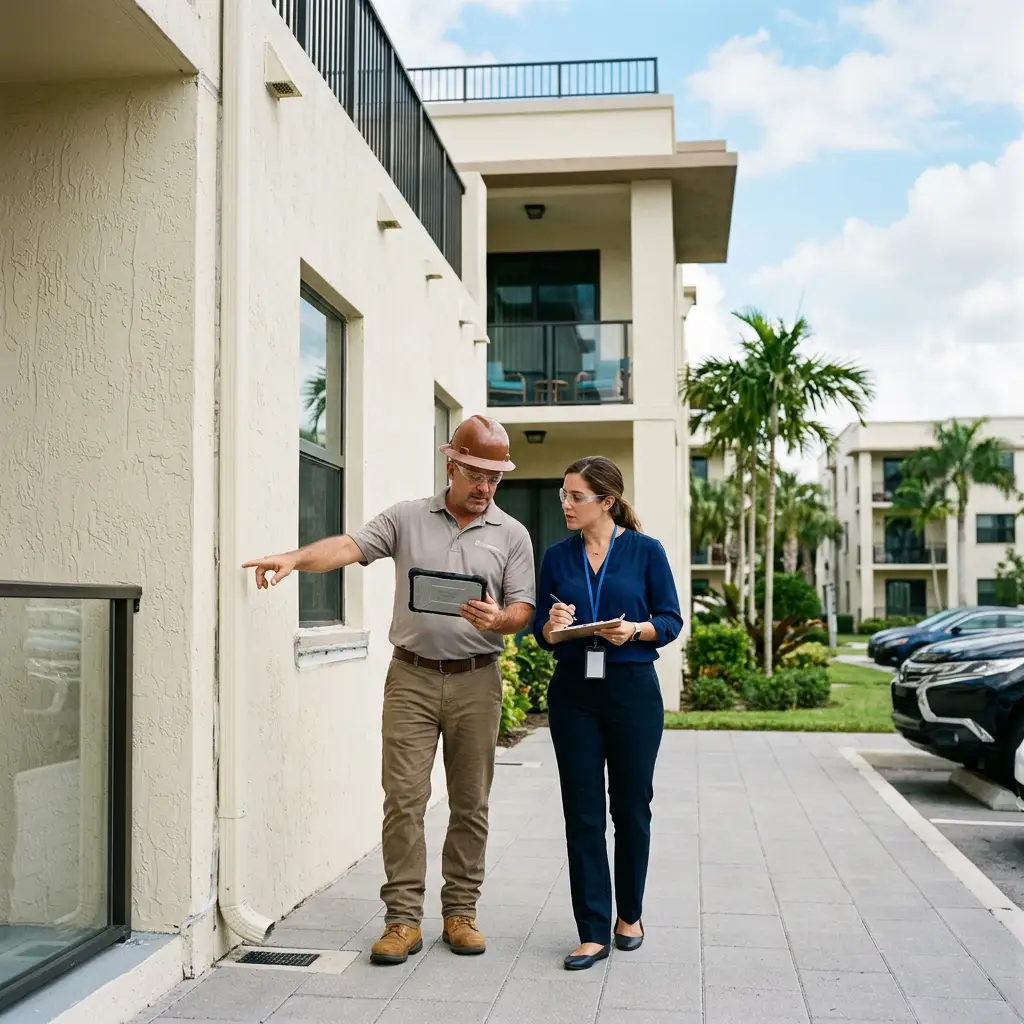
- Preventive maintenance: scheduled envelope inspections, sealant and caulk checks, drainage clearing, roof and gutter cleaning.
- Emergency response: after-hours water intrusion, storm damage, failed risers, and temporary protection.
- Restoration services: concrete and stucco restoration, spall repair, façade work, and reinforcing-steel treatment.
- Envelope and coatings: sealants, waterproof coatings, pressure washing, and commercial exterior painting.
- Structural repairs: balconies, decks, catwalks, railings, parking structures, and engineer-directed repairs.
- Capital projects: roof replacement, envelope renewal, and exterior renovation and modernization.
The Two Compliance Clocks Every Broward Board Is Running
An aging Broward condominium may be subject to both a state inspection regime and a county program, and the deadlines are not interchangeable. Associations should confirm their building’s actual obligations with the municipality, a Florida-licensed engineer or architect, association counsel, and current statutory guidance.
Florida Statute 553.899 establishes milestone inspections for qualifying condominium and cooperative buildings three or more habitable stories tall, generally beginning at 30 years from the certificate of occupancy and repeating every 10 years. A local enforcement agency may require the first inspection at 25 years based on proximity to salt water and local conditions.
Phase One is a visual assessment by a Florida-licensed engineer or architect. If substantial structural deterioration is identified, Phase Two follows with additional testing and repair recommendations. Separately, the Structural Integrity Reserve Study addresses major components such as roofs, structure, fireproofing, plumbing, electrical systems, waterproofing, and exterior painting. Associations should confirm current funding options and deadlines under the law in effect.
Broward County also operates a Building Safety Inspection Program through the Board of Rules and Appeals. It is administered separately from the statewide milestone framework, may reach different building types, and includes structural and electrical evaluation. Broward’s municipalities issue and enforce their own notices, so the municipal notice and building department—not a vendor’s assumption—should establish the project clock.
This overlap changes contractor selection. A maintenance vendor may price the visible symptom, while an engineer’s deficiency list determines the actual sequence: structure and envelope first, cosmetic restoration afterward. For inspection-driven work, boards should use a contractor who can coordinate the engineer, permits, testing, occupied-site controls, and documented closeout.
Related guide: best construction company for HOA communities in America
Service overview: HOA and condominium renovation contractors in South Florida
What Actually Drives Repair Scope in Broward
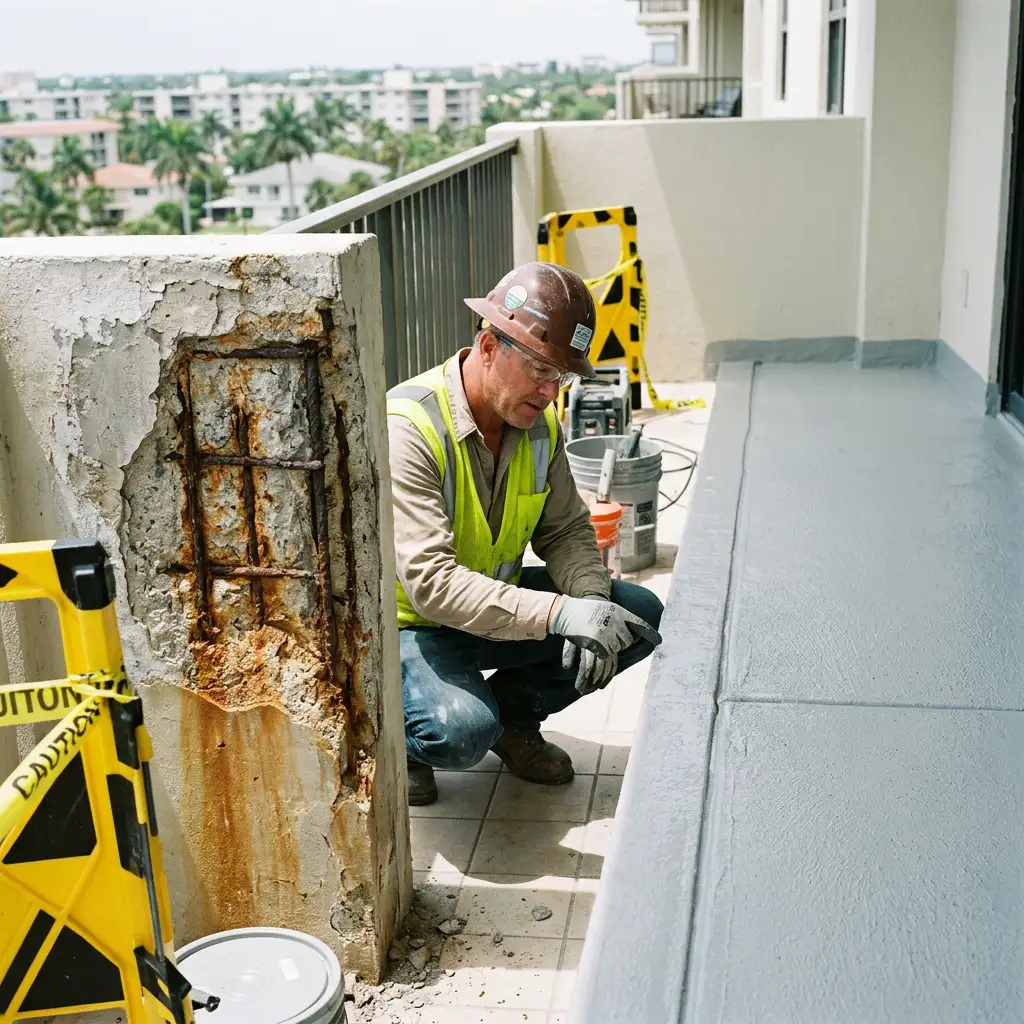
Salt air, humidity, wind, and water shape the repair cycle in Broward County. Water intrusion is the recurring failure mode: a small breach in a balcony membrane reaches reinforcing steel, corrosion expands, surrounding concrete cracks or spalls, and a preventable envelope issue becomes a structural repair.
Wood framing, fascia, and trim also deteriorate quickly in a climate that remains humid throughout the year, with termite activity compounding the damage. Painting over compromised material conceals the symptom rather than correcting the failure. The contractor should remove unsound material, identify the water path, restore the substrate, and then apply the finish system.
Broward and Miami-Dade are within the High-Velocity Hurricane Zone. Attachments, fasteners, roofing, glazing, doors, and other replacement components must follow applicable Florida Product Approval or Miami-Dade Notice of Acceptance requirements. The Florida Building Commission publishes the governing code and product-approval resources.
Insurance also belongs in the maintenance discussion. Carriers may consider roof age, water-intrusion history, structural conditions, and evidence of deferred maintenance when evaluating coverage. A documented preventive-maintenance program can support reserve planning and underwriting while reducing the likelihood that a small envelope failure becomes an emergency capital project.
Key Factors When Choosing an HOA Maintenance and Repair Contractor
Boards make stronger decisions when they score vendors against written criteria before interviews and presentations. Rapport matters, but it should not replace evidence that the firm is legally authorized, insured, operationally capable, and experienced with occupied community associations.
One useful filter is to ask how the contractor would sequence a Phase Two deficiency list against a funded reserve schedule. A vendor that only performs routine maintenance may not be able to explain engineering coordination, permits, resident protection, inspection hold points, and closeout documentation.
- License class and status: verify the exact license through DBPR because a roofing or painting license does not authorize every structural scope.
- Insurance sized for the work: confirm general liability, workers’ compensation, and limits appropriate for occupied multi-story exposure.
- Work-order management: require ticket intake, priority levels, response commitments, photo records, and closed-loop completion status.
- Real-time visibility: ask for weekly reporting, milestone tracking, cost status, submittal logs, and clear escalation paths.
- Multi-property experience: look for demonstrated coordination of elevator access, resident notices, staging, parking, and debris removal.
- Budget control: require line-item pricing, defined allowances, exclusions, contingency treatment, and written change-order procedures.
- Governance literacy: the contractor should understand board approvals, reserve rules, assessment timing, and property-management reporting.
- Community-association references: call current or recent board members and property managers rather than relying on homeowner references.
- Public reputation: review BBB standing, online reviews, and whether complaints show a repeated pattern.
Benefits of a Single Qualified Maintenance and Repair Partner
A qualified partner can reduce the gaps between inspection, preventive maintenance, repair, permitting, and closeout. When the same accountable team tracks the condition and coordinates the licensed work it uncovers, fewer issues are lost between vendors or reclassified after the budget is approved.
- Fewer scope gaps: the team can identify where routine maintenance ends and permitted repair begins.
- Lower lifecycle costs: scheduled work is generally less expensive than emergency response and creates documentation for reserves and insurers.
- Cleaner compliance records: one contractor coordinating findings, permits, testing, inspections, and closeout is easier to audit.
- Less resident friction: consistent notices, site rules, crews, and access plans reduce surprises in occupied communities.
- Stronger forecasting: a contractor familiar with the building can help the board anticipate upcoming envelope, structural, and common-area needs.
Safety Considerations for Occupied HOA Repairs
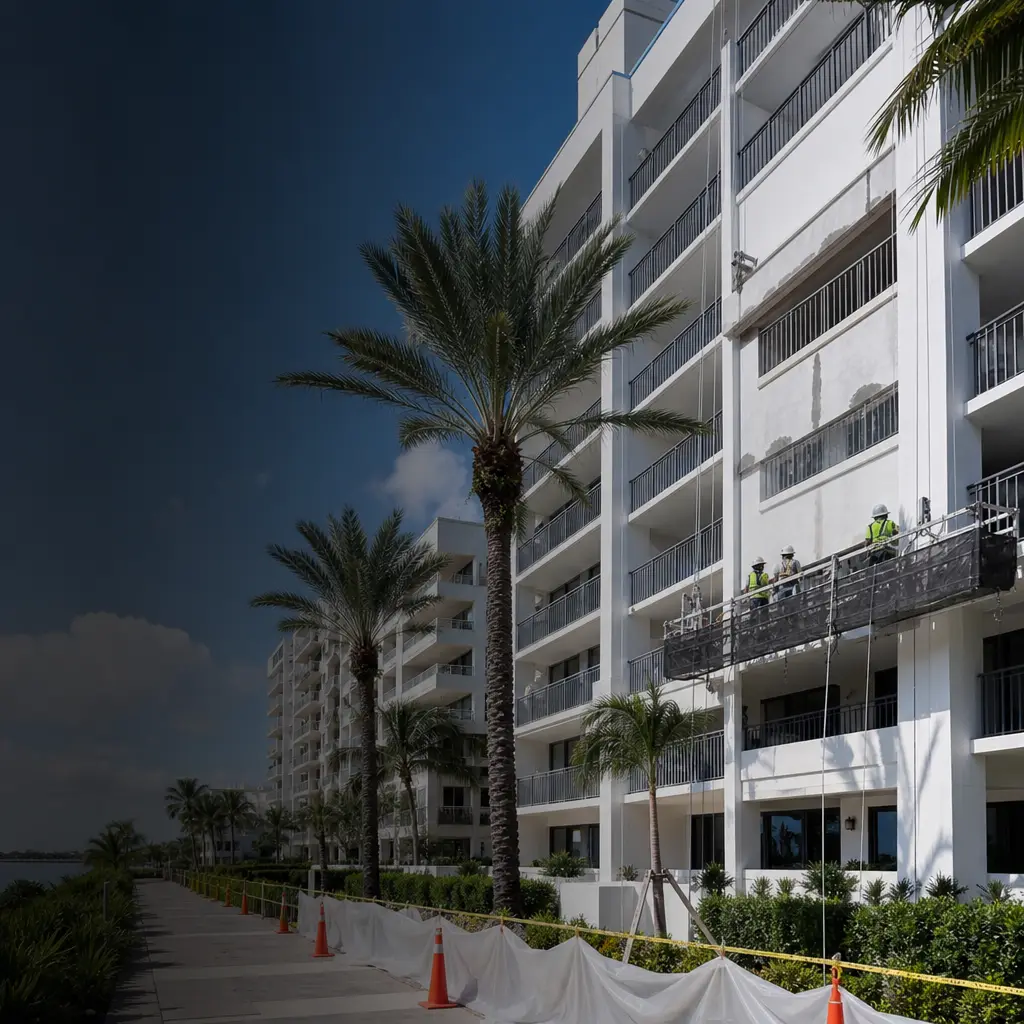
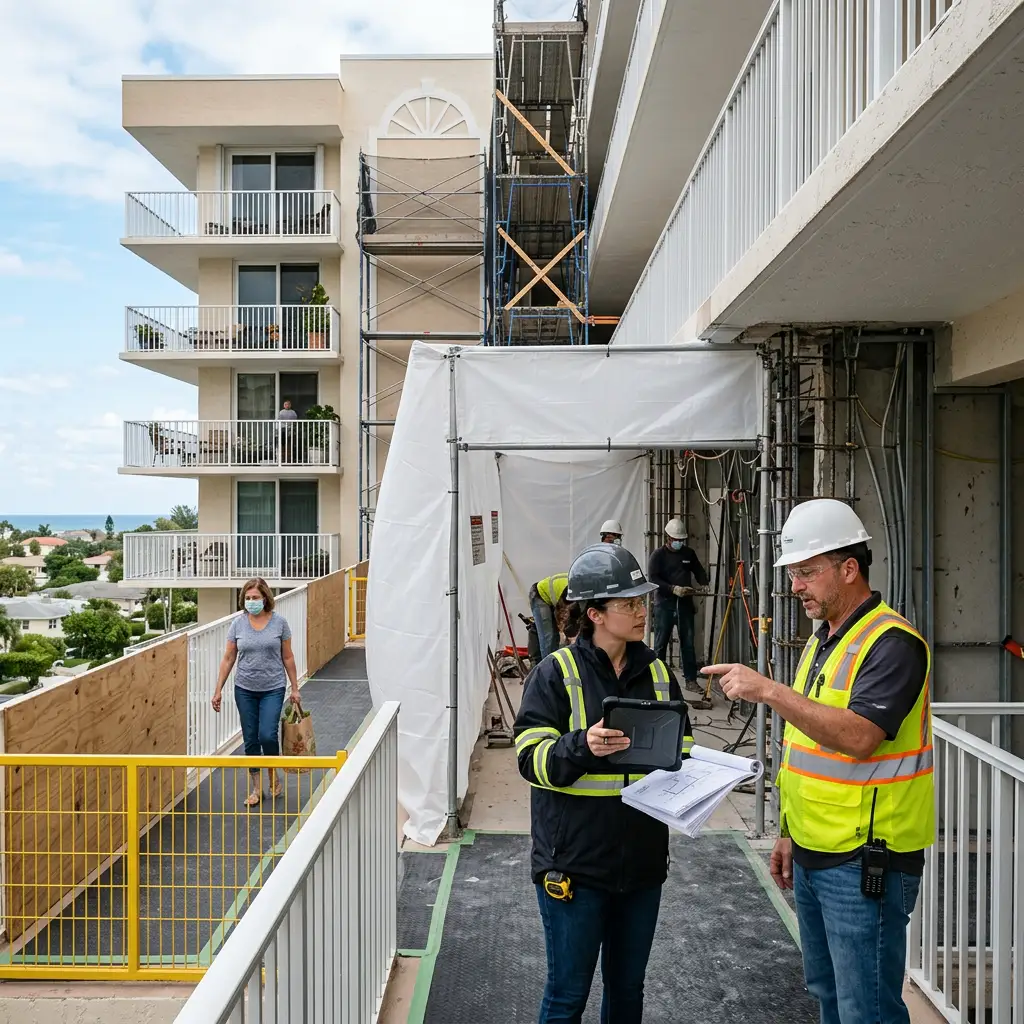
Occupied-building work requires controls that protect residents, staff, visitors, and construction crews at the same time. Safety planning should be part of the proposal and schedule rather than an informal jobsite adjustment after work begins.
Concrete cutting, grinding, and demolition can trigger OSHA’s respirable crystalline silica standard for construction, 29 CFR 1926.1153. Wet methods, vacuum shrouds, HEPA filtration where applicable, and a written exposure-control plan are baseline requirements. OSHA publishes the construction silica requirements for employers and workers.
Pre-1978 buildings may also require compliance with the EPA’s Renovation, Repair and Painting rule when work disturbs lead-based paint. Balcony, deck, and façade work above occupied walkways requires engineered access, fall protection, overhead protection, and hard barricades—not only cones or caution tape.
Egress paths must remain available during construction. Fire-alarm or sprinkler isolation needs advance notice, documented procedures, and a fire watch when required. In the HVHZ, replacement components should have the required product approvals before materials arrive on site.
How Broward Compares with Other U.S. Markets
National maintenance systems do not always transfer cleanly to South Florida. California condominium and apartment work is shaped by balcony and elevated-element inspection laws such as SB 326 and SB 721. New York combines dense-building operations with local façade and emissions rules, while Central Texas maintenance teams focus more heavily on freeze events and foundation movement.
Broward’s combination is different: structural and electrical inspection programs, salt-driven water intrusion, occupied condominium logistics, and the High-Velocity Hurricane Zone. A contractor with a national portfolio should still demonstrate what it has permitted, repaired, and closed out in Broward County specifically.
Where Booster Construction Fits HOA Work in Broward County
Booster Construction focuses exclusively on commercial and institutional projects across Broward, Miami-Dade, and Palm Beach counties. That focus aligns its project controls, field operations, and subcontractor coordination with boards, property managers, schools, houses of worship, retail centers, and other occupied institutional properties rather than residential remodeling.
The firm is best suited to inspection-driven work, envelope and structural programs, common-area modernization, and capital projects that must keep a building occupied while construction proceeds. Routine janitorial and porter work belongs with a dedicated service provider.
For boards developing a preliminary capital plan, the commercial lobby and HOA renovation budget guide explains contingency, soft costs, durability, accessibility, and occupied-building logistics. The Broward County school renovation guide provides another look at phased work in active institutional properties.
- Commercial and institutional construction focus.
- Experience with South Florida hurricane-resistant construction, coastal exposure, and municipal permitting.
- Transparent scope, allowances, cost reporting, and documented change control.
- Systems-driven scheduling, reporting, submittal tracking, and project visibility.
- Communication structured for boards, property managers, and governing-document approval processes.
Comparison of HOA Maintenance and Repair Service Models
Most Broward associations ultimately need two relationships: a service vendor for recurring work and a licensed contractor for anything that touches structure, permits, inspection findings, or reserves. That is not inefficiency; it is matching responsibility and licensing to the actual scope.
| Service model | Best for | Strengths | Limits |
|---|---|---|---|
| In-house maintenance staff | Large communities with steady daily volume | Fast response, resident familiarity, low cost per ticket | Limited licensed scope and capital-project capacity; payroll and liability remain with the association |
| Handyman services vendor | Small repairs, punch items, and minor carpentry | Flexible and quick to schedule | Cannot perform or permit structural work without the required license |
| Janitorial and porter firm | Common areas, amenities, and routine cleaning | Documented routes, trained staff, repeatable service | Cleaning-focused with no structural repair capability |
| Trade specialist | A defined roofing, concrete, painting, or waterproofing system | Deep technical focus and competitive unit pricing | Coordination and gaps between trades can remain with the board |
| Licensed commercial contractor | Inspection-driven repairs, envelope programs, structural work, and capital projects | Permits, engineering coordination, code-compliant delivery, and one accountable project team | Not the economical choice for small recurring tickets |
| Property-management construction service | Boards seeking one vendor relationship | Bundled coordination and familiar reporting | Work may be subcontracted; verify who is licensed and actually performing each scope |
What Boards Should Plan for in the Budget
No two Broward buildings price alike, so boards should use planning rules rather than generic cost-per-square-foot promises. Existing conditions, access, height, occupancy, testing, engineering, product approvals, municipal requirements, and the severity of concealed deterioration all change the final cost.
- Split the budget three ways: recurring services in operating funds, reserve-funded components in the SIRS schedule, and contingency for repair conditions not yet visible.
- Carry contingency on restoration and repair work because concealed deterioration is common after demolition begins.
- Price the compliance path, not only the physical fix. Engineering, permits, testing, inspections, temporary protection, and closeout are real line items.
- Treat insurance claims as a parallel track because coverage review and construction scheduling may move at different speeds.
- Obtain more than one estimate and require every bidder to price the same written scope, alternates, allowances, and exclusions.
Frequently Asked Questions
What does an HOA building maintenance and repair contractor in Broward County actually do?
The service mix can include common-area maintenance, porter work, pressure washing, minor plumbing or electrical replacements, sheetrock and carpentry repairs, leak investigation, water-intrusion response, waterproofing, concrete restoration, balcony repairs, and structural work. The contractor or service provider must hold the license required for each scope.
Does my Broward County association need a licensed contractor, or is a maintenance vendor enough?
A service vendor may be appropriate for recurring cleaning and minor maintenance. Structural, permitted, reserve-funded, or inspection-driven work should go to a contractor whose current Florida license authorizes that scope and who can coordinate engineering, permitting, inspections, and closeout.
How do the state milestone inspection and Broward’s Building Safety Inspection Program differ?
The statewide milestone framework applies to qualifying condominium and cooperative buildings under Florida Statute 553.899. Broward’s county program is administered separately through the Board of Rules and Appeals, has its own notice cycle, and includes structural and electrical evaluation. Confirm the building’s actual due dates with the municipality.
How can a board reduce long-term maintenance costs without deferring work?
Prioritize preventive envelope maintenance such as sealants, waterproof coatings, drainage, and roof or gutter cleaning. Documented maintenance is less expensive than emergency structural repair and provides useful records for reserve planning, inspections, and insurance review.
Conclusion
Broward County boards are managing more than a list of maintenance tickets. They are coordinating an occupied-building compliance program involving recurring services, structural safety, reserves, inspections, insurance, and resident communication.
The practical approach is to separate routine services from licensed repair work, read the engineer’s deficiency list before comparing proposals, verify every license, and require bidders to price the same documented scope. Preventive maintenance should protect the envelope before water intrusion becomes structural deterioration.
Boards ready to scope a specific building can request a free estimate from Booster Construction or review the full range of construction services for HOA and condominium associations across Broward, Miami-Dade, and Palm Beach counties.

About the Author
Matan DayanBooster Construction
Matan Dayan contributes practical articles for Booster Construction on commercial construction planning, renovations, permitting, building safety, and project delivery across South Florida.